
What is mascara made of? A tube holds four working parts. Water carries the formula. A pigment supplies the color. A film-forming polymer dries into a sheath around each hair, and a wax-and-oil system gives that sheath body. A preservative sits in the water phase, because a wet base that a brush dips into hundreds of times, near an eye, is a microbial risk.
Mascara is the product that darkens, lengthens and thickens the visible lashes by coating each hair. It shares the eye-makeup shelf with eyeliner and brow gel, and, unlike a stain, it coats the surface and washes off.
Most articles on this query stop at that list. The more useful question is which ingredients a formulator is allowed to put into a product built for the eye area, and which ones the United States simply prohibits.
This page covers the four functional parts and an ingredient-by-ingredient table with the colorant rules beside each entry. It then compares water-based, oil-based and wax-based formulas, and sets out the short regulatory list that matters when a mascara is specified.
The Four Functional Parts of Mascara
Every mascara solves the same four problems at once. It must look dark enough to read as lash color. It must sit on a smooth hair without flaking. It must survive a day of blinking, skin oil and humidity. And it must stay safe inside an opened tube.
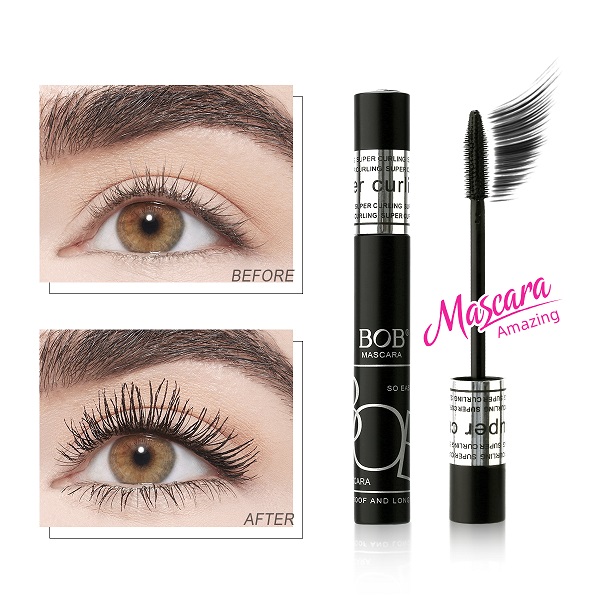
Pigment. Iron oxides and carbon black do most of the darkening. Titanium dioxide and ultramarine blue extend the color space, which is how a formula lands on brown, graphite or navy instead of flat black. Mica and guanine add the reflective layer that makes a lash read as wider than it is.
Film-forming polymer. This is what turns a colored liquid into a coating. Acrylates-based film-formers flow around the hair, then coalesce into a continuous flexible sheath as the solvent evaporates. The strength and flexibility of that sheath decide whether a mascara holds a curl, smudges by lunchtime, or lifts off in strings at the sink.
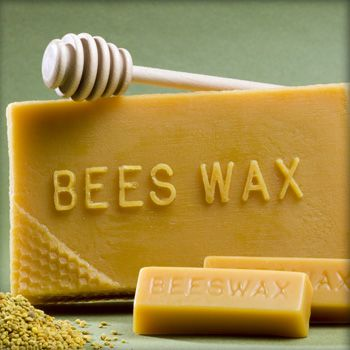
Waxes and oils. Beeswax, carnauba wax, candelilla wax, lanolin and mineral or plant oils set the viscosity of the wet formula and the thickness of the dried film. They are also the reason a batch that passes warehouse storage can still fail in a handbag in a hot market.
Water and the preservation system. Water carries the other solids and makes a soft, wash-off wear possible. It is also the part that needs protecting, so a broad-spectrum preservative is a functional requirement rather than an optional line on a specification sheet.
A back-label ingredient list runs in descending concentration, and these ten entries cover most of what appears on one.
- Water, as the solvent base
- Beeswax, as structure and film thickness
- Carnauba wax, as the heat-resistant hardener
- Iron oxides, as black and brown pigment
- Titanium dioxide, as opacity and tone
- Film-forming polymer, as the lash coating
- Nylon or rayon microfibers, as lengthening solids
- Panthenol, as a hair conditioning agent
- Lanolin or mineral oil, as emollient
- Broad-spectrum preservative, as microbial protection
The exact names shift with the claim on the tube. Waterproof systems lean on hydrophobic solvents such as dodecane. Tubing formulas swap pigment load for a polymer that wraps each hair and releases intact in warm water. Fiber mascaras raise the nylon or rayon content instead.
Mascara Ingredients and What Each Does
Anyone asking what is mascara made of usually expects a list of names, and the names below are the ones that turn up on a back label. The table pairs each with the job it performs and its status under the US color additive regulation. Six of these entries are listed in 21 CFR Part 73, which is the rulebook a formulator works from when the product goes near an eye.
| Ingredient | Job in the Formula | Where It Comes From | US Eye-Area Status |
|---|---|---|---|
| Eau | Solvent carrying pigment and polymer | Treated, deionized supply | Not a color additive |
| Iron oxides | Black, brown and yellow depth | Synthetic mineral | Permitted, § 73.2250 |
| Titanium dioxide | White opacity and light diffusion | Minéral | Permitted, § 73.2575 |
| Ultramarines | Blue-violet tone correction | Minéral | Permitted, § 73.2725 |
| Mica | Sheen and slip | Layered mineral | Permitted, § 73.2496 |
| Guanine | Silver shimmer, sold as pearl essence | Fish scales | Permitted, § 73.2329 |
| Carmine | Red tone inside dark bases | Cochineal insects | Permitted; label must declare it |
| Cire d'abeille | Thickens the film, gives brush body | Honeybee hive | Not restricted |
| Carnauba wax | Raises melt point for heat stability | Palm leaf | Not restricted |
| Glycerin and gums | Hold moisture in the dried film | Plant oil and plant gum | Not a color additive |
| Panthénol | Conditions the hair under the film | Synthetic provitamin | Not a color additive |
| Film-forming polymer | Grips each lash, holds the curl | Synthetic chemistry | An ingredient, not a colorant |
| Preservative system | Stops microbial growth in a wet tube | Synthetic chemistry | Part 700 restricts specific ones |
Two things stand out once that last column is filled in. US rules describe pigments far more precisely than they describe the rest of a formula, and the pigment rules are written around the eye.
Guanine is the clearest example. The regulation defines the color additive as the crystalline material obtained from fish scales. Its purity ceilings are explicit: guanine at not less than 75 percent, lead at not more than 20 parts per million, arsenic at 3 parts per million. Mercury is capped at 1 part per million. The rule then permits the material in cosmetics generally, including products intended for the eye area.
Carmine carries the one visible label duty in that group. A cosmetic containing it must state the presence prominently, in wording such as Contains carmine as a color additive. It is also the reason a red-toned lash formula is not vegan, since the pigment comes from cochineal insects.
Carbon black is the one common pigment that does not appear in the Part 73 list. A specification should not treat silence as permission, so ask the pigment supplier for its US status in writing before the name reaches a color claim.
Mascara Formula Bases and How They Differ
Mascaras get sorted by the claim on the tube rather than by chemistry, but the three systems differ in what the formula is built on. Sorted by base instead of by marketing label, what is mascara made of falls into three groups.
Water-based. Water is the main carrier, with glycerin, gum tragacanth or methyl cellulose for body. These wear light and remove with warm water and a soft cleanser. The water phase is also where microbial growth happens, so the preservation system and the filling environment carry the risk.
Oil-based and waterproof. Hydrocarbon and plant oils replace most of the water, and solvents such as dodecane keep the dried film from being wetted by tears. The film resists water better and needs an oil-based remover. Removal effort is the price of the wear claim.
Wax-based and tubing. A higher wax load gives a stiffer, more volumizing film. Tubing variants invert the design. Instead of pigment mass, they build a polymer sheath around each hair that slides off in warm water. That is why they come away in pieces and smudge less on the under-eye.
Those choices are production decisions as much as formula decisions. An anhydrous wax system is filled hot, and a water-based system needs a preserved batch filled into a controlled environment. Each base maps to a different wear claim, and the finished forms are laid out in the types of mascara guide.
How a Mascara Film Grips Each Lash
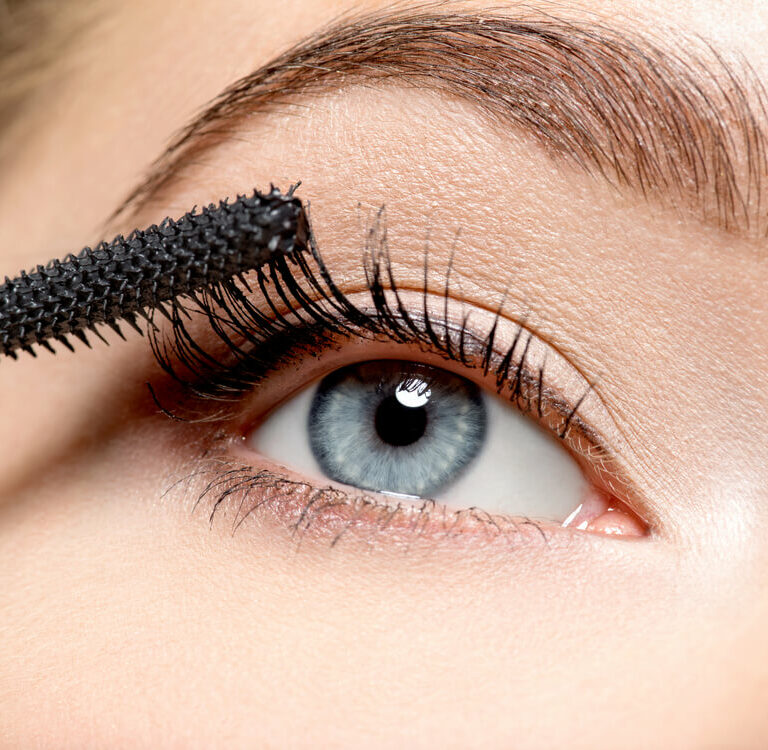
A lash is a smooth keratin fiber with a thin oily surface. Water will not wet it, and neither will a pigment suspended in water. The film-former closes that gap: it flows around the hair in the wet state, then coalesces into a continuous sheath as the solvent evaporates.
Three properties of that sheath decide the wear experience. Thickness controls whether a lash reads as longer or simply darker. Flexibility controls whether the film cracks through a day of blinking and creasing. Adhesion controls whether skin oil lifts the film off the hair by mid-afternoon.
Wax blend does most of that work. Beeswax gives a soft, tacky film that grips well and feels light. Carnauba raises the melt point so the film survives a hot climate. Candelilla behaves between the two and is the usual plant substitute when a formula drops beeswax.
Fiber mascaras add a fourth mechanism. Short nylon or rayon filaments are suspended in the film, and each one extends past the tip of a real lash, so the lengthening effect is physical rather than visual. Panthenol in the same film conditions the hair underneath, and ceresin wax stiffens the sheath enough to hold a curled lash overnight.
Smudging is usually a mismatch between the film and the wearer rather than a defect. Three things produce the same gray mark: an under-eye with oily skin, a curl that pushes product toward the lid, or a formula that never fully coalesced. The fix is a different wax-and-polymer balance, not a different brand.
Which Ingredients Are Banned for Lashes
US regulation does not approve a mascara formula before it reaches the market. What it controls is the color additive list and a short set of prohibited ingredients. That distinction matters here, because most avoidance lists in this topic mix the two together.
The avoidance lists usually name aluminum powder. Part 73 lists it at § 73.2645, and that entry allows its use in cosmetics intended for the eye area. The restriction is the amount, which must be consistent with good manufacturing practice. A fear list and a compliance list can reach opposite conclusions on the same name.
For lash use specifically, two color entries in Part 73 are explicitly off limits. Henna may be used for coloring hair only. The rule states it may not be used for coloring the eyelashes or eyebrows, or generally in the area of the eye. Bismuth citrate is permitted at up to 2.0 percent for scalp hair, with the same exclusion for lashes and brows.
The prohibitions that apply to cosmetics generally sit in 21 CFR Part 700. That part names bithionol, mercury compounds, halogenated salicylanilides, zirconium-containing aerosols, chloroform, methylene chloride and chlorofluorocarbon propellants. Bithionol caused persistent photosensitivity, and chloroform produced liver tumors in animal studies. Part 700 also restricts prohibited cattle materials, which reaches tallow-derived fatty acids used in some formulas.
Mercury is the entry worth reading closely, because it shows how differently the eye area is treated. The FDA withdrew its long-standing tolerance of mercurial preservatives and treats any cosmetic containing mercury as adulterated, with one narrow exception. A product intended only for the eye area may contain up to 65 parts per million of mercury as a preservative. That is allowed only when no other effective and safe nonmercurial preservative exists.
The stated reason is microbiological. Mercury compounds are exceptionally effective at preventing Pseudomonas contamination, and a Pseudomonas infection of the eye can cause serious injury, including blindness. A preservative decision that would be optional on a body lotion is not optional on a lash product.
Parabens and formaldehyde-releasing preservatives are not on that prohibition list. Their constraints come from buyer specification, from rules in other markets, and from the availability of alternatives. The practical way to handle them in a purchase order is to state the preservative system you want and ask for the data that supports it.
That leaves three sets of paperwork as the real safety argument for an eye formula. Which colorants are in the batch, and what their certificates say. What the preservation system is, and what stability and microbial testing showed. And what each wax and pigment is declared against by its supplier. Siloran manufactures under GMPC and ISO 22716 in a 100,000-class cosmetics cleanroom. The plant keeps its own ultra-clean microbiology testing room, and product goes for periodic third-party testing through SGS.
Vegan Mascara Claims and Animal Ingredients
Four common mascara materials are animal-derived, and each one changes what a brand can print on a carton. Beeswax gives the creamy structure a brush carries. Lanolin, a wool wax, conditions and softens the film. Guanine supplies the silver shimmer described above. Carmine supplies red tone.
The bat poop rumor belongs to a different problem entirely. It substitutes guano, which is bat excrement and is not a cosmetic ingredient, for guanine, the fish-scale crystal that Part 73 permits around the eye. The mascara bat poop myth documents where that confusion started and why it still circulates.
Vegan reformulation is a documentation task rather than an ingredient swap. Dropping carmine means replacing a red tone from a permitted colorant list that has few options left. Dropping guanine means replacing a pearl effect with synthetic mica, silica or a coated flake pearling agent. Beeswax moves to candelilla or a synthetic wax, and lanolin to a plant or mineral emollient. Each substitution needs its own stability and eye-safety file.
Two claims travel on different evidence and get used as one. Cruelty-free addresses testing on animals. Vegan addresses the ingredient list, and by extension the processing aids, the fatty acids, and whether a shared production line can keep a batch separate. Tallow-derived stearic acid and glycerin are the entries brands miss, because an animal-derived fatty acid never appears in marketing copy yet appears in the declaration.
Which of those claims a formula can support depends on the base a factory can build. Siloran’s mascara production range covers lengthening, volumizing and waterproof systems, and a private label program normally starts from one of those and adjusts the wax and pigment choices from there.
Frequently Asked Questions About Mascara Ingredients
What is mascara made of?
Four working parts. Water carries the formula, and a pigment such as iron oxides or carbon black supplies the color. A film-forming polymer dries into a sheath around each hair, and waxes such as beeswax or carnauba give that sheath body. A broad-spectrum preservative keeps the wet base microbiologically safe.
Is mascara made out of bat poop?
No. The rumor substitutes guano, which is bat excrement, for guanine, a shimmer colorant produced from fish scales. US regulation defines guanine as the crystalline material obtained from fish scales and permits it in products intended for the eye area. No fecal material is a cosmetic ingredient.
Does mascara have metal in it?
Most of the color comes from mineral pigments, which are metal-based chemistry, including iron oxides and titanium dioxide. Regulation addresses purity rather than existence. Part 73 sets ceilings such as 20 parts per million lead and 1 part per million mercury for the shimmer colorant guanine.
Why does mascara need a preservative at all?
A mascara tube holds a wet product that a brush dips into repeatedly, often close to an eye. Water plus handling is a microbial risk, and an eye infection is a worse outcome than a skin one. That is why preservation is a formulation requirement rather than a marketing choice.
Which mascara ingredients should a buyer ask about?
Ask for three documents. Colorant identity and certificates for every pigment. The preservative system, with its stability and microbial data. And supplier declarations for any animal-derived wax or fatty acid. Those answers decide what the tube is allowed to claim.
What This Means for Your Specification
A mascara is a small system of four jobs, and every one of them has an evidence trail a supplier can produce. So when a buyer asks what is mascara made of, the useful answer is not whether a name sounds alarming. It is whether the person supplying that material can name its source, its purity file and its testing.
That conversation belongs at the sampling stage. Color choice, wax blend and preservation system are cheap to change on a sample and expensive to change after a launch, because packaging artwork repeats whatever the formula file proves. A brand that prints vegan, waterproof or ophthalmologist-tested wording is borrowing the evidence its factory holds.
Since 1991 Siloran has formulated and filled eye makeup, lip color and face products in its own plant. Sample development takes seven working days, and private label production takes forty. The decision that keeps a lash formula off a safety argument list is not a longer avoidance list. It is knowing which colorants, waxes and preservatives are in the batch, and having the file to prove it.