

Sustainable lipstick packaging is becoming an important consideration for beauty brands as consumers pay more attention to environmentally responsible products and packaging regulations continue to evolve. Choosing the right materials and designs can help brands reduce waste while maintaining product quality and market appeal.
This article explores five sustainable lipstick packaging solutions, including refillable systems, mono-material designs, and recycled plastics. Each option will be discussed based on its material features, practical applications, and suitability for different beauty brands.
Why Sustainable Lipstick Packaging Matters
Adopting sustainable lipstick packaging helps reduce environmental waste, meet rising consumer expectations for eco-conscious products, and align your brand with future market regulations. It provides a clear way to strengthen brand value and stand out in a competitive market.
Reducing Environmental Impact
The cosmetics industry relies heavily on packaging, much of which is made from materials that can be difficult to recycle after use. This has encouraged brands to explore more sustainable packaging solutions that reduce material waste and improve recyclability.
Conventional lipstick tubes present a specific challenge. They are often made from multiple materials like plastic and metal that are hard to separate for recycling. These mixed structures make material separation more difficult and limit recycling options.
Brands can address these challenges by selecting suitable materials and packaging structures. Options like post-consumer recycled (PCR) plastic, FSC-certified paper, and simple mono-material designs reduce the carbon footprint of production. These choices also divert a large amount of waste from entering our landfills and oceans.
Meeting Consumer Demand and Strengthening Brand Value
Many beauty consumers are paying closer attention to the environmental impact of the products they purchase. Sustainable packaging options can help brands communicate their values while meeting the growing interest in responsible beauty products.
In a crowded beauty market, thoughtful packaging is a powerful tool for differentiation. By using innovative and sustainable materials, brands can tell a compelling story about their values. This builds customer loyalty and communicates a clear commitment to responsible business practices.
Moving to sustainable packaging also makes good business sense. Governments are introducing stricter regulations, including plastic taxes and Extended Producer Responsibility (EPR) schemes. Adopting sustainable practices early helps ensure your brand remains compliant and competitive in future markets.
Launch Your Private Label Lipstick Line.
Idea 1 Refillable Lipstick Embalaje
Refillable lipstick packaging centers on a durable, reusable outer case that customers keep, replacing only the inner lipstick cartridge. This approach significantly cuts down on packaging waste and builds strong customer loyalty by encouraging repeat purchases of compatible refills.
Waste Reduction
The core of this system is a durable outer case designed for long-term use. Instead of disposing of the entire lipstick tube, customers only replace the inner lipstick cartridge. This model drastically cuts down on the primary packaging waste generated with each purchase.
By extending the life of the main component, our refillable systems reduce the demand for new materials and lower the amount of packaging sent to landfills. Refill cartridges are smaller and lighter than full lipstick units, which also reduces the energy and emissions associated with manufacturing and transportation.
Long-Term Consumer Engagement
Refillable systems create a built-in repeat purchase model. Once a customer invests in a premium case, they are more likely to continue buying compatible refills. This fosters strong brand loyalty and creates a predictable cycle of sales.
Customers often form an attachment to their high-quality cases, viewing them as valuable, long-lasting accessories rather than disposable items. This connection deepens their relationship with the brand.
We can help you develop collectible or customizable outer cases, creating an ecosystem that keeps customers invested in the brand. This strategy encourages them to explore new shades and stay engaged with future product launches, boosting customer lifetime value.
Idea 2 Recycled Plastic Packaging
Recycled plastic packaging replaces new, fossil-based polymers with materials recovered from waste streams. This strategy reduces landfill waste and lowers the carbon footprint of lipstick components, helping create a circular economy for plastics in the beauty industry while maintaining the performance required for cosmetic products.
PCR Materials
Post-consumer recycled (PCR) plastics give materials discarded by households a second life. Using PCR content reduces the industry’s reliance on virgin polymers derived from fossil fuels, directly supporting a circular economy by diverting waste from landfills and incineration.
This approach helps lower the carbon footprint of lipstick packaging. From a technical standpoint, different types of PCR plastics are suited for specific parts. We often use recycled PET (rPET) for clear outer cases and recycled PP (rPP) for more durable mechanical components, like the internal twist-up mechanisms.
Ocean-Bound Plastic Solutions
This strategy focuses on intercepting plastic waste in communities where it is at high risk of entering the environment and polluting waterways. It’s a proactive way to address marine pollution at the source.
Advanced chemical recycling technologies can transform this mixed and often contaminated plastic waste into virgin-like polymers. These high-quality materials are perfectly suitable for premium cosmetic packaging, meeting both aesthetic and functional standards.
By creating value for this at-risk waste, brands can tell a powerful story about environmental impact. This approach helps improve local collection infrastructure and directly reduces the flow of plastic into our oceans.
Idea 3 Paper-Based Packaging
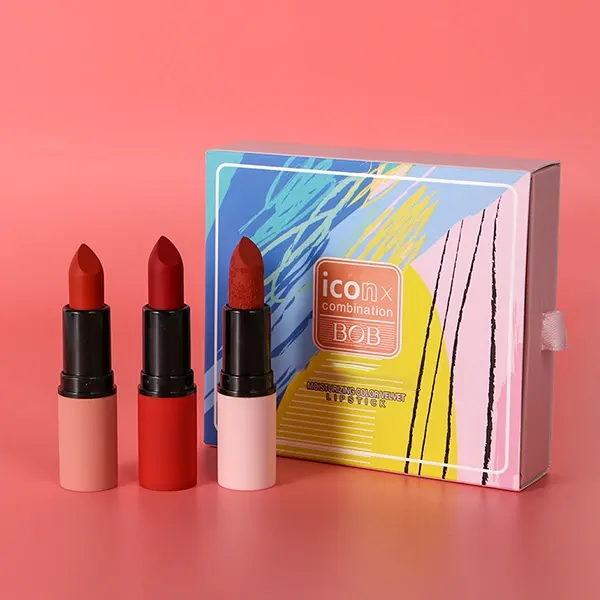
Paper-based packaging provides a renewable and highly recyclable option for lipstick cartons, sleeves, and tubes. Using certified paper and minimalist designs reduces material use, lowers shipping costs, and meets strong consumer demand for responsible products.
FSC-Certified Paper
Using fibers from certified sources like the Forest Stewardship Council (FSC) supports renewable resource cycles and provides clear material traceability. This verification confirms that the paper comes from well-managed forests, which aligns with consumer expectations for responsibly sourced products.
Sourcing FSC-certified paper also helps your brand meet evolving regulatory standards. It builds a stronger, more credible story around forest stewardship that resonates with environmentally conscious buyers.
Lightweight Designs
Minimalist structural designs reduce the overall grammage and board consumption for each lipstick package. This strategy focuses on eliminating unnecessary elements like inserts, false bottoms, or oversized secondary cartons to cut down on waste.
Right-sizing the packaging reduces material use and also lowers shipping costs and the product’s overall carbon footprint. This approach helps align your packaging with key goals like the EU’s waste reduction targets.
Idea 4: Bamboo and Renewable Materials
Using bamboo and other renewable materials in lipstick packaging offers a powerful way to signal a commitment to sustainability. These materials provide a unique, natural look that differentiates products from conventional plastic tubes, supporting an eco-luxury brand position. As a fast-growing and biodegradable resource, bamboo helps reduce plastic waste and landfill burden, especially when used in durable, refillable systems.
Natural Appearance
The natural grain and warm texture of bamboo provide a strong visual differentiation from conventional plastic lipstick tubes. This aesthetic helps establish a premium, eco-luxury positioning on the shelf.
This unique look and feel help brands communicate a commitment to sustainability, as consumers often associate bamboo with higher quality and ethical standards.
Sustainability Benefits
Bamboo is a rapidly renewable resource that matures in just 3–5 years. It typically requires minimal water, pesticides, or fertilizers to grow, reducing its agricultural footprint.
As a biodegradable material, bamboo reduces the long-term burden on landfills. Its durability also makes it ideal for refillable lipstick systems, which extends the packaging’s life and minimizes waste.
Idea 5 Mono-Material Packaging
Mono-material packaging means engineering the entire lipstick—from the cap and base to the internal mechanism—from a single type of plastic like polypropylene (PP). This approach eliminates the mixed materials that make conventional tubes nearly impossible to recycle, allowing the whole unit to enter a single, clean recycling stream.
Improved Recyclability
Traditional lipstick tubes often combine different plastics, metals, and adhesives. This complexity makes them contaminants in most municipal recycling systems, so they frequently end up in landfills.
Our mono-material design solves this problem. By making every part from a single, compatible polymer, we ensure the entire package can enter one recycling stream without causing issues.
This directly increases the likelihood that the packaging will actually be reclaimed and reprocessed into new products, supporting a genuine circular economy for cosmetics.
Simplified Material Recovery
The mix of materials in standard lipsticks creates a major challenge for recovery facilities. Separating small, bonded parts is often too complex and costly to be practical, leading to high rejection rates.
A mono-material design completely streamlines this process. Customers don’t need to disassemble the lipstick before disposal, removing a significant barrier to effective recycling.
For recycling facilities, this approach means less contamination in their material streams. It results in a higher yield of quality recycled material and supports a more efficient, economically viable operation.
How to Choose Sustainable Packaging for Your Brand
Choosing the right sustainable packaging involves balancing your brand’s environmental goals with practical needs like product safety, consumer convenience, and regulatory compliance. The best solution reduces environmental impact but still protects your lipstick formula, works within real-world recycling systems, and strengthens your brand identity.
Balancing Brand Goals with Material Performance
Product safety always comes first. Before committing to a material, you must test its compatibility with your lipstick formula. This ensures the packaging does not cause the formula to degrade, change color, or leach any unwanted substances, protecting both the product and your customers.
Next, define your main sustainability objective. Are you aiming to reduce virgin plastic use, design a premium refillable system, or improve the recyclability of your packaging? A clear goal helps narrow down material choices and focuses your design efforts on what matters most to your brand and audience.
Your packaging should reflect your brand’s position in the market. A luxury line might succeed with a durable, weighty refillable case made from metal or high-quality recycled plastics. A mass-market brand could make a bigger impact by switching to lightweight, recyclable PCR plastics that are accessible to more consumers.
The final design must also be convenient. Customers expect packaging that is easy to open, use, and carry. A sustainable design that is difficult to handle or fails to protect the lipstick in a purse or travel bag will not earn customer loyalty, no matter how eco-friendly it is.
Designing for Effective End-of-Life Management
To make recycling easier, use mono-materials whenever possible. A lipstick tube designed with fewer material types, such as a PP-based mono-material structure, may be easier to process than complex assemblies containing multiple materials. Reducing the number of different materials in a single component increases the chances it will actually get recycled.
When multiple materials are necessary, design them for easy disassembly. If a customer can easily separate a metal shell from a plastic insert, each part can go into its correct recycling stream. Snap-fit components are often better than permanent glues for enabling this separation.
Align your chosen end-of-life path with real-world infrastructure. A compostable material is only a good solution if your customers have access to industrial or home composting facilities. Similarly, a recyclable plastic is only effective if local systems actually accept and process that specific type of small cosmetic packaging.
Finally, provide clear, simple instructions. Use on-pack labels or QR codes to show customers exactly how to refill, reuse, or dispose of the packaging. Guiding them through the process helps ensure your sustainable design achieves its intended environmental benefit.
Reflexiones finales
Choosing lipstick packaging based only on sustainability claims may create challenges for formula compatibility, packaging performance, and long-term brand development. As an experienced cosmetic manufacturer, we help beauty brands select sustainable packaging solutions that balance product quality, design requirements, and market expectations.
From refillable systems to mono-material designs, our OEM/ODM lipstick solutions support brands in developing customized products with suitable packaging options. Request samples to evaluate our packaging quality and finish, and discuss your next lipstick project with our team.
Frequently Asked Questions
What are some sustainable lipstick packaging ideas for eco brands?
Eco-conscious brands have several effective options for sustainable lipstick packaging. Key ideas include: Refillable systems, where a durable outer case made of metal or high-quality recycled plastic is kept and reused with replaceable lipstick bullets. Mono-material designs use a single type of plastic, like polypropylene (PP), for all components to simplify recycling. Tubes made from recycled plastics (PCR) reduce the need for new fossil-fuel-based materials. For a plastic-free approach, paperboard or bamboo tubes with a push-up mechanism are practical choices. Brands also practice material reduction by creating minimalist designs that eliminate unnecessary layers or inserts, lowering the overall environmental footprint.
Can a lipstick tube be made entirely from biodegradable paper?
Yes, a lipstick tube can be made entirely from biodegradable paper, but it requires a different design from traditional twist-up mechanisms. These designs typically use a rigid, plastic-free paperboard or kraft paper structure with a manual push-up disk at the base to advance the product. To be fully biodegradable, these tubes must use plant-based, compostable coatings for oil resistance instead of plastic liners, along with water-based adhesives and soy-based inks. While they work well for solid lipsticks and balms, the design is limited to this push-up style, as complex twist-up mechanisms still require more durable plastic or metal components.
What is PCR plastic and what is the maximum percentage safe for makeup?
PCR stands for Post-Consumer Recycled plastic, which is material recovered from waste that consumers have already used and discarded. This plastic is cleaned, processed, and turned back into resin pellets to create new packaging. There is no universal maximum percentage of PCR that is considered safe for all makeup. Instead, the amount used is determined by the packaging’s functional requirements. Brands often use a blend of PCR and virgin plastic to achieve the right balance of strength, clarity, and formula compatibility. While some components can be made with 100% PCR, the final percentage is a technical choice based on performance and aesthetic needs, not a fixed safety limit.
Do eco-friendly lipstick containers affect the shelf life of the formula?
Yes, the material and design of any container can affect a formula’s shelf life. A sustainable material doesn’t automatically shorten it, but the packaging must provide adequate protection from air, light, and moisture. For example, opaque materials like aluminum or tinted glass offer excellent protection and can even extend the shelf life of sensitive formulas. Recycled plastics (PCR) can perform just like their virgin counterparts if specified correctly. However, more porous materials like paper or certain bioplastics may require an internal barrier lining to prevent the formula’s oils from oxidizing or drying out. Ultimately, shelf life depends on the functional performance of the package, not just its eco-friendly label.
How do you recycle a multi-material cosmetic component after use?
Recycling multi-material components like lipstick tubes is challenging for standard curbside programs. First, check the packaging for any specific recycling labels or instructions. If possible, disassemble the component and separate the parts by material type—for example, a plastic cap from a metal base. Always clean out any remaining product. Since local recycling rules vary widely and often exclude small cosmetic items, the best option is to use a brand or retail take-back program. These specialized schemes are designed to collect and properly process hard-to-recycle beauty packaging.
How does Siloran support sustainable lipstick packaging development?
Siloran helps brands explore sustainable lipstick packaging options by providing customized cosmetic manufacturing solutions and supporting material selection based on product requirements. Brands requiring specific environmental certifications can discuss documentation requirements during the development process.

 Spanish
  English
  Arabic
  Dutch
Dutch  French
  Portuguese
  Russian