

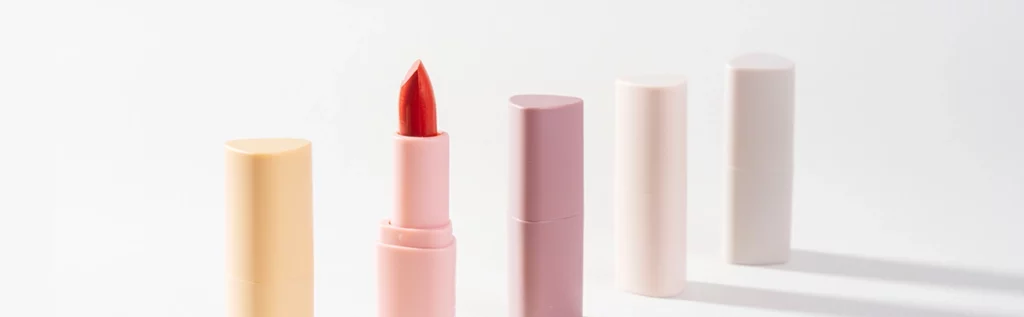
Understanding what causes lipstick sweating is the first step to improving product stability and reducing quality risks. This stability issue, a form of oil separation called syneresis, can affect product appearance, customer satisfaction, and brand reputation, especially when lipsticks are exposed to heat and humidity during storage or transportation.
This article explains how formula design and manufacturing controls influence lipstick stability, including wax selection, oil compatibility, cooling processes, and stability testing methods commonly used in cosmetic production.
What Is Lipstick Sweating?
Lipstick sweating is when oils separate from the wax base and form droplets on the surface. It’s a cosmetic defect triggered by heat and signals an unstable formula.
The Core Definition: Oil Droplets on the Surface
Lipstick sweating is the appearance of small liquid droplets on the surface of a lipstick bullet. This typically occurs after the product has been exposed to high temperatures or humidity.
These droplets are not water. They are primarily oils and other liquid components that have separated and migrated out of the lipstick’s solid wax and oil base.
In cosmetic manufacturing, lipstick sweating is considered a stability issue because it can affect product appearance, texture consistency, and consumer perception of quality before the product is used.
Syneresis and Its Impact on Product Quality
From a technical standpoint, lipstick sweating is a form of phase separation called syneresis. It’s a common stability challenge for any semi-solid product that holds liquid within a structured matrix.
In most cases, a bit of light sweating doesn’t mean the product has microbial spoilage or is unsafe to use. The fundamental formula is only slightly changed.
While the lipstick is often safe, the issue can alter its appearance, texture, and long-term performance. This can lead to consumer disappointment and damage a brand’s reputation for quality.
Common Causes of Lipstick Sweating
Lipstick sweating is just oil separating from wax. It’s a stability defect caused by incompatible ingredients, heat, humidity, or flawed cooling during production.
Oil and Wax Separation
Lipsticks are a carefully balanced mixture of oils and waxes. Sweating happens when these ingredients are not fully compatible and start to separate. A lipstick formula is only stable when the solid wax network effectively traps the liquid oils. When that structure becomes unstable, the oils migrate to the surface and form visible droplets.
Temperature Changes
Heat is a primary trigger for lipstick sweating. High temperatures soften the waxes in the formula, which weakens their ability to hold onto the liquid oils and can push them out onto the surface. Lipsticks exposed to repeated cycles of heating and cooling are far more likely to sweat. This fluctuation destabilizes their internal structure over time.
Humidity Exposure
Hot and humid environments can increase stress on lipstick formulas by accelerating temperature-related changes and oil migration. Sweating is more likely to occur when products experience high temperatures, repeated heat cycles, or insufficient formula stability during storage and transportation.
Improper Cooling During Production
The manufacturing process plays a key role in stability. If a lipstick is cooled too quickly or unevenly after being poured into the mold, its internal wax and oil structure may not set correctly. This creates an unstable structure from the very beginning, making the product much more prone to oil separation later in its lifecycle.
Create Bestselling Lipsticks for Your Brand.
How Formula Design Affects Lipstick Stability
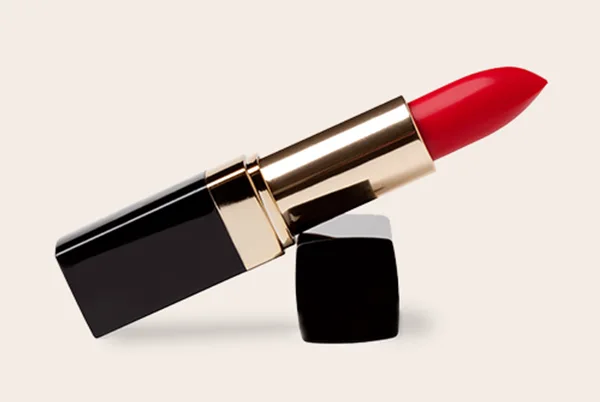
Lipstick stability is a direct result of its formula. The right wax blend, compatible oils, and a sufficient melting point prevent softening and sweating under stress.
Wax Selection
Waxes like beeswax, candelilla, and carnauba are the backbone of a lipstick. They form a crystalline network that traps oils, providing the stick’s structure and hardness. This physical scaffolding is the first line of defense against instability.
The specific blend and ratio of these waxes are critical. An optimized mix can dramatically reduce oil migration and the appearance of sweating. It’s not just about total wax content, but the interaction between different wax types.
Formulators may also incorporate branched-chain or synthetic waxes to adjust crystal structure and improve the formula’s ability to retain oils under different temperature conditions.
Oil Compatibility
Lipstick stability relies heavily on the polarity match between the oils and waxes. When their polarities are similar, they form a much more homogenous and stable mixture, reducing the natural tendency to separate over time.
Low-viscosity, lightweight oils are more mobile and present a higher risk of sweating. They can easily escape the wax network, especially when temperatures rise. These oils are great for feel but are a known stability challenge.
Using higher-viscosity, heavier emollients is a key strategy to anchor the liquid phase within the wax structure. These oils are less mobile and help prevent the entire system from bleeding or migrating to the surface.
Heat Resistance Performance
A formula’s melting point is dictated by its wax blend and directly determines its structural integrity at higher temperatures. If the melting point is too low, the stick will soften and lose its shape.
A balanced wax-to-oil ratio helps improve heat stability while maintaining a comfortable application feel. Excessive wax content may increase hardness, so formulators typically optimize the ratio based on texture, performance, and market requirements.
Controlled processing, especially slow and deliberate cooling, fosters a stronger and more uniform crystal network. This manufacturing step is crucial because a well-formed structure enhances both heat resistance and the formula’s ability to retain oil.
How Manufacturers Prevent Lipstick Sweating
Manufacturers stop lipstick sweating with a three-part strategy: controlling the production process, managing the cooling and curing, and using smart packaging and storage protocols.
| Production Process Control | Cooling and Curing Systems | Packaging and Storage |
|---|---|---|
|
|
|
How Lipstick Stability Is Tested
Lipstick stability testing isn’t just about making sure it doesn’t melt. It’s a series of controlled stress tests that predict how a formula and its packaging will survive the journey from the factory to a customer’s purse in a hot car. It all comes down to heat, humidity, and time.
Heat Resistance Testing
This is the most direct way to evaluate sweating risk. Lipsticks are placed under elevated temperature conditions, often around 45°C, to simulate potential heat exposure during storage or transportation. Technicians may also run temperature cycling tests, moving samples between lower and higher temperature conditions (such as 10°C and 45°C) to mimic thermal stress during distribution.
They are looking for specific failure points: oil droplets forming on the surface, oil rings at the base of the bullet, or any structural softening or slumping. This test directly evaluates if the formula’s core oil-and-wax structure can hold itself together under thermal pressure.
Humidity Testing
Heat and moisture often go together, so formulas are also challenged in high-humidity chambers. Placing samples under conditions such as 40°C and 75% relative humidity can help evaluate how environmental factors affect product stability.
This helps technicians distinguish between simple water condensation on the surface and true oil sweating, which can look similar at first glance. It also stress-tests the packaging. A cheap plastic component might warp or fail under these conditions, creating gaps that allow oil to leak and cause sweating around the tube’s neck.
Shelf-Life Evaluation
Shelf-life studies combine heat, humidity, and light exposure over a longer period to predict how long a lipstick will remain stable and sellable. This involves both accelerated and real-time testing.
An accelerated study, for example, may expose a lipstick to elevated temperatures such as 45°C for several weeks to evaluate potential stability risks. These results are validated against real-time studies where samples sit at room temperature.
A lipstick stability evaluation typically considers factors such as sweating, color changes, odor, texture, and overall product performance throughout the evaluation period.
How to Choose a Reliable Lipstick Manufacturer
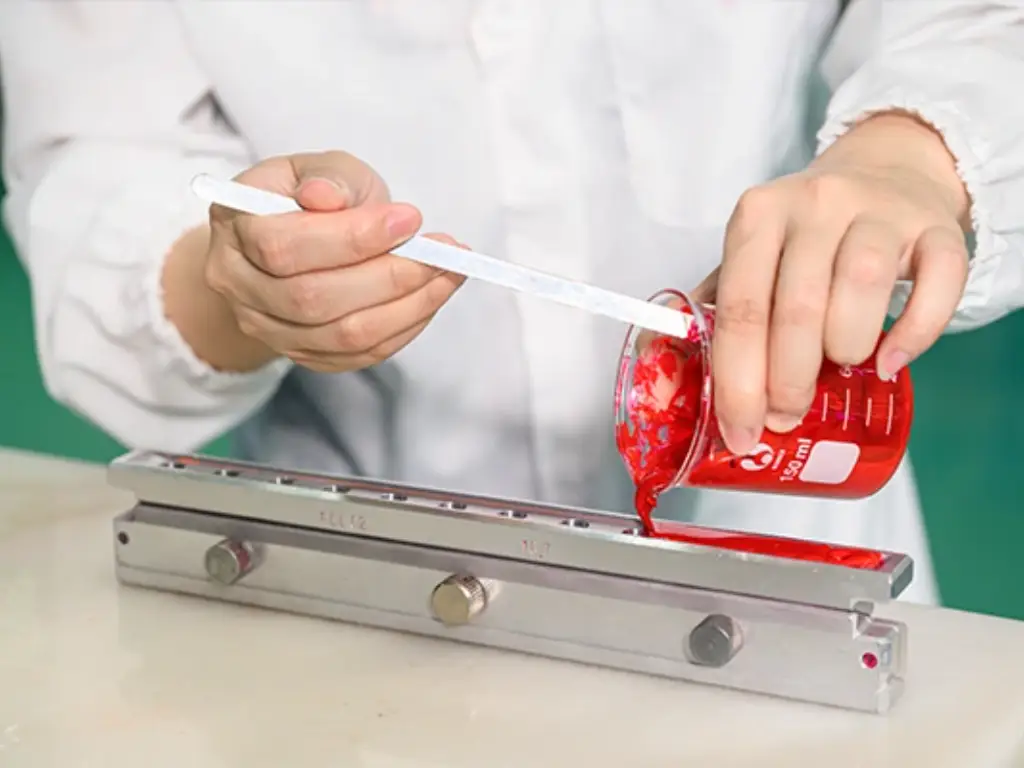
Choosing a lipstick partner is about proof. They must demonstrate deep control over the formula, process, and QC to prevent sweating—not just talk about it.
Evaluate Their Technical Expertise and Stability Testing
Any manufacturer can mix wax and oil. A reliable partner understands exactly why a lipstick fails. You need to vet their core technical knowledge on sweating, which is essentially oil bleeding out of the wax structure. Ask them to explain how they manage oil-wax compatibility, temperature shifts, and even the way pigments can disrupt the formula’s stability. Vague answers are a major red flag.
A capable formulator should also understand how different ingredients affect lipstick stability and how to adjust the formula accordingly. This may include optimizing wax systems, selecting suitable structuring agents, and balancing oil levels to create a stable internal structure.
Don’t just rely on conversation; demand to see the data. A serious manufacturer will have stability reports to back up their claims. Specifically, you should request:
- Accelerated Heat Data: Proof that their lipsticks can withstand high heat (40-50°C) without significant sweating or deforming. This simulates a product left in a hot warehouse or car.
- Humidity Testing Results: Data showing performance under high humidity conditions (around 75% RH), which can worsen oil migration in some formulas.
- Temperature Cycling Reports: Evidence from tests that cycle between hot and cold conditions, which mimic the stress of real-world shipping and are a major trigger for sweating.
Audit Their Manufacturing Process and Quality Control
A well-designed formula requires consistent manufacturing control to deliver stable and reliable lipstick performance.The manufacturing process directly impacts the final wax crystal structure that holds the lipstick together.
Brands should evaluate whether manufacturers have documented controls for key parameters such as molding temperature, cooling conditions, filling processes, and finishing procedures when applicable. Small deviations here can lead to big stability problems down the line.
A manufacturer is only as good as its raw materials. Inquire about their sourcing and incoming quality control (IQC) for the most critical ingredients. Do they test the melting point of every batch of wax? Do they check the viscosity and peroxide value of their oils to ensure consistency and prevent oxidation? This level of scrutiny is not optional for producing a stable product.
Finally, check their quality system. They need to be operating under a recognized framework like ISO 22716 (Cosmetic Good Manufacturing Practices). This isn’t just about a certificate for the wall. It ensures they have robust protocols for everything, from raw material traceability to handling customer complaints about sweating. Ask them how they manage a non-conforming batch and what their corrective action process looks like. A professional operation will have clear, confident answers.
Часто задаваемые вопросы
Why does my lipstick look like it’s sweating droplets?
Lipstick ‘sweating’ happens when oils or emollients separate from the wax base and form small droplets on the surface. It is a physical stability issue, not water. This is often caused by temperature changes, heat exposure, or simply the age of the product. Creamier formulas are more likely to sweat. A small amount is usually harmless. You can help prevent it by storing lipstick in a cool, dry place away from direct sunlight. If the sweating is heavy or comes with changes in texture, color, or smell, it is best to replace it.
Is a sweaty lipstick safe to use?
In most cases, yes. The droplets are oils from the formula, and traditional lipsticks are poor environments for microbial growth. Minor sweating is more of an aesthetic issue than a safety one. The product is generally safe to use if the sweating is minimal and there are no other changes in color, texture, or smell. You should replace the lipstick if the sweating is heavy, or if the stick becomes grainy, crumbly, or has a rancid odor, as these signs indicate its quality is compromised.
How can I stop my lipstick from looking sweaty in a humid climate?
To prevent lipstick from migrating or looking ‘sweaty’ on your lips in humid weather, choose long-wear, transfer-resistant, or matte formulas. They hold up better against moisture. Apply lipstick in thin layers on clean, dry lips for better adhesion. Avoid layering heavy balms or glosses on top, as they can cause the color to break down. Setting the makeup around your mouth with powder also helps prevent smudging.
What kind of waxes give lipsticks the best heat stability?
Waxes with suitable melting points play an important role in improving thermal stability and reducing the risk of sweating. Carnauba wax (melting point around 80–86°C) provides hardness and heat resistance. Sunflower seed wax (around 78°C) can help strengthen the wax structure and improve oil retention. Candelilla wax (around 68–73°C) also contributes to hardness and stability. Formulators often blend these with softer waxes to balance heat resistance with a smooth application.
What is the standard temperature limit for a bullet lipstick?
Many bullet lipsticks are tested under elevated temperatures such as 40–45°C to evaluate heat resistance and sweating risks. For regular storage, 15–25°C (59–77°F) is commonly recommended, depending on the formula and manufacturer guidelines. Higher temperatures may increase the risk of softening and oil separation. Some formulas may also undergo stress testing at 50°C, but this does not represent normal storage or transportation conditions.
Заключительные мысли
Choosing a reliable cosmetics manufacturer based on price alone can increase quality risks during production and after launch. Lipstick sweating is not only an appearance issue but also a factor that can affect inventory management, customer satisfaction, and brand reputation. A professional cosmetics manufacturer should have proven stability testing, documented quality control procedures, and the technical capability to maintain consistent product performance.
Instead of relying on promises, brands should review stability reports, production capabilities, and quality assurance processes before selecting an OEM/ODM partner. Contact our team to discuss lipstick development, testing protocols, and customized manufacturing solutions for your next project.

 Russian
  English
  Arabic
  Dutch
Dutch  French
  Portuguese
  Spanish