

Printing your logo on lipstick packaging is not just a design choice. The printing method directly affects production cost, durability, and how customers perceive your brand. Choosing the wrong decoration method can result in poor adhesion, inconsistent finishes, or a packaging appearance that does not match your brand positioning.
This guide compares four common lipstick logo decoration methods: silk screen printing, hot stamping, pad printing, and laser engraving. We explain their tooling requirements, cost considerations, and material compatibility to help brands choose the right option for their packaging.
Logo Decoration Methods for Lipstick Packaging
The right logo decoration method depends on the lipstick component material, design complexity, surface shape, and order volume. Understanding the structure and options of lipstick packaging is also essential because different materials and finishes can affect printing performance.
Silk Screen Printing
This method uses a mesh screen to force ink onto the lipstick component. It applies an opaque ink layer that creates clear and durable logo graphics on lipstick components.
- Ideal for simple logos with 1-3 solid colors on coated plastic or metal lipstick components.
- Produces bright, durable graphics that stand out, even on dark-colored packaging.
- Cost-effective for medium to large production runs with a consistent logo design.
Hot Stamping
Hot stamping applies a thin layer of metallic or pigmented foil using a heated die and pressure. It is widely used when brands want a premium metallic finish without traditional ink printing.
- Creates a high-end, glossy logo, typically in gold, silver, or rose gold.
- Since hot stamping transfers foil through heat and pressure rather than liquid ink, it does not require ink drying time before the next production step.
- This is the standard for achieving a luxury metallic look on lipstick cases and outer boxes.
Pad Printing
Here, a soft silicone pad acts like a stamp, transferring ink from an etched plate onto the lipstick surface. Its flexibility is its biggest strength.
- Perfect for printing on small, curved, or irregularly shaped parts like lipstick caps and bases.
- Captures fine lines and small details for logos, icons, or shade numbers in tight spots.
- Offers great flexibility with lower tooling costs, making it suitable for designs on complex surfaces.
Laser Engraving
This process uses a laser beam to physically etch the logo into the lipstick case, removing a thin surface layer. No ink or foil is involved.
- Creates a permanent, sharp mark that cannot fade, peel, or rub off.
- Often used for metal lipstick cases when brands want a permanent, understated premium finish.
- Allows flexible customization, such as names or serial numbers, without creating traditional printing plates or stamping dies.
Custom Logo Designs on Lipstick Bullets
Custom lipstick bullet designs can be created through molding processes or post-production decoration. The best option depends on the formula, design complexity, and production volume. Understanding the complete lipstick manufacturing process also helps brands choose the right customization method at each production stage.
Embossed Lipstick Bullets
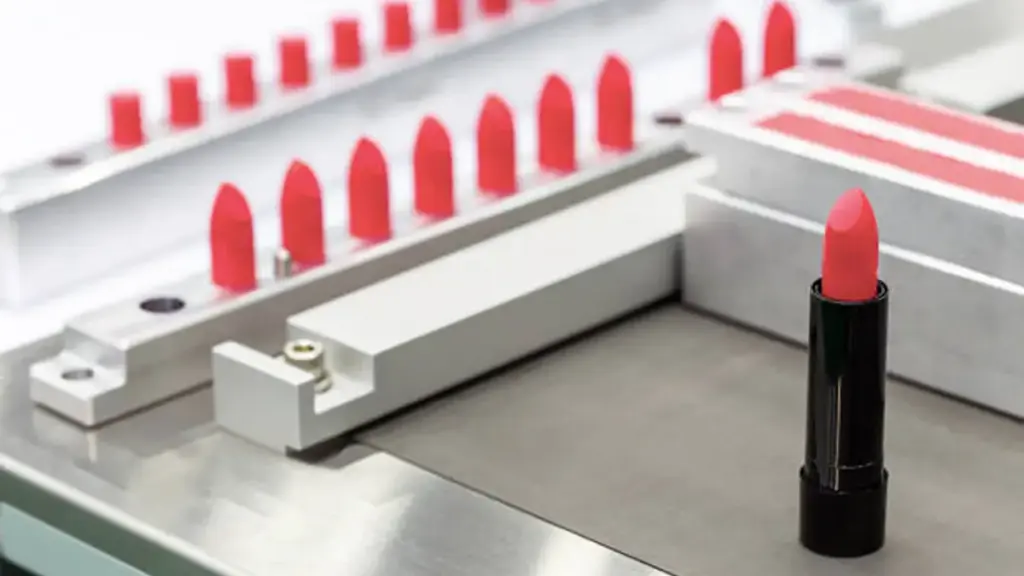
For embossed lipstick bullets, the logo is incorporated into the mold design so the pattern is formed during the lipstick molding process. During the molding process, the lipstick formula takes the shape of the customized mold design, creating a raised or recessed logo on the bullet surface. This process is built for scale. Once the mold is made, every single bullet has the logo with no extra decoration step. The trade-off is the significant upfront investment in precision-machined tooling. This method works best for simple, bold logos that can release cleanly from the mold and won’t easily break or deform during use.
Laser Engraved Lipstick Bullets
Laser engraving can achieve detailed surface designs after molding, but testing is required to ensure the formula maintains its appearance and structure during the process. This approach offers great flexibility for limited editions or personalized products because the designs are digital. You avoid the high cost of custom molds but add a per-piece processing cost, making it a better fit for smaller volumes. Engraving can also achieve much finer detail than embossing, but the equipment must be carefully calibrated to the lipstick’s formula to get clean, sharp lines without melting or smearing the product.
Your One-Stop Solution for Custom Lipsticks.
How to Choose the Right Logo Decoration Method
Your branding method depends on three factors: your budget, your packaging material, and your market position. Aligning these is critical for matching cost with brand perception.
| Decision Factor | Low-Budget / Mass-Market | Mid-Range / Masstige | High-End / Luxury |
|---|---|---|---|
| Budget Strategy | Focus on low setup costs. Use pressure-sensitive labels or digital printing on outer cartons for small runs. | Balance upfront tooling with per-unit costs. Screen printing and hot foil stamping become viable as volume grows. | Invest in premium tooling like embossing or engraving. This works for brands with higher margins to absorb the cost. |
| Material Match | Use versatile paperboard cartons for branding. Simple prints and labels work well on standard plastic tubes. | Screen printing and hot foil are great for plastic components. Use pad printing to handle curved or uneven surfaces. | Engraving and embossing are ideal for metal cases. Always run durability tests to check resistance to friction and oils. |
| Brand Experience | Aim for clear, efficient recognition. A single-color screen print gets the job done without breaking the bank. | Add premium touches. Hot foil on the carton or a multi-color print on the component elevates the unboxing experience. | Create a tactile experience. Use deep embossing, engraving, or complex finishes on weighted components to signal quality. |
Budget
Your budget is the first filter for choosing a branding method. The real cost isn’t just the price per lipstick; it’s a trade-off between upfront tooling fees and the cost for each unit you produce.
- Weigh fixed tooling and setup fees against the variable per-unit costs for ink, foil, and labor.
- If you have a tight budget or a small run, pick methods with low upfront costs, like pressure-sensitive labels or digital printing on cartons.
- Screen printing and hot foil stamping get cheaper per unit as your volume increases, because you spread the initial setup cost over more items.
- High-end options like embossing or engraving require a serious investment in tooling, making them a fit only for premium brands with healthy margins.
Packaging Material
The material of your lipstick component dictates what’s possible. A technique that works perfectly on a plastic tube will fail on a metal case. The shape and finish also limit your options.
- Match the branding technique to the component material. Screen printing and foil work well on plastic, but engraving is better suited for metal.
- Factor in the component’s shape. Pad printing is designed for curved or uneven surfaces where other direct printing methods can’t get a clean result.
- Don’t forget the outer paperboard carton. It gives you versatile branding options like offset printing, foiling, embossing, and spot UV finishes.
- Always run durability tests. Make sure the logo can withstand friction, oils, and general handling throughout the product’s life.
Brand Positioning
Finally, the branding method must align with your brand’s place in the market. A luxury brand using a cheap-looking label sends a confusing message, just as a mass-market brand overspending on engraving makes no financial sense.
- Mass-market brands should stick to clear and efficient methods like single-color screen printing to ensure recognition while keeping costs low.
- Mid-market brands can boost their appeal with premium touches, such as hot foil on cartons or a multi-color print on the lipstick component.
- Luxury brands need methods that create a tactile experience. Deep embossing, engraving, or multi-process finishes on weighted components justify a higher price point.
- Eco-conscious or artisanal brands can use minimal-ink techniques like blind embossing on recycled paper to reinforce their values.
How Much Does Lipstick Logo Printing Cost?
Logo printing costs split into two main parts: an upfront fee for the printing tools and a per-piece charge for the actual printing and packaging.
One-Time Setup and Tooling Fees
Before any printing starts, you’ll pay a one-time fee to create the physical tools for your logo. This isn’t a design fee; it’s the cost to make the printing plates, screens, or metal dies needed for production. This cost covers the engraving of your logo onto the tool and the initial machine calibration. Expect to pay this fee once for each unique design.
- Silk Screen / Pad Printing Plate Fee: Tooling fees vary by supplier, logo complexity, and component size. Screen printing plates are usually lower cost, while custom hot stamping dies require higher upfront investment.
- Hot Stamping Die Fee: Hot stamping usually requires a custom metal die, which generally involves a higher upfront tooling cost compared with standard printing plates.
If you change the logo, its size, or the shape of the lipstick component, you will need a new tool and will have to pay this setup fee again.
Per-Unit Printing and Packaging Costs
After the setup fee, there is a per-unit cost for applying the logo to each lipstick component. This price is added on top of the base cost of the empty tube or cap. The final cost depends on the printing method, order volume, and number of colors.
- Single-Color Printing (Silk Screen/Pad): Cost depends on order quantity, logo size, ink colors, and component type. Higher production volumes usually reduce the cost per unit.
- Hot Stamping (Foil Logo): Usually runs $0.08–$0.25 per unit, with metallic foils like gold or silver being a popular choice.
- UV Digital Printing: For full-color or complex logos on small runs, the cost is higher, around $0.15–$0.40 per unit.
Don’t forget the outer packaging. A custom-printed lipstick box adds to the total cost, typically starting around $0.50 to over $1.00 per box, depending on the material, printing, and any special finishes like foil or embossing.
Working with an OEM Manufacturer for Custom Lipstick Packaging
When developing custom lipstick products, logo printing is only one part of the complete manufacturing process. Working with an experienced OEM/ODM cosmetic manufacturer helps brands coordinate packaging design, formula development, production, and quality control in one streamlined process.
Guangdong Siloran Cosmetics Co. specializes in color cosmetics and skincare manufacturing, offering OEM and private label solutions for lipstick, lip gloss, eye makeup, and other cosmetic products. With a modern 40,000-square-meter production facility, GMP-certified workshops, and ISO22716 quality management standards, Siloran supports brands from product development to mass production.
The company provides customized solutions including formula selection, packaging design, and product customization based on different market requirements. Advanced filling and packaging equipment, combined with strict production monitoring, helps ensure consistent product quality for international customers.
For brands looking to launch custom lipsticks with unique packaging and reliable supply, partnering with a manufacturer experienced in cosmetic production can simplify development and improve production efficiency. Brands planning to enter this market can also learn more about how to start a lipstick business and prepare for product development, sourcing, and production decisions.
Заключительные мысли
Lower-cost decoration methods can work well for many products, but they should still be tested for adhesion, durability, and overall appearance before mass production. Aligning the decoration technique to your specific material, budget, and market position is the only way to protect your product launch. It ensures your packaging delivers the exact brand message you intended.
Before mass production, requesting samples allows you to compare finishes and confirm that the selected printing method meets your expectations. We recommend requesting a sample kit to feel the difference between hot stamping, screen printing, and engraving firsthand. Свяжитесь с нашей командой to review your design files and lock in the right technical specifications for production.
Frequently Asked Questions
How do you print a logo on lipstick cases?
Printing a logo on lipstick cases involves several methods. Common choices include silk screening for vibrant, single-color logos on plastic or metal, and hot stamping for a premium metallic look. Pad printing works well for curved or irregular surfaces, while digital UV printing is ideal for short runs or full-color designs. The best method depends on the case material, shape, production volume, and desired finish.
What is a custom embossed lipstick bullet?
A custom embossed lipstick bullet has a logo or pattern molded directly onto the surface of the lipstick itself, not just the packaging. It’s made by pouring the molten lipstick formula into a specialized mold that has the design engraved into it. As the lipstick cools and hardens, it takes on the shape of the mold, including the embossed design, creating a unique brand statement.
Can lipstick packaging include a custom brand logo?
Yes. Lipstick packaging can be customized with different logo decoration methods, including silk screen printing, hot stamping, pad printing, and laser engraving. The suitable option depends on the packaging material, design requirements, and production volume.
What is pad printing for makeup components?
Pad printing is a technique used to transfer a 2D logo onto a 3D object, like a lipstick tube or cap. It uses a soft silicone pad to pick up ink from an etched plate and press it onto the cosmetic component. Its flexibility makes it perfect for printing fine details and logos on curved, uneven, or textured surfaces where other methods might fail.
Can a logo with fine lines be printed on a shiny metallic lipstick tube?
Yes, you can print a fine-line logo on a shiny metallic tube with careful planning. Methods like UV digital printing or silk screening are suitable. The key is to use high-contrast ink colors and ensure the artwork’s lines are thick enough to print clearly without breaking up. The tube’s surface may also need a special primer to ensure the ink adheres properly and resists scratching.
Are the inks for custom logo printing safe and scratch-resistant?
Yes, the inks are safe and durable when industry standards are followed. Printers use specialized cosmetic packaging inks, like UV-curable inks, formulated to be low-migration and free of harmful substances. These inks are applied to the exterior packaging, not the product itself. Proper curing creates a hard film that is highly resistant to scratches and abrasion from daily handling.

 Russian
  English
  Arabic
  Dutch
Dutch  French
  Portuguese
  Spanish