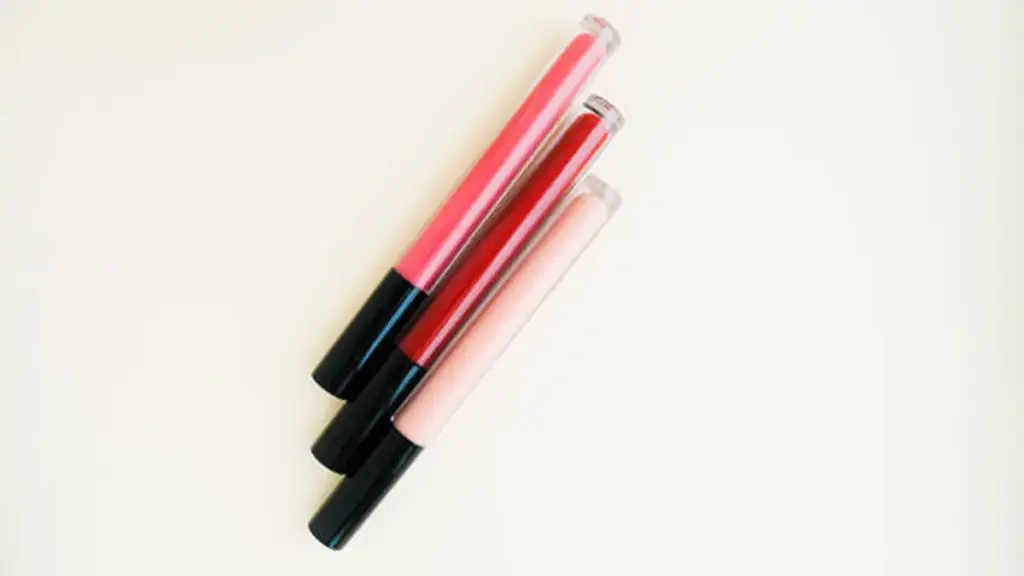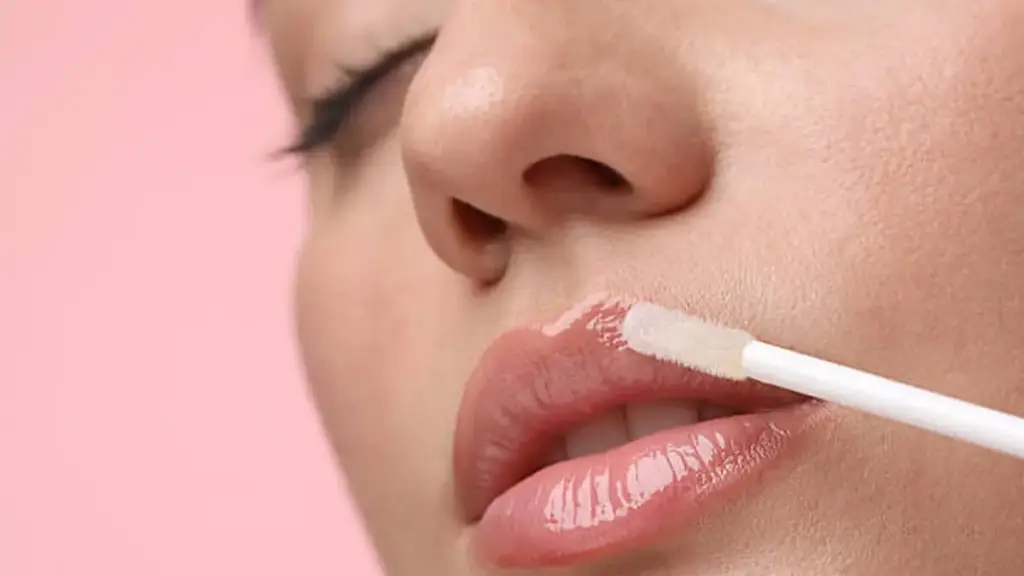

Understanding why lipstick texture changes in heat is critical for preventing costly product returns and failed market entries. A formula that sweats, breaks, or turns grainy during shipping or on a retail shelf directly erodes profit margins and damages brand reputation, especially in high-temperature regions.
This analysis explains why lipstick texture changes in heat and evaluates the formulation and manufacturing controls that prevent it. We examine how wax selection, such as high-melting-point carnauba, and controlled cooling processes prevent structural failure, ensuring product integrity during accelerated stability tests at 45°C and above.
Why Lipstick Texture Changes in Heat
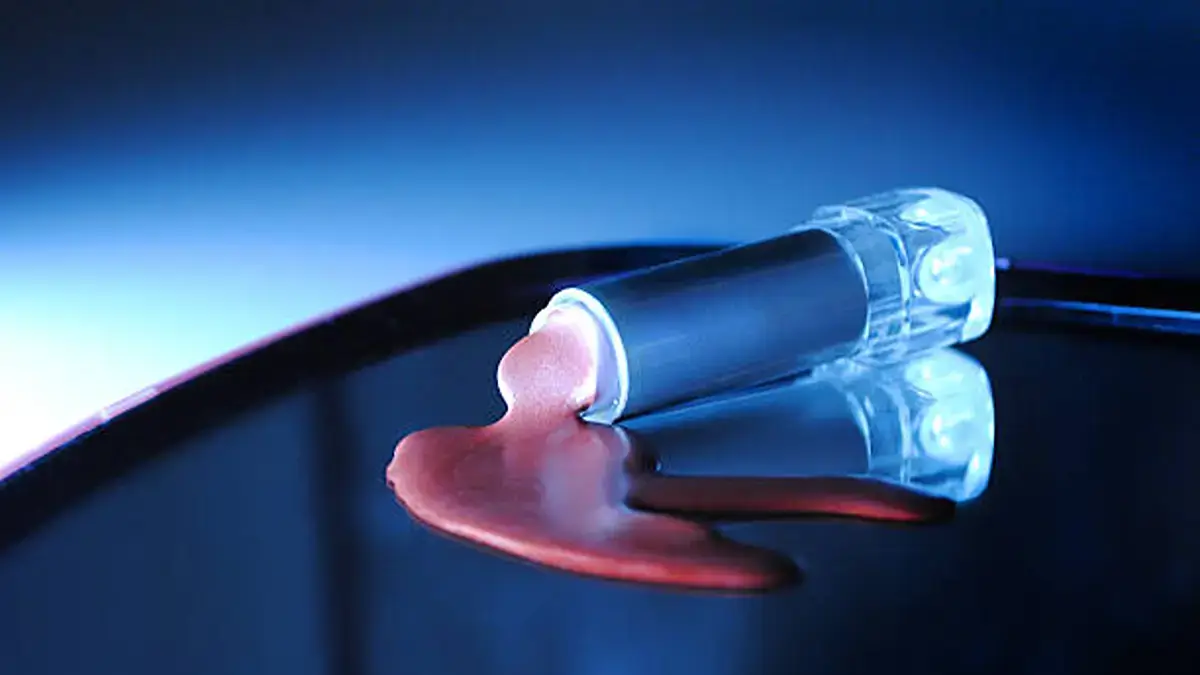
Heat disrupts a lipstick’s core wax and oil structure, causing it to soften, “sweat” oil, or turn grainy. This directly degrades its application, color, and stability.
Weakening of the Wax and Oil Structure
A lipstick gets its solid shape from a crystalline network of waxes. Think of it as a scaffold that traps the oils and color pigments in place. When exposed to heat, this network relaxes and weakens. The bullet softens, loses its shape, and can even start to melt if the temperature gets high enough.
The real problem often appears after the product cools down again. The waxes do not always reharden into their original smooth arrangement. They can recrystallize improperly, forming larger, perceptible crystals. Constant cycles of warming and cooling during transit and retail storage are what drive this uneven resetting of the internal structure.
Oil Migration and Sweating
As the wax structure loosens, it loses its grip on the oils in the formula. Those oils also become thinner and more mobile at higher temperatures, so they are forced along the path of least resistance and seep out onto the surface as small droplets. This is commonly known in the industry as “sweating” or oil bleeding; the same failure shows up as separation in блеск для губ.
Sweating is a symptom of the same thermal breakdown, but its root causes and the formulation fixes run deeper. We cover that failure mode in detail in our guide to what causes lipstick sweating and how manufacturers prevent it.
Pigment Redistribution
In a stable lipstick, color pigments are suspended evenly throughout the oil and wax matrix, and that uniform distribution is what delivers a consistent payoff with every swipe. When the wax softens and the oils migrate, the pigments are no longer locked in place: they drift with the moving oils, clump into dense spots, or settle unevenly within the bullet. The result on the lip is streaks, patchiness, or a shade that looks different from one swipe to the next.
Degradation of Application, Color, and Stability
A structurally compromised lipstick is difficult to use and difficult to sell. A softened bullet deposits too much product with each swipe, feels greasy, and is fragile enough to slump or break at the base of the tube. The escaped oil creates an uneven shine and can make the color appear blotchy, so the bullet no longer delivers a uniform finish.
Sustained heat also has longer-term consequences. It speeds up the breakdown of sensitive ingredients like natural oils and antioxidants, which shows up as off-odors and rancidity. Anhydrous lipstick is not a good host for microbial growth, but heat-compromised packaging and repeated handling still raise the contamination risk that quality control has to account for.
Visible Signs of Heat Damage
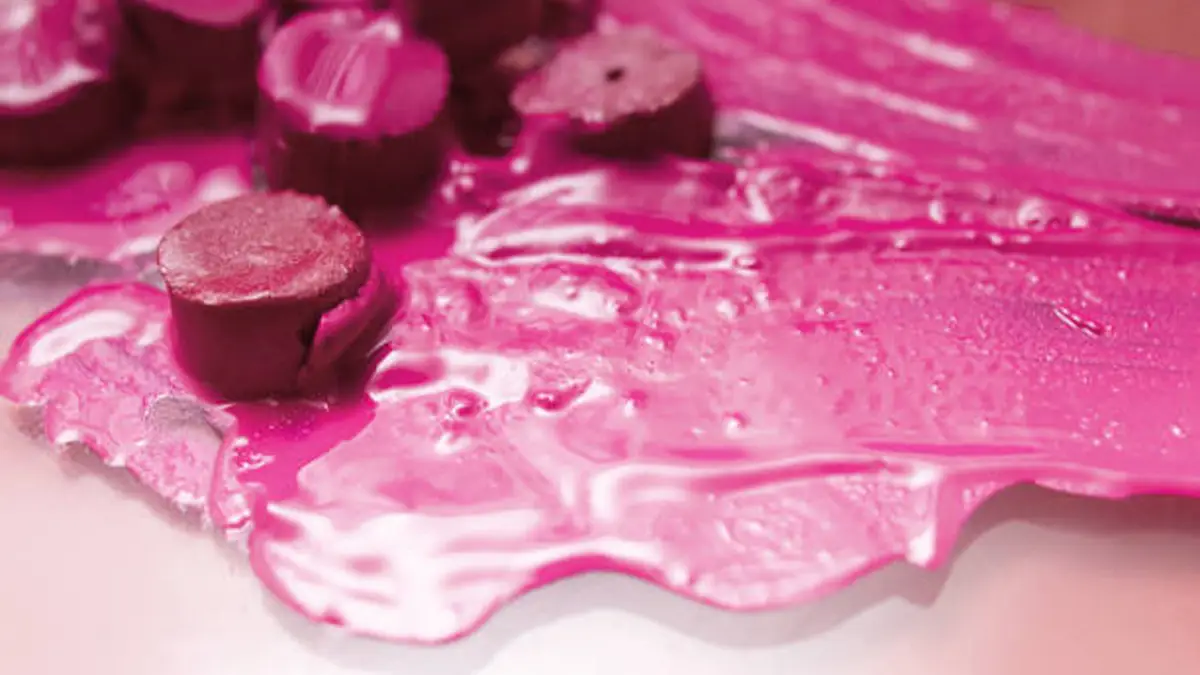
Heat damage appears as softening, sweating, or a grainy texture. These physical changes happen when a lipstick’s internal wax-and-oil structure breaks down.
Softening
- The lipstick bullet deforms easily under light pressure, developing a mushy tip or bending during application.
- It feels excessively creamy and slippery, causing it to slide outside the lip line or break at the base.
Sweating
- Tiny beads or droplets of oil appear on the surface of the bullet, creating a shiny or dewy look.
- A sweating lipstick can feel greasy and may deposit patchy color on the first swipe due to the surface oil.
Grainy Texture
- A rough, gritty, or sand-like sensation is felt when the lipstick is swiped across the skin or lips.
- The grainy texture results in poor glide, streaky application, and an unpleasant feel.
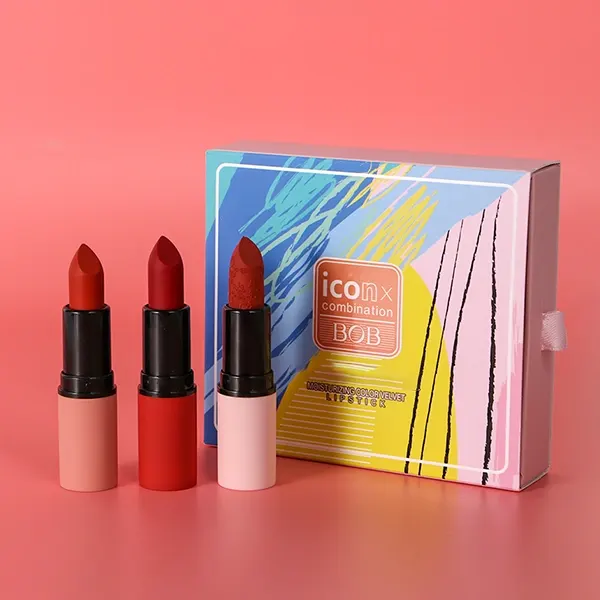
How Wax Selection Affects Heat Resistance
A lipstick’s heat resistance comes from the wax type—its melting point, crystal structure, and oil-binding capacity—not just the total amount of wax used.
Core Wax Properties That Determine Thermal Stability
Heat stability isn’t about simply adding more wax. It’s about choosing waxes with the right physical properties. These three factors are what actually make a difference when the temperature rises.
- Melting Point: This is the most direct factor. Waxes with higher melting points like carnauba (typically 80–86°C) and rice bran (78–82°C) raise the temperature at which the lipstick starts to soften or lose its shape.
- Crystallinity & Hardness: Highly crystalline waxes, like carnauba and candelilla, create a rigid, interlocking network. This structure provides the strength to resist bending and slumping when it gets warm.
- Oil-Binding Capacity: A wax’s ability to hold onto oils is what limits sweating. Sunflower wax is a standout here, as it effectively traps oils within its matrix, even as temperatures go up.
Key Wax Types for Building Heat-Resistant Formulas
To build a formula that holds up in a hot climate, formulators rely on a specific toolkit of waxes, each serving a distinct purpose in the final structure. The figures below are typical industry ranges; confirm the values for your own batch against raw material certificates of analysis (COA) and finished-formula test reports.
- High-Melting Natural Waxes: Carnauba and sunflower wax are go-to choices. Carnauba brings hardness and raises the melting point, while sunflower wax provides strong oil binding to resist sweating.
- Mineral & Petroleum-Derived Waxes: High-melting-point grades of microcrystalline wax, some near 90°C, are used to boost heat resistance. They also add flexibility, which keeps the stick from becoming brittle.
- Synthetic Waxes: These provide tighter control over melting points and texture. They allow formulators to fine-tune heat stability, which is useful in long-wear liquid lipsticks that cannot be allowed to fail in the field.
Wax choice is one input in a formula brief. If you are specifying a product from scratch rather than troubleshooting an existing one, our guide on how to develop your own custom lipstick formula covers the full ingredient decision path.
The Role of Manufacturing and Cooling Processes
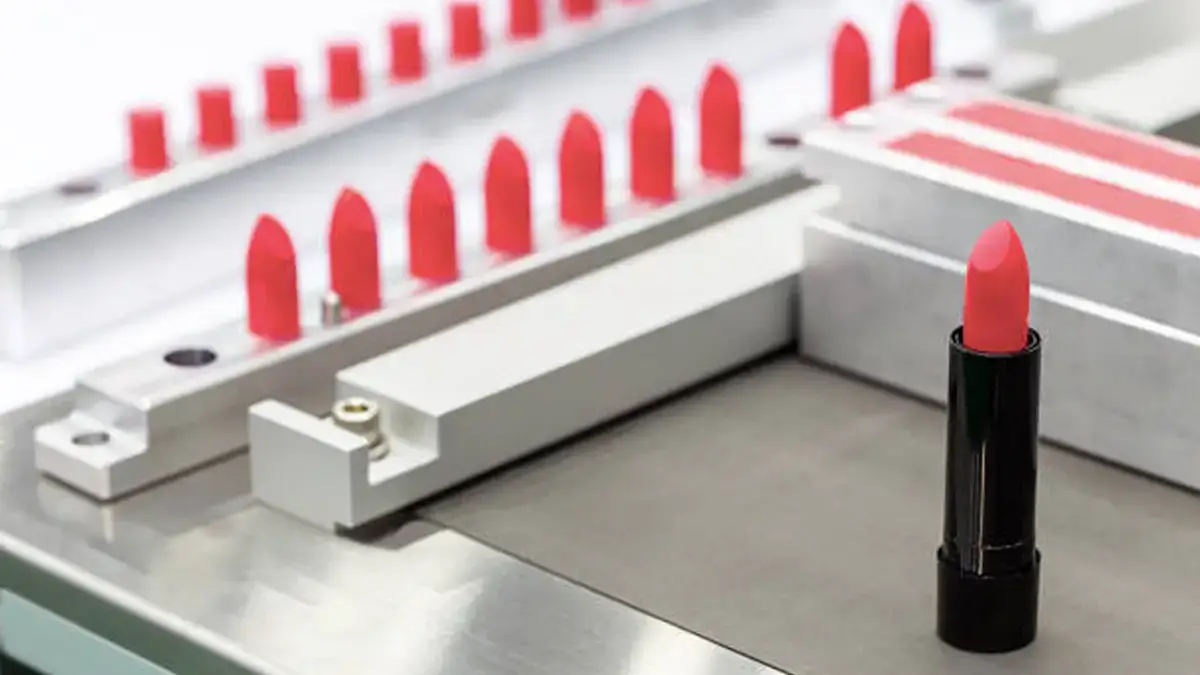
Lipstick’s heat resistance isn’t just about the formula. It’s built on the factory floor, where controlled cooling and solidification create the stable internal structure.
Why lipstick texture changes in heat is only half a formula story. The casting, cooling, and flame-finishing sequence as a whole is described in our walkthrough of how lipstick is made in a factory; this section narrows in on the stage that decides thermal performance.
Cooling Tunnel Controls
The cooling tunnel is where a lipstick’s heat stability is locked in. Its job is to remove heat at a specific, controlled rate to build the right wax crystal structure from the start. Air temperature, how uniformly that air flows around the molds, and total residence time are what prevent internal stresses and surface defects.
A correctly managed tunnel produces bullets with a consistent crystalline network—the structure that resists softening, sweating, or collapsing in hot transit and humid retail climates.
Solidification Management
Solidification turns the liquid lipstick mass into a solid stick. An outer shell forms against the cold mold first, then hardening progresses toward the core, and the speed of that cool-down directly determines the size of the wax crystals inside.
A moderate, controlled cool-down produces a finer, more stable network that withstands heat better. Proper solidification physically locks oils within the wax matrix, which is what keeps them from separating and beading on the surface in warm storage.
Stability Testing for High-Temperature Markets
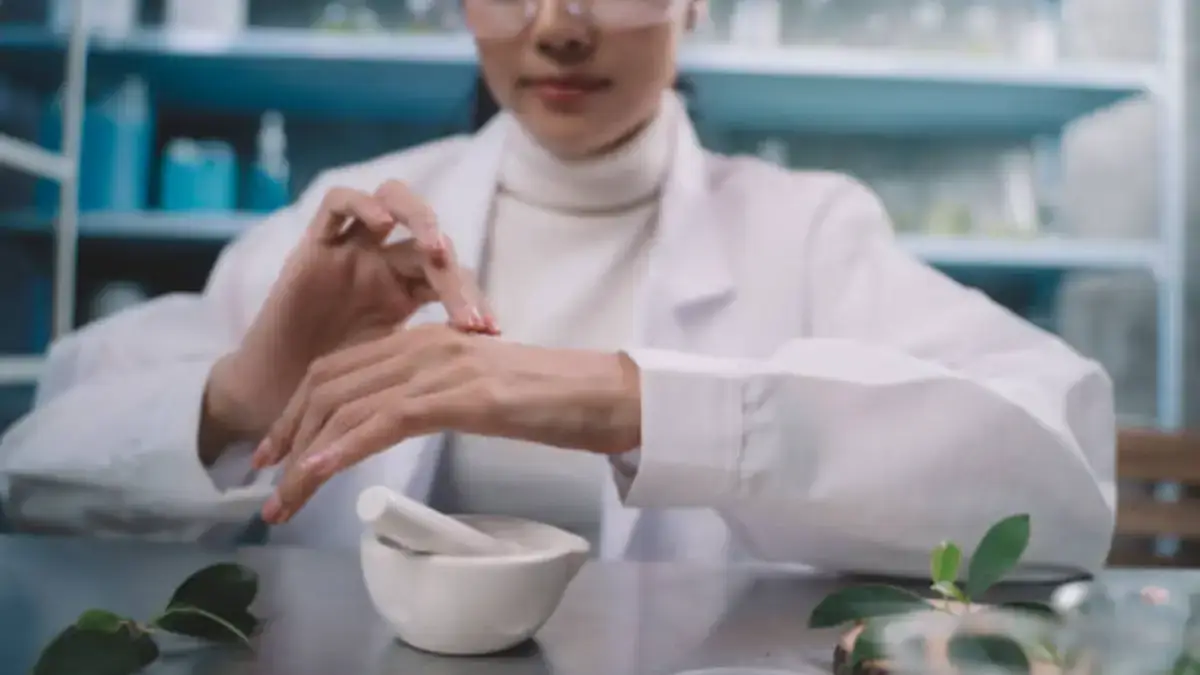
To sell lipstick in hot climates, you need a multi-layered testing protocol that simulates real-world storage and shipping, not just standard room-temperature stability.
Test Conditions and Study Design for Hot Climates
A proper stability program for high-temperature markets isn’t a single test. It’s a series of controlled exposures designed to predict how the lipstick will survive from the factory to a consumer in a warm market such as the Middle East or Southeast Asia.
- Baseline and Accelerated Tests: Combine long-term studies at a sustained 30°C with accelerated tests at 40°C or even 45°C. This combination helps predict the product’s stability over its intended shelf life in a warm region.
- Worst-Case Stress Tests: Run short-term stress tests at 50–55°C. This approximates a shipping container sitting on a dock or the back of a delivery truck in peak summer. It’s a quick way to find the formula’s breaking point.
- Final Packaging: All tests should use the final consumer packaging. A formula might be stable on its own, but the meaningful test is how it performs inside the tube, covering everything from mechanical support to the seal’s resistance to leakage when temperatures rise.
Key Evaluation Parameters and Acceptance Criteria
Checking whether the lipstick “survived” is not enough. You need measurable criteria to decide if it is still a sellable product, and you need to define what “fail” means before testing starts.
- Physical Integrity: Bullet softening, melting, surface sweating, or breakage, tracked by visual checks and instrumental methods such as penetrometry to quantify hardness change.
- Sensory Performance: A lipstick that holds its shape but feels wrong is still a failure. Track color stability, off-odors (especially rancidity), payoff, and glide.
- Pre-Defined Limits: Set acceptable change levels for hardness, appearance, and texture in advance. Without these benchmarks, stability data cannot support a shelf-life claim.
Stability documentation also carries regulatory weight. Products placed on the EU market must be supported by a safety assessment under the EU Cosmetics Regulation, and heat-stress results on the finished bullet form part of that evidence base.
How Brands Can Reduce Heat-Related Product Failures
Heat failures aren’t random; they result from weak formulation and loose logistics. Brands that succeed in hot climates engineer for thermal stress and control the supply chain.
Enhance Product Resilience Through Formulation and Packaging
Fixing heat-related product issues starts in the lab, not with a better shipping box. Because the wax-oil matrix is the structural backbone of a bullet, waxes with higher melting points such as carnauba or sunflower seed wax lift the temperature at which softening and deformation begin. This is a balancing act; too much hard wax makes the product feel draggy and unpleasant to apply, so the workable answer is a strategic blend rather than maximum hardness.
To limit oil sweating, specify higher-viscosity emollients that are less mobile and confirm that the oils and waxes share compatible polarity, which reduces separation. Rheology modifiers such as silica reinforce the internal structure, trapping oils more effectively without compromising a creamy feel.
Packaging plays a supporting role. While it can’t save a weak formula, robust solid lipstick tubes made from materials that don’t easily warp or crack are a baseline requirement, and a secure mechanism with a firm cap “click” reduces air exchange and wobble if the bullet softens. For orders shipped directly to consumers in hot climates, secondary packaging like insulating mailers can buffer against the extreme temperatures inside a delivery truck.
Implement Rigorous Testing and Supply Chain Controls
A heat-resistant formula is of little use if it isn’t verified. Structured stability testing is a requirement for any brand selling in or shipping through warm regions, and the accelerated protocols outlined above form the practical baseline. During these tests, development teams monitor specific failure points:
- Shape Retention: Does the bullet slump, lean, or bend?
- Surface Integrity: Is there oil sweating or wax crystallization (graininess)?
- Mechanical Strength: How much force does it take to break the bullet after heat exposure?
A strong formula can still fail if the supply chain breaks down. Establish and enforce temperature limits for transit and warehousing, and place temperature data loggers in shipments to verify whether logistics partners meet them. Simple practices, such as instructing warehouses and retailers to keep product away from direct sunlight and heating vents, limit avoidable losses.
A closed feedback loop matters just as much. Track heat-related customer complaints by region and season: that data maps where formulations, packaging, or shipping methods are failing, and it should feed directly into the next development and logistics cycle.
Choosing a Manufacturer for Hot Climate Distribution
A partner for hot climates needs proven formulation expertise for high melting points and strict control over heat-sensitive production, packaging, and supply chain processes.
| Technical Formulation and Stability Expertise | Production, Packaging, and Supply Chain Controls |
|---|---|
|
|
Turning Heat-Resistance Findings into a Purchase Decision
For a brand or distributor, the value of this analysis is a sequence of gates between the first sample and the production order:
- Request the thermal data first. Before discussing shade or fragrance, ask for heat-stress results on the base formula—accelerated aging temperature, duration, and the pass/fail limits applied.
- Sample in your own market conditions. Run approved samples through your real storage and transit conditions, including a hot-climate hold, rather than judging from a report written for room temperature.
- Freeze the specification in writing. Once a sample passes, lock the wax system, oil package, target melting range, cooling parameters, tube supplier, and packaging. Any later change to these items reopens the stability question.
- Inspect against that baseline. Define the pre-shipment check against the frozen specification and the approved sample—appearance, hardness reading, and sweating inspection on retained units held at elevated temperature.
- Plan handling after delivery. Agree storage guidance, transport mode, and the complaint-escalation path with your distributor before goods move, so thermal performance is not lost at the last mile.
Часто задаваемые вопросы
Why does my lipstick feel grainy after getting warm?
Graininess after warming is usually caused by fats and butters, like shea or mango butter, recrystallizing. When the lipstick warms up and then cools down slowly, these ingredients can form tiny crystals, creating a gritty texture. This is a physical change, not a sign of spoilage, and the lipstick is generally still safe to use.
Can a lipstick return to its original texture after melting?
A lipstick can be returned to a usable solid form after melting, but it may not regain its original texture. The shape is partly recoverable by gently re-melting the product, pouring it into a clean container, and chilling it until firm. The result is a usable lipstick, though it might look or feel slightly different, which is why brands treat a melted return as a quality issue rather than a cosmetic one.
Why do some lipsticks melt faster than others?
The melting point depends on the formula’s balance of waxes, oils, and butters. Natural lipsticks often rely on softer plant butters and oils, which have lower melting points and lead to a creamier, more heat-sensitive product. Conventional lipsticks may use higher-melting synthetic waxes and polymers to provide better structural stability in warmer temperatures.
What ingredients keep lipstick creamy but also resistant to melting?
A creamy, melt-resistant lipstick is achieved with a specific blend of ingredients. High-melting point waxes like carnauba wax provide the core structure. Flexible film-forming polymers, often silicone-based, create a durable layer that resists heat. Finally, volatile carriers like isododecane allow for a smooth, creamy application before evaporating to leave a stable, non-greasy finish.
Заключительные мысли
Attempting to cut costs on formulation is a direct risk to your brand’s reputation in high-temperature markets. A lipstick that fails in the customer’s hands erodes trust far more than the initial savings are worth. Success depends on a manufacturing process engineered for lipstick heat stability, from wax selection to cooling tunnel controls.
Don’t leave thermal performance to chance—validate it. The next step is to engineer a lipstick that survives your target market’s climate. Свяжитесь с нашей командой to review your technical requirements and discuss a private label or OEM development plan.