
Paraben-free makeup brands are labels that state, on their own website, that the paraben family of preservatives is excluded from their formulas. That is a sourcing decision written down, not a safety verdict from a regulator, and the difference matters more than most roundups admit.
Below are ten paraben-free makeup brands worth comparing, each picked on a published exclusion rather than on popularity: nine you can buy, and Siloran, marked as such. Each retail entry carries its signature product and US price. Around the shortlist: what parabens do in a formula, what replaces them, and what the rules looked like in 2026.
What a Paraben-Free Label Does and Does Not Promise
Parabens are preservatives, not pigments or actives. A brand that removes them has changed its preservation system, and the useful question is what replaced them.
The parabens you meet on an ingredient list are methylparaben, ethylparaben, propylparaben, butylparaben and isobutylparaben. They are strong against mold and yeast and comparatively weak against bacteria on their own, which is why no real formula relied on them alone: a paraben system pairs the ester with a second preservative or a booster such as phenoxyethanol.
The concern traces to laboratory work showing parabens bind weakly to estrogen receptors. Binding in a dish is not the same as harm at the concentration a mascara contains. The FDA puts its position plainly on its parabens in cosmetics page, last updated 18 November 2025: “At this time, we do not have information showing that parabens as they are used in cosmetics have an effect on human health.”
Two consequences follow at the shelf. “Paraben-free” has no legal definition in the United States or the European Union, so the claim is only as good as the policy page behind it. And in the EU the wording itself is regulated, which the rules section below covers. A brand that spends more energy scaring you about parabens than naming its own system is telling you which one it uses.
Five Parabens Are Banned in the EU and Four Are Still Permitted
The paraben family is not one yes-or-no answer. Four esters are legal in Europe inside limits; five were removed in 2014.
| Ester on an INCI list | EU status | Maximum use level |
|---|---|---|
| Méthylparabène | Allowed, Annex V | 0.4% as acid |
| Ethylparaben | Allowed, Annex V | 0.4% as acid |
| Propylparabène | Allowed, Annex V | 0.14% as acid |
| Butylparaben | Allowed, Annex V | 0.14% as acid |
| Isopropylparaben | Prohibited, Annex II | Not permitted |
| Isobutylparaben | Prohibited, Annex II | Not permitted |
| Phenylparaben | Prohibited, Annex II | Not permitted |
| Benzylparaben | Prohibited, Annex II | Not permitted |
| Pentylparaben | Prohibited, Annex II | Not permitted |
The five prohibitions entered Annex II through Regulation 358/2014. No comparable list exists in US federal law, which is why an American brand’s paraben statement is a private standard rather than a compliance answer.
How This Shortlist Was Put Together
Three gates, applied to every brand below. Nothing was included because it is popular.
A published exclusion, on the brand’s own site. Not a retailer filter or a press release: a clean-standards page, an ingredient glossary, or product-page copy naming parabens among excluded ingredients. Each entry below quotes that line.
Color cosmetics, and a US price we could open. Every brand must sell makeup today, with mascara, lipstick, foundation or powder in the range. Prices are the single-unit US price on the brand’s own storefront, before promotions. Two frequently listed names failed these gates.
One self-placement, declared. Siloran is at number eight. We manufacture color cosmetics and hold no retail price or shelf to compare on those terms; the entry clears the same gate as the rest, because the exclusion statement sits on our own site. We do not speak for the nine retail brands.
The 10 Paraben-Free Makeup Brands Worth Comparing in 2026
Ordered by how much of a full color kit a brand covers under one exclusion policy, then by whether you can buy it today, which is why the manufacturer sits at eight.
1. ILIA Beauty
Year Founded: 2011
Headquarters: United States
Product Types: Mascara, eyeshadow, eyeliner, foundation, lip and brow
Best For: A prestige everyday kit under one standard
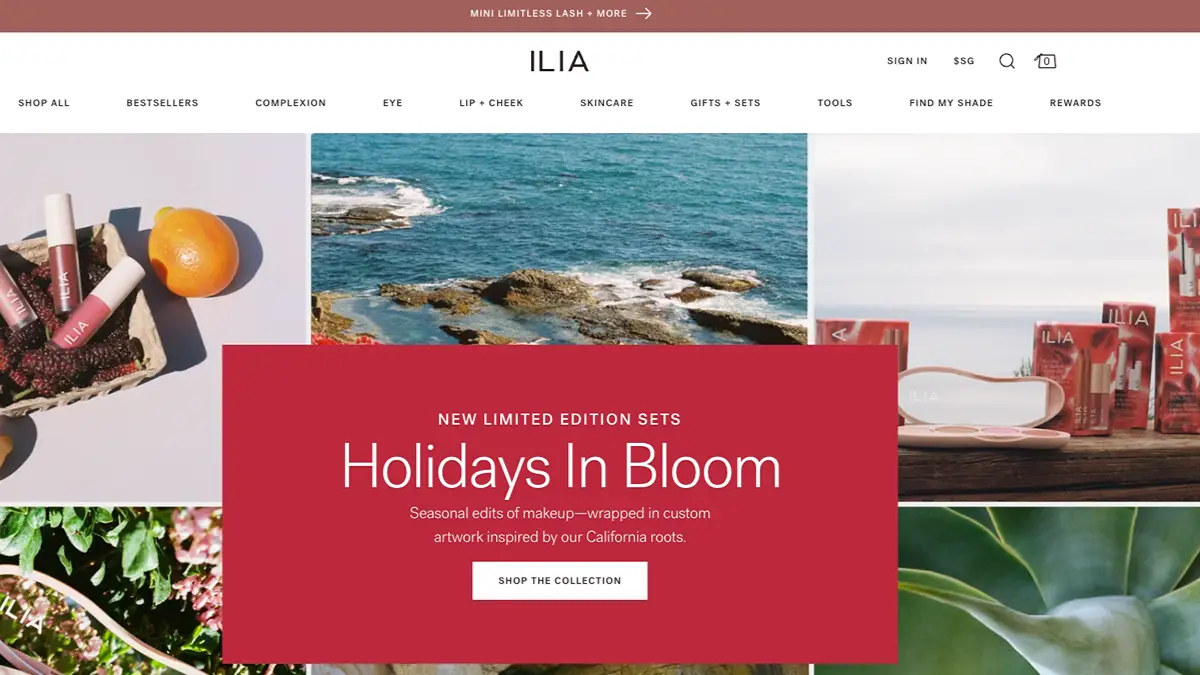
ILIA publishes its exclusion on a standards page rather than a label: products are “formulated without 50+ ingredients including parabens, phthalates, lauryl/laureth sulfates, talc.” The Laguna Beach, California range covers a full face kit, which is why it sits first. Limitless Lash Mascara is $29.00.
2. Jones Road Beauty
Year Founded: 2020
Headquarters: United States
Product Types: Mascara, lip, foundation, cream blush and shadow sticks
Best For: A five-product routine
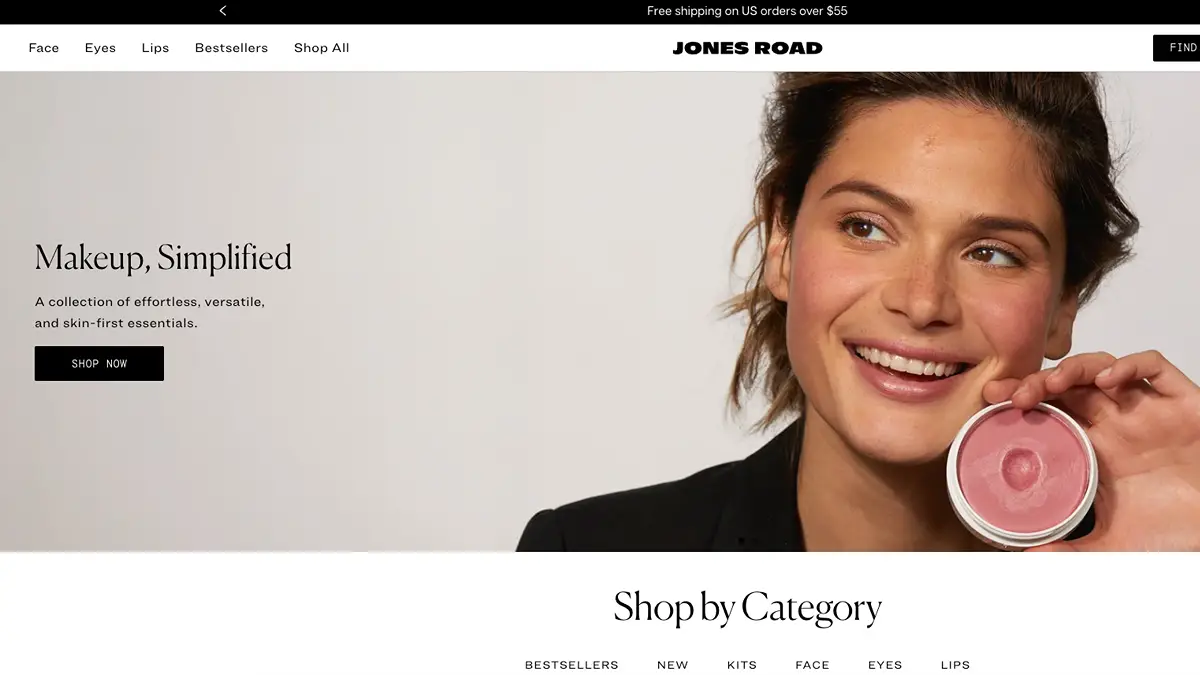
Started by makeup artist Bobbi Brown and run from Montclair, New Jersey, Jones Road states the list flat on its about page: “No phthalates, sulfates, parabens, PEGs, cyclic silicones, EDTA, or BPA.” The range is the tightest fit to a classic kit on this page. The Statement Mascara is $28.00.
3. RMS Beauty
Year Founded: 2009
Headquarters: United States
Product Types: Powder, liquid and cream foundation, concealer, mascara, lipstick, brow, cream shadow, bronzer, highlighter
Best For: Cream textures and the widest color matrix here
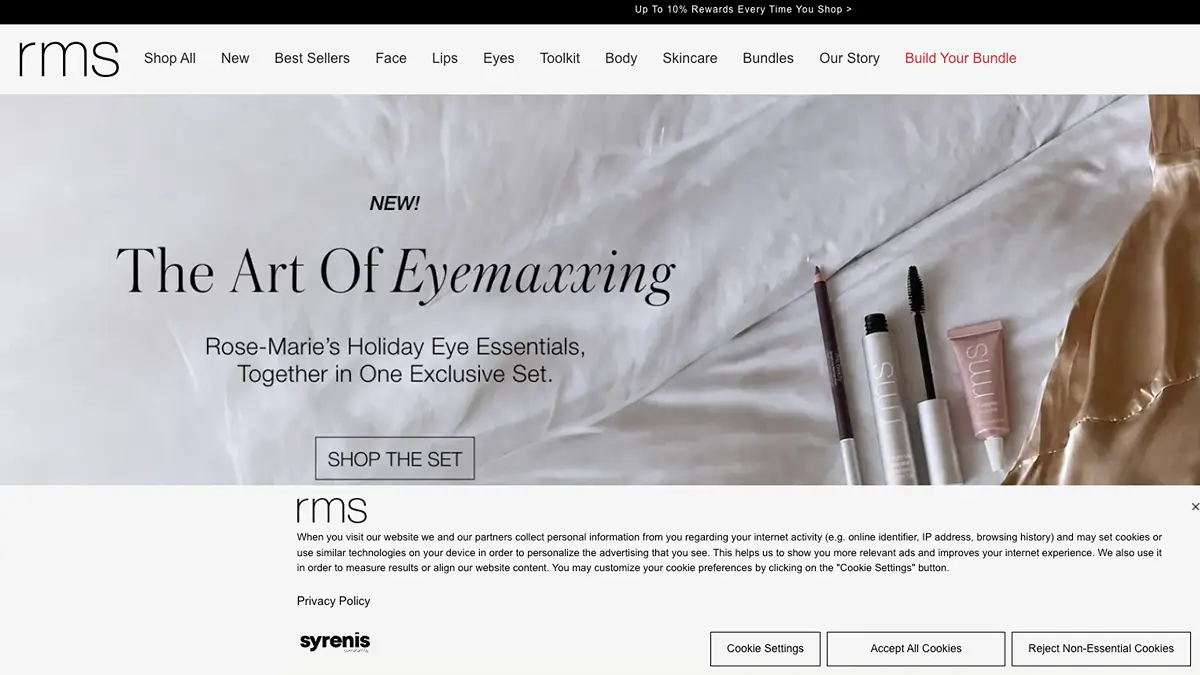
Founded by makeup artist Rose-Marie Swift, RMS covers more of a face than any other brand on this list, and its stated exclusions run to “parabens, gluten, synthetic fragrances, GMOs, sulfate… talc.” Straight Up Volumizing Peptide Mascara is $29.00.
4. bareMinerals
Year Founded: 1995
Headquarters: United States
Product Types: Mineral powder and liquid foundation, concealer, blush, eyeshadow, brow and finishing powders
Best For: Mineral powder bases and full-range breadth
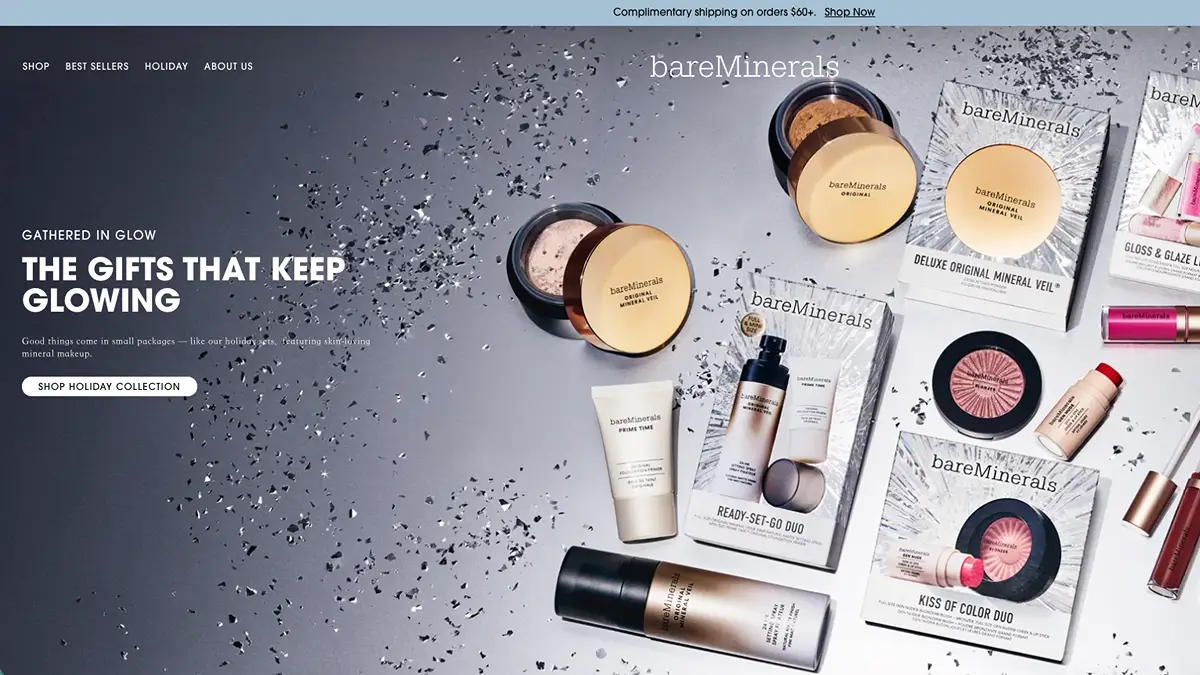
The oldest brand here, trading as “since 1995” and operating from New York under Orveon Global US LLC, the company named in its terms of service. Product pages carry the longest single sentence on this list: “Formulated without parabens, formaldehyde, synthetic fragrance, gluten, PEGs, phthalates, propylene glycol, mineral oil, coal tar, or microbeads,” backed by more than 2,500 restricted ingredients. ORIGINAL Loose Powder Foundation SPF 15 is $39.50.
5. Kosas
Year Founded: 2015
Headquarters: United States
Product Types: Concealer, foundation, skin tint, mascara, cheek, lip and brow
Best For: Concealer and complexion
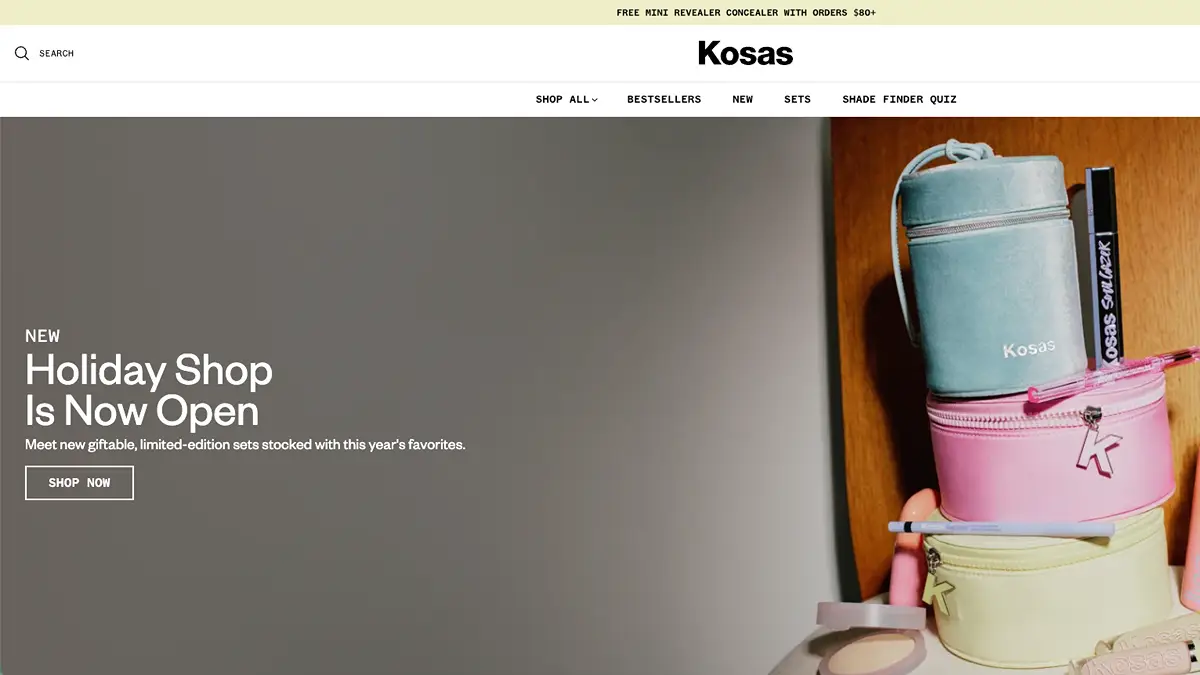
Founded by nail artist Sheena Yaitanes, Kosas is complexion-led with eyes and lips alongside. Its safety page lists parabens first among ingredients “we do not include in our product formulations,” on a banned list above 2,700 materials aligned to EU standards. Revealer Concealer is $32.00.
6. 100% Pure
Year Founded: 1999
Headquarters: United States
Product Types: Fruit-pigmented foundation, concealer, mascara, blush and lip
Best For: The pigment story and the longest exclusion list
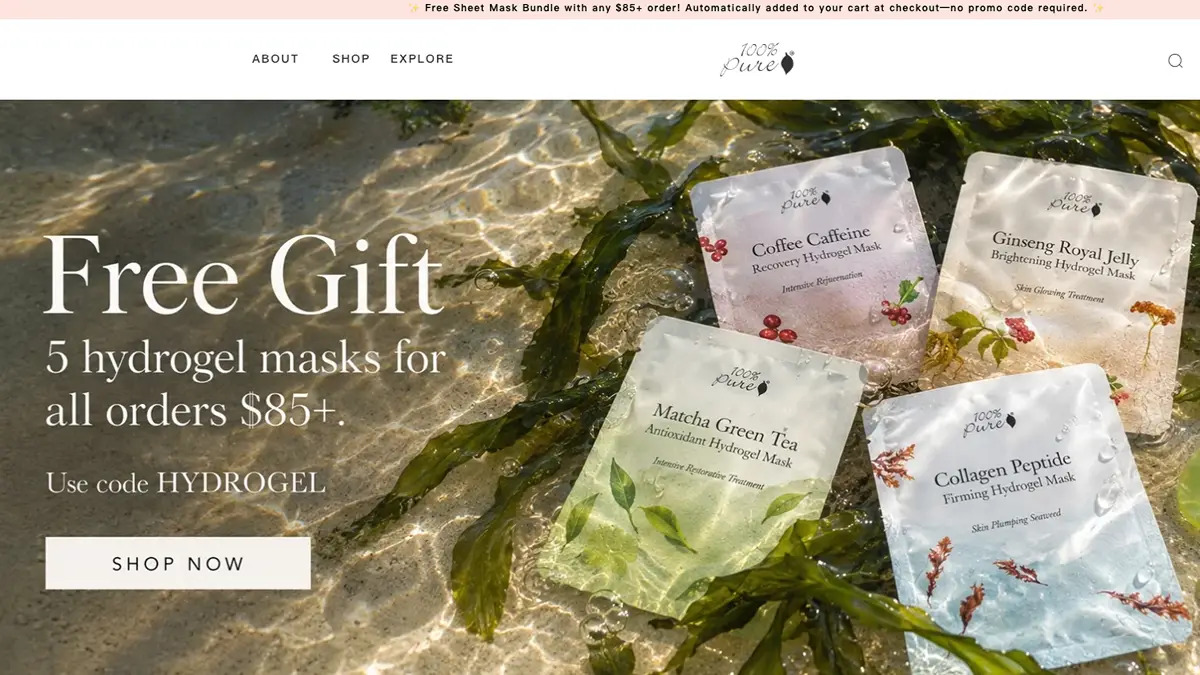
100% Pure colors its products with fruit pigments instead of synthetic dyes and manufactures in its own San Jose, California facility. Its banned ingredients page names parabens among the “entire classes we never use,” the longest list here. Note the address: the store now lives at 100percentpure.com, not the older domain many roundups still link. Fruit Pigmented Full Coverage Water to Powder Foundation is $48.00.
7. Well People
Year Founded: 2008
Headquarters: United States
Product Types: Three mascaras, three foundations, concealer, cheek, brow, liner, shadow and lip oils
Best For: The lowest entry price and the widest exclusion sentence
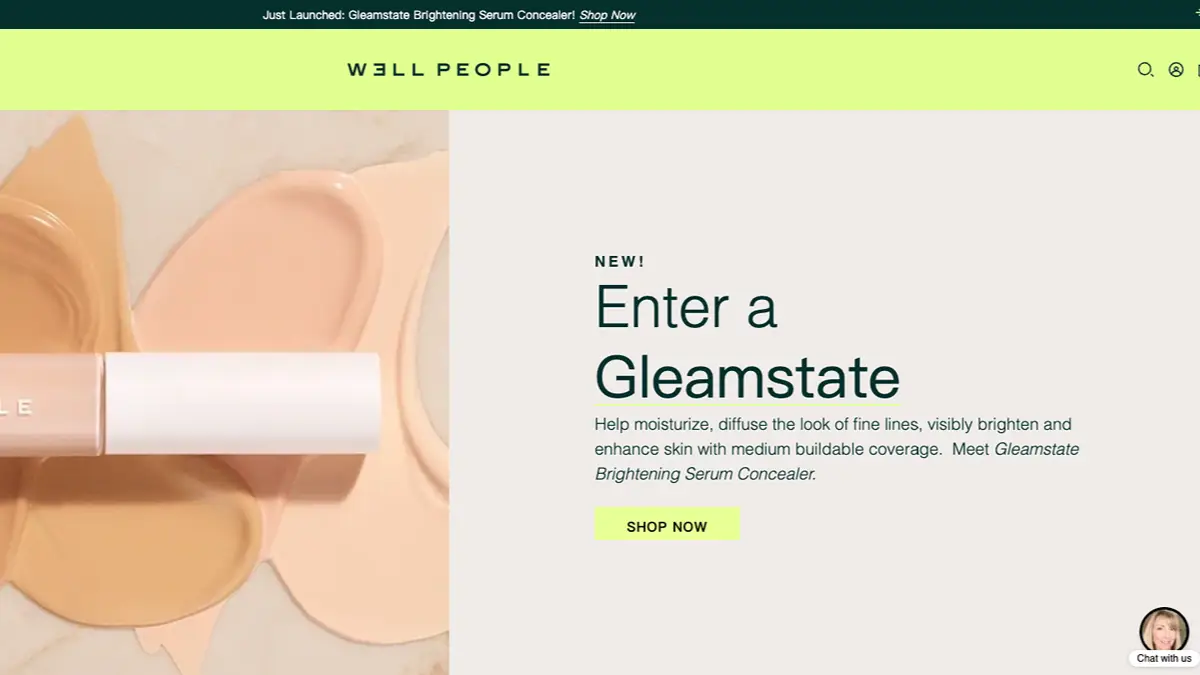
Launched in 2008 by James Walker, makeup artist Shirley Pinkson and dermatologist Dr. Renee Snyder, and acquired by e.l.f. Beauty in February 2020, Well People builds out of Oakland, California. Its product pages carry the widest statement we found: “All Well People products are free from parabens, avobenzone, oxybenzone, GMOs, phthalates, sulfates, synthetic fragrance, dimethicone, petrolatum, PEG, propylene glycol, mineral oil, talc, nanoparticles.” Expressionist Curling Mascara is $20.00, the cheapest hero on this page.
8. Siloran
Year Founded: 1991
Headquarters: Chine
Product Types: Lips, eyes and face: solid lipstick, gloss, mascara, shadow, primer, foundation, concealer, blush and setting powder
Best For: Brand owners specifying a paraben-free line, not shoppers
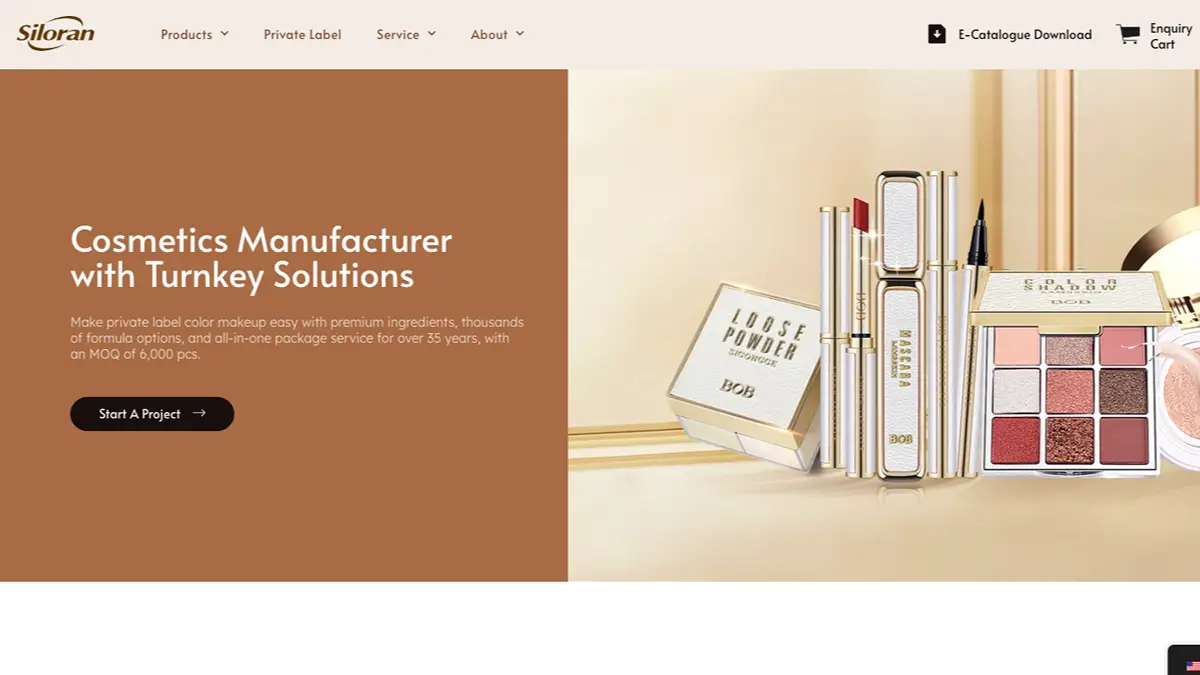
We are the manufacturer on this list, so the nine retail brands here are labels we compare against, not rivals for the same customer. Our Recherche et développement page states the formulation defaults as four badges — vegan friendly, organic ingredients, paraben free, cruelty free. A private label build is quoted per formula and package, not per unit.
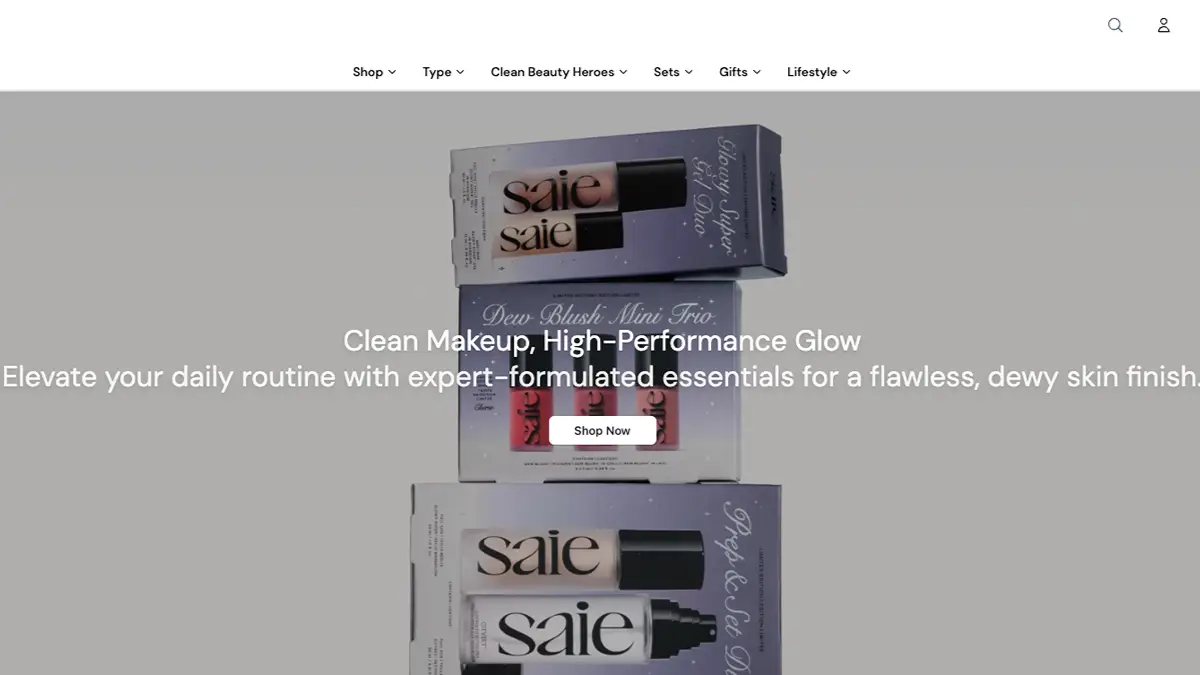
9. Saie
Year Founded: 2019
Headquarters: United States
Product Types: Skin tint, concealer, mascara, liquid and baked blush, bronzer, setting spray and SPF
Best For: Dewy finishes in a narrow range
Saie is glow-first and narrow by design: no bullet lipstick and no brow line. Its FAQ commits the whole catalogue to a Clean Standard excluding “over 2,000 potentially harmful ingredients including sulfates, parabens, and phthalates.” Mascara 101 is $26.00.
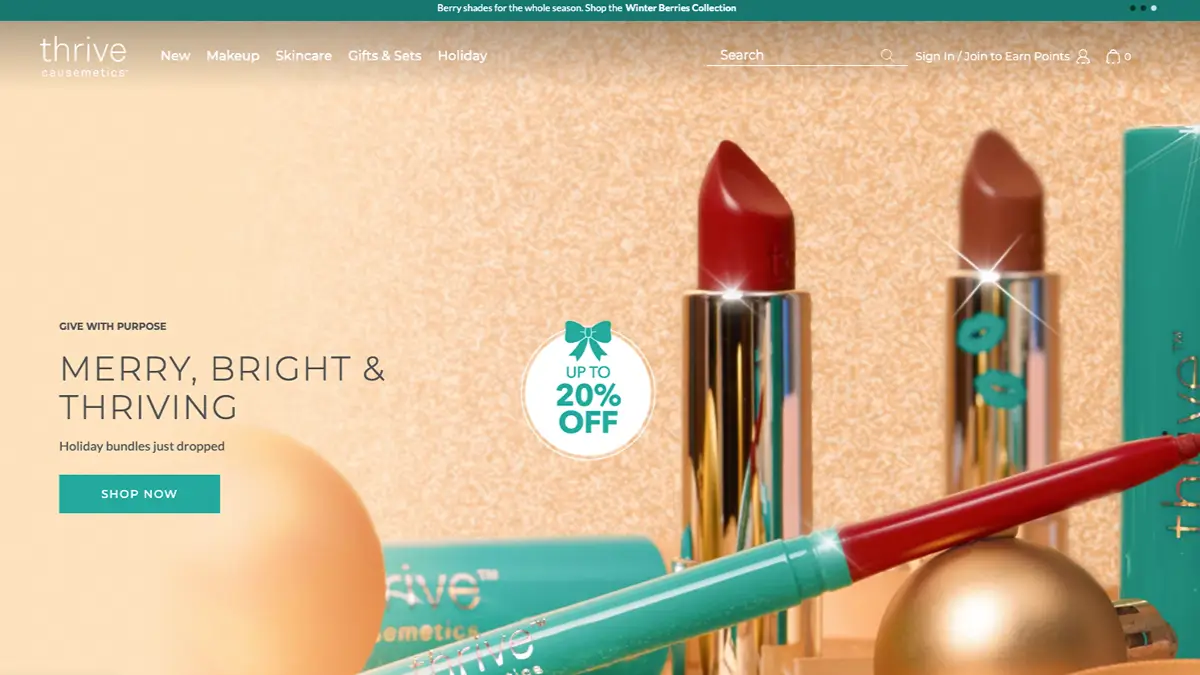
10. Thrive Causemetics
Year Founded: 2014
Headquarters: United States
Product Types: Tubing and volumizing mascaras, lipstick and lip crayon, gloss serum, liners, brow, cheek sticks and concealer
Best For: Lash performance
Founded in 2014 and launched in 2015 from Playa Vista, Los Angeles, Thrive is the lash-and-brow specialist of the group; there is no foundation in the current range. Its Banned from Beauty list leaves out “parabens, sulfates, phthalates, latex, and synthetic fragrance.” Liquid Lash Extensions Tubing Mascara is $26.00.
Paraben-Free Makeup Brands at a Glance
| Brand | Fondé | Color coverage | Cheapest hero, US$ |
|---|---|---|---|
| ILIA Beauty | 2011 | Eyes, face, lip, brow | 29.00 |
| Jones Road | 2020 | Mascara, lip, foundation, cream cheek and eye | 24.00 |
| RMS Beauty | 2009 | Three foundation textures, lip, eye, brow | 29.00 |
| bareMinerals | 1995 | Mineral base, mascara, liquid lipstick, shadow | 39.50 |
| Kosas | 2015 | Complexion-led, with mascara, cheek, lip, brow | 28.00 |
| 100% Pure | 1999 | Eye, face, lip, fruit pigments | 48.00 |
| Well People | 2008 | Mascara, foundation, cheek, brow, liner, shadow | 20.00 |
| Siloran | 1991 | Lips, eyes and face, private label only | Not sold retail |
| Saie | 2019 | Complexion, mascara, baked cheek and eye, SPF | 26.00 |
| Thrive Causemetics | 2014 | Lash, lip, brow, cheek sticks, concealer | 26.00 |
What Paraben-Free Makeup Costs, Drugstore to Prestige
Across the nine retail hero products above, a single unit runs from $20.00 to $48.00. Price tracks format and packaging, not the absence of parabens.
The old rule that clean means expensive stopped holding years ago. Paraben-free is now the default posture of much of the mass market, and the cheapest mascara here, Well People’s Expressionist at $20.00, sits below several conventional drugstore equivalents.
What moves a price is the rest of the system. A preservative-light formula in an airless pump costs more to engineer and package than the same product in a wide-mouth jar, and that barrier is what lets a brand preserve gently. Water content does the same work: anhydrous pencils, baked powders and sticks need far less preservation than a liquid liner.
What Replaces Parabens Once a Formula Drops Them
Nothing on a “paraben-free” label means nothing is preserving the product. An unpreserved water-based mascara is a microbiology hazard, not a clean one.
The systems that took the parabens’ place are mostly multi-functional boosters rather than listed preservatives: ethylhexylglycerin, 1,2-hexanediol, caprylyl glycol and p-anisic acid, usually paired with phenoxyethanol. Phenoxyethanol is permitted in the EU up to 1.0%, not the 2% older articles still quote. Organic acids such as benzoic acid (0.5% leave-on) work only at low pH, which limits where they can go.
None of this is free of trade-offs. Phenoxyethanol, benzoic acid and ethylhexylglycerin all appear in published patch-test series as contact allergens in a minority of users, so someone who reacts to a paraben is not guaranteed to react to nothing. Booster-only systems also leave less margin on the production floor, moving plant hygiene into the product’s safety case.
That is what a brand owner should press a factory on: the proof is a challenge test on the finished formula in its final package, read against the shelf life you intend to sell — what our microbiology challenge testing service produces. A brand that cannot name its preservative has copied a claim, not done a formulation.
Matching a Paraben-Free Formula to Your Skin
Texture and wear behavior decide tolerance more than the exclusion list does.
| Skin or lash situation | Format to prioritize | What to check |
|---|---|---|
| Reactive or eczema-prone skin | Anhydrous sticks, powders, pencils | Less water phase, less preservation needed |
| Oily skin, long wear days | Mineral powder, powder-to-liquid foundation | Keep preservatives in the rinse-off step |
| Sensitive eyes or contact lenses | Tubing mascara | The film releases in warm water, so less cleanser reaches the eye |
| Dry or mature skin | Cream blush, serum foundation | More water and oil, more preservation required |
| Label reading during pregnancy | Whatever the brand states in writing | “Pregnancy friendly” is unregulated; read the list, then the INCI |
A practical order of work: choose the format you can wear, confirm an ingredient list exists for that specific shade, then find the paraben statement on the policy page.
The Rules Behind the Claim in 2026
As of late 2026 no jurisdiction bans parabens as a class in cosmetics. What exists is a set of limits in Europe, five prohibitions, and a US framework that regulates the claim rather than the ingredient.
In the European Union the four permitted esters sit in Annex V of Regulation (EC) No 1223/2009 at the levels in the table above. The Scientific Committee on Consumer Safety has reviewed them one by one; its opinion on propylparaben found the ester not regarded as an endocrine disruptor at concentrations in use, on insufficient evidence rather than proof of the opposite. Wording is separately controlled: under Regulation 655/2013 claims must be legal, truthful, verifiable, honest and fair, and the CTPA’s help note on “free from” claims (March 2019) warns that a blanket “free from parabens” statement can read as an attack on a permitted class.
In the United States, MoCRA changed the paperwork rather than the ingredient list. Facility registration and product listing have run since the 2024 deadline, and safety substantiation is a legal duty. The small-business relief does not extend to products contacting the eye’s mucous membrane, mascara included.
One item is not law yet. The European Commission’s Omnibus Act IX was notified to the WTO in July 2026 and would phase new CMR-related restrictions in from February 2027 — a draft inside a comment cycle. Articles stating that EU paraben rules changed this year are reading a notification as an entry into force.
Paraben-Free Makeup Trends to Watch in 2027
The next twelve months in this category look less like new exclusions and more like pressure on the evidence behind claims already printed.
Grand View Research sized clean beauty at roughly $10.5 billion in 2025 and projects about $35.3 billion by 2033, close to 17% compound growth. Parabens are no longer the fight inside that growth; they were won as a market position, which is why the claims are moving elsewhere.
Three shifts are worth planning around. Preservation is designed in from the format: anhydrous sticks, powder-to-liquid textures, airless dispensing and single doses let a brand cut its preservative package honestly instead of renaming it. Second, exclusion lists are converging on numbers — 2,000, 2,500, 2,700 and 2,870 above — and once every brand claims a list, the differentiator becomes who can produce a test report. Third, EU Regulation 2025/40 began applying on 12 August 2026, grading cosmetic packaging for recyclability, which favors refill and mineral formats.
For a buyer, the 2027 trend to act on is a change in what to look for: stop scanning for the word “free”, and look instead for a named preservative system, a printed ingredient list for the exact shade in front of you, and a brand that states both without implying the alternative is poison.
For Brand Owners: What a Paraben-Free Claim Costs to Prove
Deleting four preservatives from a bill of materials takes an afternoon. Replacing them with a system that survives a twelve-month shelf life takes a lab.
If you are building a line rather than shopping for one, the shortlist doubles as a specification. Every brand here publishes its exclusion on its own domain, which makes the claim auditable by a customer with a phone, and your formula has to survive the same reading: a preservation system matched to the format, proven by challenge testing on the finished product in its final package, and a label that states what is present instead of attacking what is permitted.
Our workshop is built to 100,000-grade cosmetic cleaning standards with a water purification and dust vacuum system, under CE, GMPC, ISO 22716 and SGS certification, and none of the makeup is tested on animals. A private label mascara program is the hardest version of this work: tubing and fiber systems are water-heavy, sit at the eye, and get replaced every three months. Stock orders ship in three working days from five cartons; a private label build runs to mass production in 40 working days, with A-class samples in seven.
Build a Paraben-Free Line You Can Document
Frequently Asked Questions About Paraben-Free Makeup Brands
Are parabens banned in cosmetics anywhere?
No regulator bans the whole family. The European Union prohibits five esters through Annex II of Regulation 1223/2009, and permits four others inside limits. The United States prohibits none at federal level, which is why the FDA states it has no information showing an effect on human health at cosmetic concentrations.
Does paraben-free mean preservative-free?
No, and an unpreserved water-based product would be unsafe rather than clean. One or two ingredients further you will normally find phenoxyethanol, ethylhexylglycerin, caprylyl glycol, 1,2-hexanediol or p-anisic acid doing the work. Anhydrous powders, pencils and sticks are the honest exception: almost no water for microbes to live in.
How do I check whether one specific brand uses parabens?
Two pages, in this order. Open the brand’s ingredient policy or clean-standards page and search it for “paraben”, then read the ingredient list on the product page for the exact shade you intend to buy — a catalogue-wide statement and a specific formula are different claims. Where a brand publishes neither, the absence is your answer.
Is paraben-free makeup better for sensitive skin?
Not automatically. Sensitivity usually traces to one material, and some paraben substitutes appear in published patch-test series, so switching families can trade one trigger for another. Fragrance, film formers and pigment load tend to matter more than the preservative system. If you are reacting to a fondation or a mascara, change the format before you change the preservative story.
What should a brand owner ask a contract manufacturer?
Which preservation system matches your format, and may I see the challenge test report on the finished product in its final package, with the shelf life stated. A manufacturer who answers with marketing language rather than a test standard is moving the risk into your compliance file.
Réflexions finales
The useful version of this search is not which brands avoided parabens — that set is now most of the market — but which will tell you what they use instead. All ten publish an exclusion on their own site, and every link here goes to the page we read it on, so each claim is checkable in about a minute.
If you are formulating rather than shopping, the same test runs in reverse: a paraben-free claim is only worth the preservation data behind it. We produce that data, and we would rather show you the report than the adjective. Start a conversation about a mascara, lipstick or powder line, and send us the label you want to defend.