

Finding the right small MOQ makeup manufacturer in China can help new brands avoid over-ordering and keep more cash available for marketing and product development. The wrong supplier can also mean higher unit costs, inconsistent quality, or production delays.
This guide compares private label and OEM production, explains what affects makeup MOQs, and shows how using stock formulas or packaging can sometimes help reduce the initial order size. It also covers the certifications and factory checks you should review before placing your first order.
What Is Considered a Small MOQ?
There is no universal definition of a small MOQ for makeup in China. Some private label suppliers may accept orders in the hundreds, while other established manufacturers may require thousands of units or more. The actual MOQ depends on the product, formula, packaging, customization level, and production setup. The actual MOQ depends on the formula, packaging, customization level, and production setup.
The General Range for Makeup Products
When suppliers quote a makeup MOQ, the number usually reflects the minimum batch size, packaging requirements, setup time, and purchasing requirements for raw materials.
- For private label makeup from China, MOQ can range from a few hundred units to several thousand or more per product SKU, depending on the manufacturer, formula, packaging, and level of customization.
- There is no fixed industry benchmark for a low MOQ. An order that is considered small by one manufacturer may be too low for another, depending on its production setup and purchasing requirements.
- Very small orders can be difficult to place with a direct manufacturer because setup, material, packaging, and labor costs are spread across fewer units, which can result in a higher unit price.
How Customization Affects This Number
However, that number can change significantly depending on the level of customization. The required MOQ depends on both the level of customization and the production resources needed to fulfill the order.
- Low MOQs may be easier to achieve when you use the manufacturer’s existing formulas and standard packaging. This is the private label cosmetica model.
- If you request a custom formula, unique packaging molds, or complex printing (OEM services), the MOQ increases significantly, often into the thousands of units.
- To secure a small MOQ, brands limit their changes to simply applying a logo to the manufacturer’s stock components.
Benefits and Challenges of Small MOQ Manufacturing
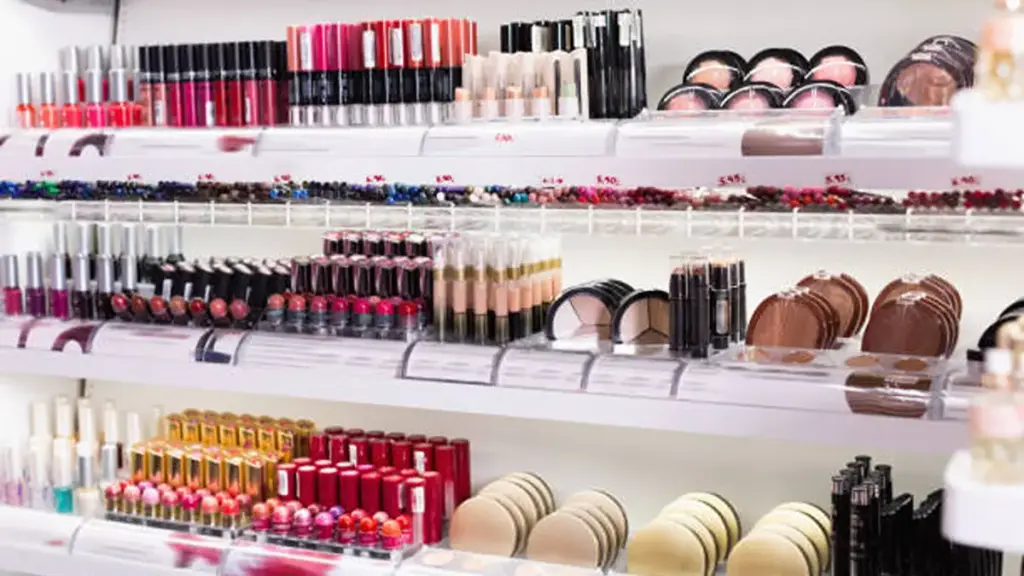
Small MOQ production can reduce the upfront investment for a new brand, but it usually comes with higher unit costs and fewer customization options.
For a new cosmetics brand, the first production run can have a major impact on cash flow. A smaller MOQ reduces the amount of inventory you need to commit to upfront, but it may also mean a higher unit cost and fewer options for custom formulas or packaging. The right balance depends on your budget, product strategy, and expected sales volume.
Key Benefits for Emerging Brands
Opting for smaller production runs is a strategic move to manage risk and capital when you’re just starting out. The advantages are mostly financial and operational.
- It lowers your upfront capital investment. This massively reduces the financial risk if a product doesn’t sell and saves you from getting buried in unsold inventory.
- You can validate products and test the market much faster. Launching smaller, experimental batches gives you real-world sales data before you commit to a larger order.
- Cash flow management becomes much easier. You’re not tying up money in inventory holding costs, and there’s less risk of stock expiring before it sells.
- You can launch with more product diversity. The same budget can be spread across more shades or SKUs, giving your initial launch a wider appeal.
Primary Challenges and Trade-offs
Smaller orders also have trade-offs. Unit costs are usually higher, and some factories may limit your choices of formulas, packaging, or production methods.
- The cost per unit is significantly higher. Without economies of scale in production and material sourcing, your margins will be thinner.
- You get very limited access to custom formulas and packaging. Unique components and bespoke formulations almost always require large production runs to be feasible.
- Smaller production runs do not automatically mean lower quality. However, they may involve more production changeovers, lower production efficiency, or less favorable unit economics. Batch consistency depends more on the manufacturer’s process controls and quality management system than on the order size itself.
- It can be hard to find good manufacturers. Many reliable factories are not interested in small orders, and those that are might deprioritize your production run if a bigger client comes along.
Your One-Stop Partner for Custom Cosmetics.
How to Find Reliable Small MOQ Makeup Manufacturers
Finding a good small-batch manufacturer means combining online research with in-person vetting at trade shows and direct, professional outreach to factories in key production hubs.
| Method | Key Actions |
|---|---|
Search Industry Directories |
|
Attend Trade Shows |
|
Contact Factories Directly |
|
How to Evaluate a Makeup Manufacturer
Evaluating a manufacturer means checking its certifications, R&D capabilities, production facilities, quality controls, and export experience. Problems in any of these areas can lead to higher costs, delays, or quality issues later.
Certifications
Certifications are your first line of defense. They quickly tell you if a manufacturer meets basic global standards for safety and quality. Without this documentation, it is much harder to verify whether the manufacturer meets the standards you need.
- Verify the manufacturer’s manufacturing license and quality management system. ISO 22716 provides guidelines for the production, control, storage, and shipment of cosmetic products, so certification can be useful evidence of a manufacturer’s quality management practices. You should also check whether the factory meets the requirements of your target market.
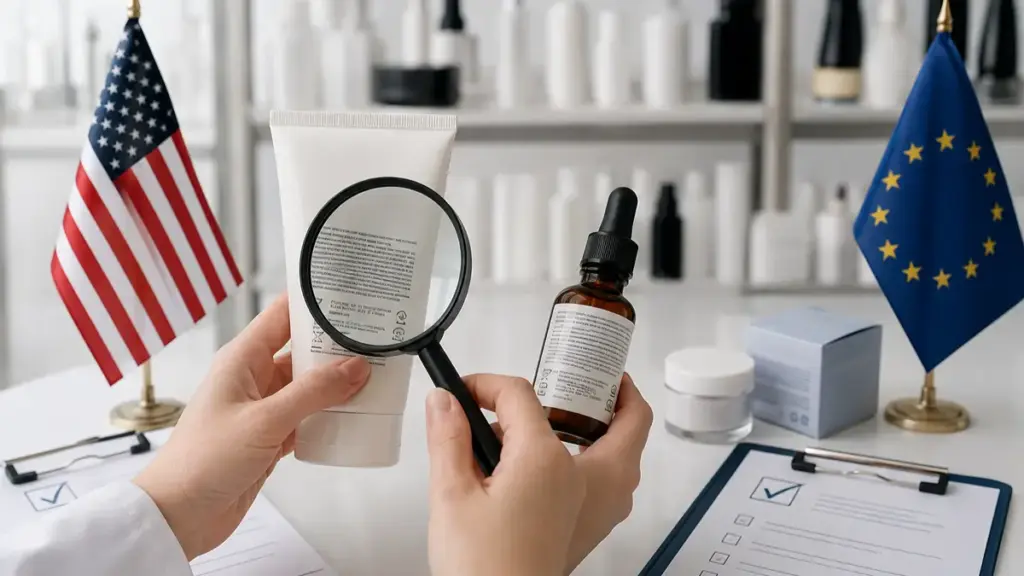
- If you’re selling in the U.S., ask whether the manufacturer can support the applicable MoCRA facility registration and product-listing process. Keep in mind that FDA registration or listing is not the same as FDA approval. For the EU market, ask whether the manufacturer can support the Responsible Person with the technical documentation needed for compliance, including the product information file, safety documentation, and CPNP notification. Previous experience with your target market is another useful indicator, especially when the destination market has specific documentation or labeling requirements.
- Always demand copies of the actual certificates. Don’t just trust a logo on their website. Check the expiration dates to make sure they are valid. An expired certificate is worthless.
R&D Capabilities
A manufacturer’s R&D strength determines whether you can create a unique product or if you’re stuck selling the same thing as everyone else. This is where brand differentiation begins.
- Assess their in-house team and lab. Do they have actual chemists on staff? Ask about their lab equipment. A serious partner can create or modify formulas, not just fill bottles.
- Clarify their service model. Know the difference between private label and OEM. In this article, private label refers to using an existing manufacturer formula with your branding, while custom or OEM development refers to creating or modifying a formula to meet your specifications. Terminology can vary between manufacturers, so confirm exactly what is included in the supplier’s service. OEM offers uniqueness but comes with higher MOQs and costs.
- Protect your formula. If you’re creating something unique (OEM), get a Non-Disclosure Agreement (NDA) in place. You also need to explicitly define who owns the intellectual property (IP) for the final formula in your contract.
Productiecapaciteit
You need a partner who fits your current scale but can also grow with you. A mismatch in capacity leads to cash flow problems or supply chain failures.
- Confirm their Minimum Order Quantity (MOQ). Make sure their required minimum aligns with your launch budget and sales forecasts. A factory with a 10,000-unit MOQ is not a fit for a brand testing the market with 500 units.
- Ask about lead times for both samples and bulk orders. You need these numbers to build a realistic launch timeline and manage your inventory. Find out how long it takes from deposit payment to shipment.
- Inquire about their ability to scale. Ask about their production lines and make-up productie capacity. If your brand grows quickly, the manufacturer should also have enough production capacity to handle a significant increase in order volume.
Why Manufacturing Infrastructure Matters
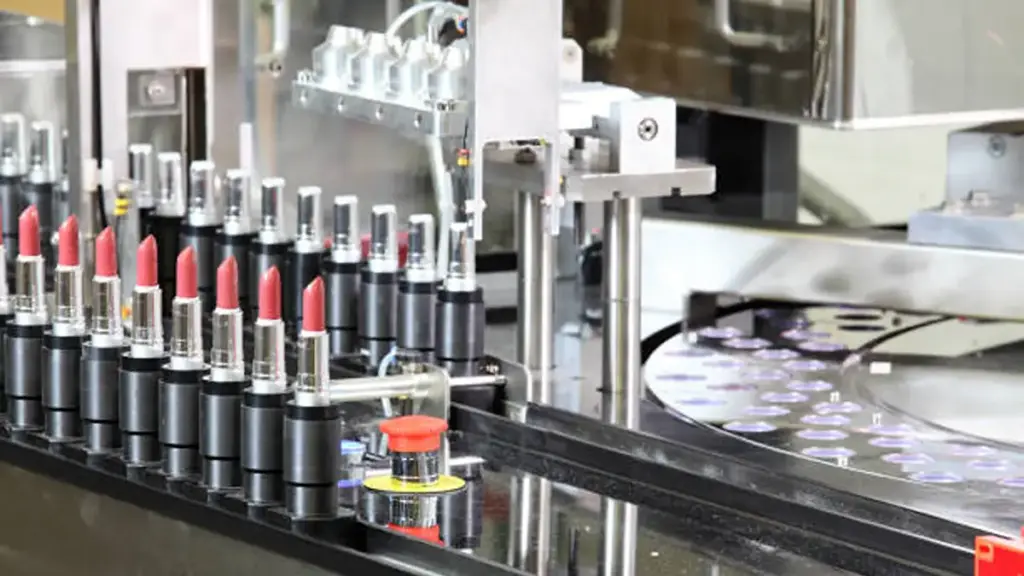
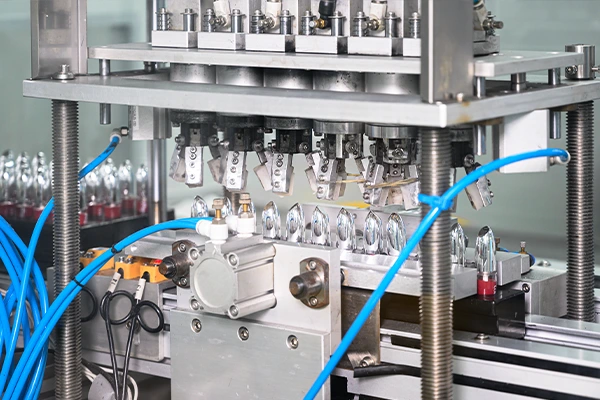
A manufacturer’s infrastructure matters just as much as its quoted MOQ, especially when a new product needs to move from sampling to regular production. Siloran, a cosmetics manufacturer established in 1991, operates a 40,000-square-meter facility with around 400 employees and a dedicated R&D team. Its production setup includes separate workshops for daily chemical products, lip makeup, powders, spraying, and batching, supported by automatic filling, capping, packaging, and lipstick production equipment. The factory also operates a GMP-standard 100,000-grade clean workshop and follows ISO 22716 quality management practices. This combination of R&D resources, specialized production areas, and automated equipment gives brands a manufacturing partner that can support different product categories and larger production volumes as demand develops. For buyers comparing Chinese makeup manufacturers, these operational details are useful indicators of whether a supplier can support a product beyond the initial order.
Export Experience
Manufacturing is only part of the process. The supplier also needs to understand export documentation, freight arrangements, and the requirements of your destination market.
- Review the countries they currently ship to. If they have a track record of shipping to your target market, they already understand the specific regulations and documentation required. This dramatically reduces your risk.
- Check their ability to provide customs documents. Ask whether the manufacturer can provide the export and product documentation required for your shipment, such as a Commercial Invoice, Packing List, SDS where applicable, ingredient information, and any market-specific documents. Missing or incorrect paperwork is a common reason for shipments getting stuck at the port.
- Confirm their logistics familiarity. Ask if they are comfortable working with international freight forwarders and handling smaller-volume shipments via air freight. Many new brands start with air shipments, so this is a crucial capability.
How to Reduce MOQ Requirements
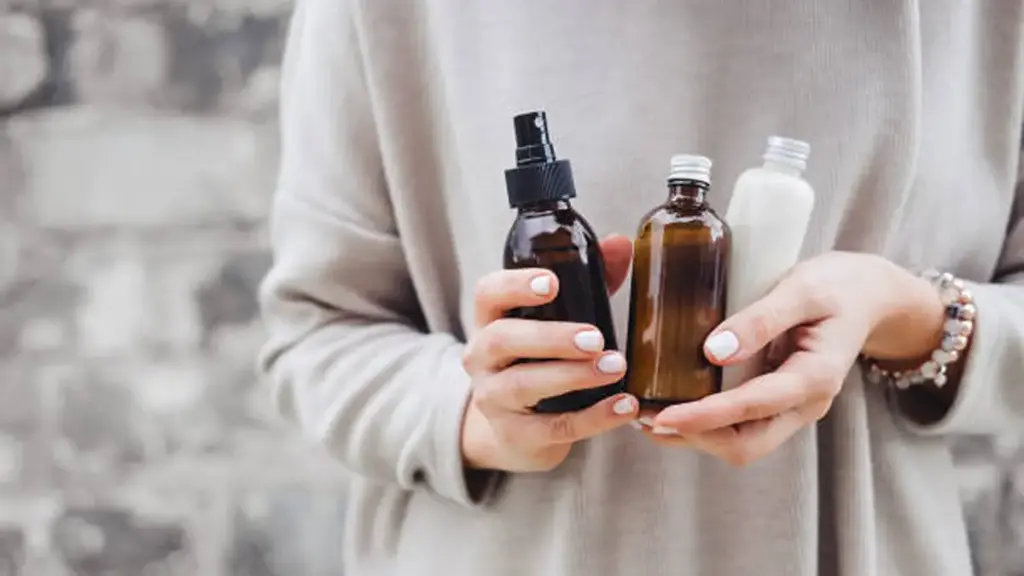
To lower MOQs, make your order fit the factory’s existing workflow. Use their stock formulas and packaging to avoid the high costs of custom development.
Minimum order quantities aren’t arbitrary numbers; they’re calculated to cover the factory’s costs for setup, materials, and labor. If you want a lower number, you have to lower their cost and risk. This means ditching the fully custom mindset for your first run and making your project as easy as possible for them to produce. The strategy boils down to using what the factory already has on hand.
Stock Formulas
Formula batch size is one factor that can affect a factory’s MOQ. Developing a new one requires expensive R&D time, stability testing, and ordering new raw materials—each with its own MOQ from a chemical supplier. The simplest way to bypass this is to use the factory’s pre-existing, validated formulas.
- Use the manufacturer’s validated base formulas for products like foundation, lipstick, or powder. These formulas may already have undergone the manufacturer’s internal testing and quality checks, reducing the need for a fully custom development process.
- Limit your customization to minor changes like adjusting a shade or adding a fragrance. Avoid creating a completely new formula from scratch, as that triggers a full development process.
- Group multiple SKUs under a single base formula. For example, order five lipstick shades that all use the same base. This lets you meet the MOQ for one large batch of formula, not five small ones.
- Choose ingredients and pigments the factory already keeps in stock. If a formula requires a specialty ingredient that the factory does not normally stock, the supplier’s own purchasing minimum may increase your required order quantity.
Stock Packaging
Often, the packaging MOQ is the real obstacle, not the formula. The factory orders components from its own suppliers, who have massive minimums for custom work. You get around this by selecting packaging that the factory already buys in bulk for other clients.
- Select from the factory’s catalog of standard components. This lets you benefit from their bulk purchasing power, as they use these same jars, tubes, and compacts for multiple brands.
- Avoid custom molds for things like unique lipstick cases or compacts. The tooling costs are high, and the minimum order quantities from the mold maker are even higher.
- Standardize components across your product line. Using the same bottle for your primer and foundation allows you to combine the order volume for both products.
- Opt for simple decoration like a one-color logo print or a sticker label. Move the complex, multi-color branding to the outer box, which usually has a much lower print MOQ.
Shared Production Runs
Production scheduling can also affect MOQ. A factory may be more flexible with a smaller order when it can be efficiently scheduled alongside an existing production run using the same or a similar formula. This can help reduce additional setup and changeover costs, but availability depends on the factory’s production schedule and policies.
- Ask whether the factory can accommodate your order within an existing production run of the same or a similar product. If their production schedule allows it, this may reduce some setup costs and make a smaller order more feasible.
- Ask about the factory’s production calendar and whether your order can be scheduled during an existing run for a similar formula. When production can be organized this way, the factory may have lower downtime and changeover costs.
- Schedule your production during the factory’s off-peak seasons. They are more likely to be flexible and accept smaller “fill-in” orders when their lines aren’t running at full capacity.
- For very small quantities that a direct manufacturer cannot accommodate, a trading company or sourcing partner may be another option. Some trading companies consolidate demand from multiple buyers, although their pricing, quality control, and level of direct factory access should be reviewed carefully.
Frequently Asked Questions
How do I find a makeup manufacturer in China that accepts small orders?
To find a manufacturer for small orders, focus on private label or white label suppliers. Search on B2B platforms like Alibaba using terms such as “private label makeup low MOQ.” These suppliers may use existing formulas and stock packaging to offer lower MOQs than fully customized production, but the actual minimum can vary significantly by manufacturer, product type, and production requirements.
Why are minimum orders so high for custom cosmetic formulas?
Custom formulas have high MOQs because of significant fixed costs. These include research and development, dedicated lab time, and production line setup and cleaning. Factories also face minimum order requirements from their own suppliers for raw ingredients and custom packaging. Spreading these costs over a large batch makes the per-unit price viable.
Can I get a custom color with a low minimum order?
Yes, some manufacturers may offer custom shades at a relatively low MOQ when they can use an existing base formula and readily available pigments. Using stock packaging can also help keep the order size and development costs lower. However, the actual MOQ varies by product, formula, pigments, packaging, and the manufacturer’s production requirements. For a first order, ask the manufacturer whether a custom shade can be developed from an existing formula rather than creating a completely new formula from scratch.
What is the difference between a cosmetic trading company and a direct factory?
A direct factory is the manufacturer that formulates, mixes, and packages the cosmetic products in-house. A trading company acts as an intermediary, sourcing products from various factories and managing the process for you. Working directly with a factory offers more control over the formula and quality assurance, while a trading company may provide a wider product variety and more flexibility for very small orders.
How do Chinese factories determine their minimum order quantities?
Factories calculate MOQs based on a few core factors. The main drivers are the minimum batch size their equipment can efficiently process, the minimum quantity of packaging components they must buy from their suppliers, and the costs associated with setting up and cleaning the production line. Together, these elements determine the smallest run that is economically feasible for the factory.
Does a low minimum order mean I will get lower quality cosmetics?
A low MOQ does not automatically mean lower quality. Product quality depends on the manufacturer’s production standards, such as GMP certification, their ingredient sourcing, and their kwaliteitscontrolesystemen. A good factory maintains the same quality standards for both large and small production runs. The typical trade-offs for a low MOQ are a higher cost per unit and fewer customization options, not a sacrifice in quality.
Laatste gedachten
For a new brand, a smaller first order is primarily a way to test demand before committing to larger inventory volumes. For an initial launch, stock formulas and standard packaging can make it easier to keep the order size manageable. Custom molds and fully developed formulas are better considered once demand is established. This disciplined approach is your only defense against tying up capital in products that may not sell.
Don’t leave your launch to chance by vetting partners alone. The next step is to turn this knowledge into action with a qualified manufacturing brief. Contact our sourcing specialists to define your product specifications, review suitable formulas and packaging options, and build a production plan around your target order volume.

 Dutch
Dutch  English
  Arabic
  French
  Portuguese
  Russian
  Spanish