

Mascara customization without a clear strategy for differentiation leads to severe margin erosion. Private label brands that rely on generic stock options are often forced into price wars, failing to build brand equity and ultimately becoming indistinguishable from competitors in a saturated market.
This analysis benchmarks formula and component choices against specific performance outcomes. We evaluate how lengthening formulas use cellulose-based fibers and how silicone brushes deliver clean separation, helping you engineer a product that aligns with a clear market position and avoids the commodity trap.
What Can Be Customized in Mascara?
Mascara is tailored at the factory—from formula to packaging—or customized by the user through application techniques like layering different products to get a specific look.
| Brand & Manufacturing-Level Customization | User-Driven Customization & Application |
|---|---|
|
The core product is engineered. This includes the formula’s performance (lengthening, volumizing), the brush’s shape and material, the tube’s design, and the final packaging. |
The final look is created by the user. This involves layering different mascaras (“cocktailing”), changing application techniques, or simply choosing specific products for their lash type. |
Brand & Manufacturing-Level Customization
This is where the product is built from the ground up. Brands and their manufacturing partners make key decisions that define the mascara’s performance and identity before it ever reaches a shelf.
- Formula: Key attributes like performance (lengthening, volumizing), base (waterproof, tubing), texture, and added ‘care’ ingredients are tailored.
- Brush & Wand: The material (fiber vs. silicone), shape (curved, tapered), and size are selected to match the formula’s goal.
- Color: A spectrum of shades beyond classic black can be developed, including browns, fashion colors, and clear formulas.
- Tube & Componentry: The physical tube’s shape, size, material, and color are designed, including the internal wiper system which controls product load.
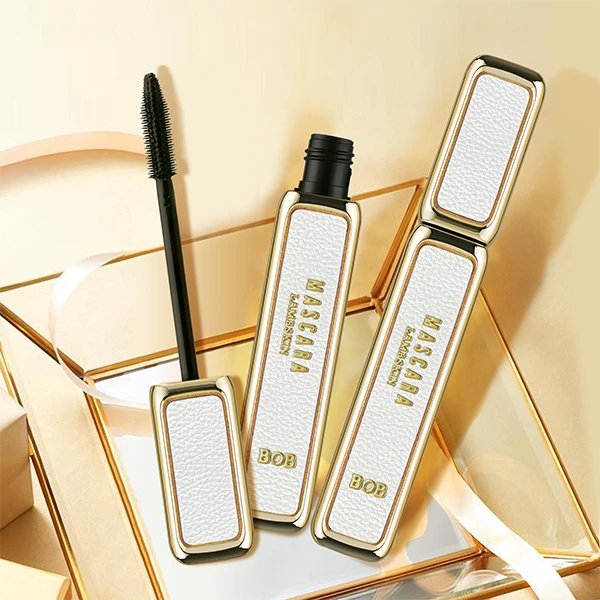
- Packaging & Boxes: Outer packaging is created with custom structures, graphics, and finishes to improve branding and shelf presence.
- Guided Services: Some brands offer quizzes or consultations that recommend a specific formula and brush pairing based on user needs.
User-Driven Customization & Application
Once the product is in hand, customization shifts to the individual. How someone uses the mascara has a huge impact on the final result, allowing for looks that go beyond the product’s primary design.
- Mascara Cocktailing: Users can layer different mascara types, like a lengthening base followed by a volumizing top coat, to achieve a unique result.
- Application Technique: The final look is adjusted by changing the application method, such as the number of coats or wiggling the wand at the lash base.
- Custom Color Layering: Applying colored mascara over a black or brown base allows users to create subtle tints or bold custom shades.
- Personalized Selection: Users customize their outcome by choosing specific products from a brand’s portfolio that best match their lash type (e.g., short, straight, or sparse).
Custom Mascara Formulas
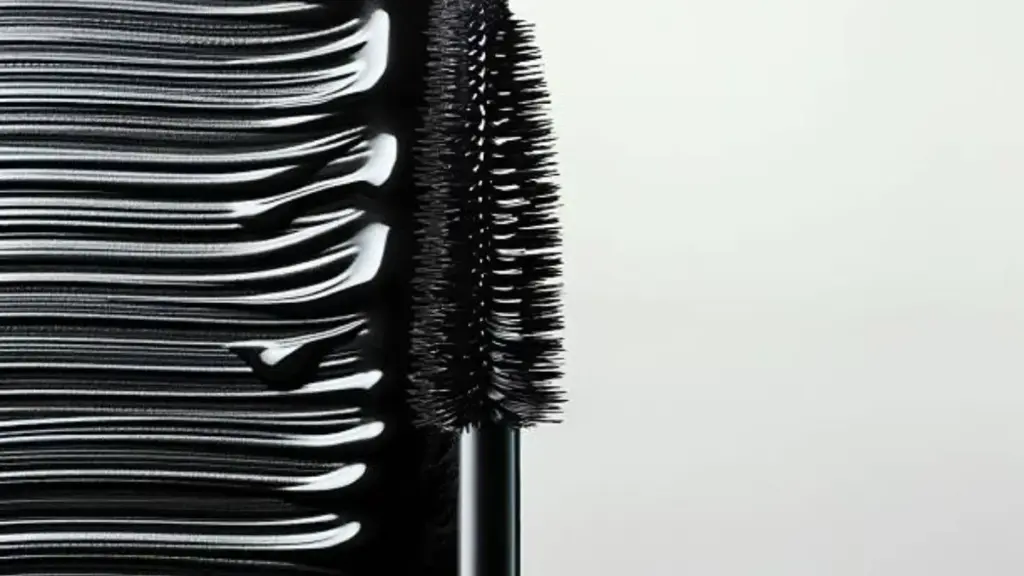
Developing a custom mascara formula requires more than selecting performance ingredients. Mascara manufacturers must also consider formulation stability, product safety, and compliance with cosmetic manufacturing standards such as Good Manufacturing Practices (GMP).
Verlenging
The main goal here is to visibly extend lash length with clean separation and definition. These formulas use cellulose-based fibers that adhere to the tips of the lashes, creating tiny physical extensions. Specific film-formers are used to secure these fibers and pigments along the lash without adding bulk. The formula’s viscosity is tightly controlled, allowing for buildable coats while preventing clumps and ensuring the fibers deposit evenly.
Volume geven
Volumizing formulas are designed to boost the thickness and density of the lash line for a fuller, more dramatic appearance. They feature a higher concentration of waxes and specialized bulking agents to deposit more product with each stroke. The formula is typically thicker than lengthening mascaras to maximize product pickup and application at the lash base. They often contain a heavy load of black iron oxide pigments to create a dark, dense lash line that can mimic an eyeliner effect.
Krullen
These formulas focus on lifting lashes and holding them in a curled position, which is ideal for straight or downward-pointing lashes. They employ stiff polymer films that contract as they dry, creating a structure that physically supports an upward curl. The formula must be lightweight to prevent heavy waxes from weighing lashes down and undoing the lift. A quick-drying profile helps set the curl rapidly after application, locking the lashes into their lifted shape.
Waterdicht
Waterproof mascara is engineered to resist water, sweat, humidity, and tears, which prevents smudging and flaking. The key ingredients are hydrophobic film-formers, such as polyurethane dispersions, that form a water-resistant coating around each lash. These formulas often contain little to no water, relying instead on volatile solvents and oils that won’t break down from moisture. The system maintains the primary effect—whether it’s lengthening, volumizing, or curling—under humid or wet conditions.
Your Turnkey Partner for Bestselling Mascara
Choosing the Right Mascara Brush
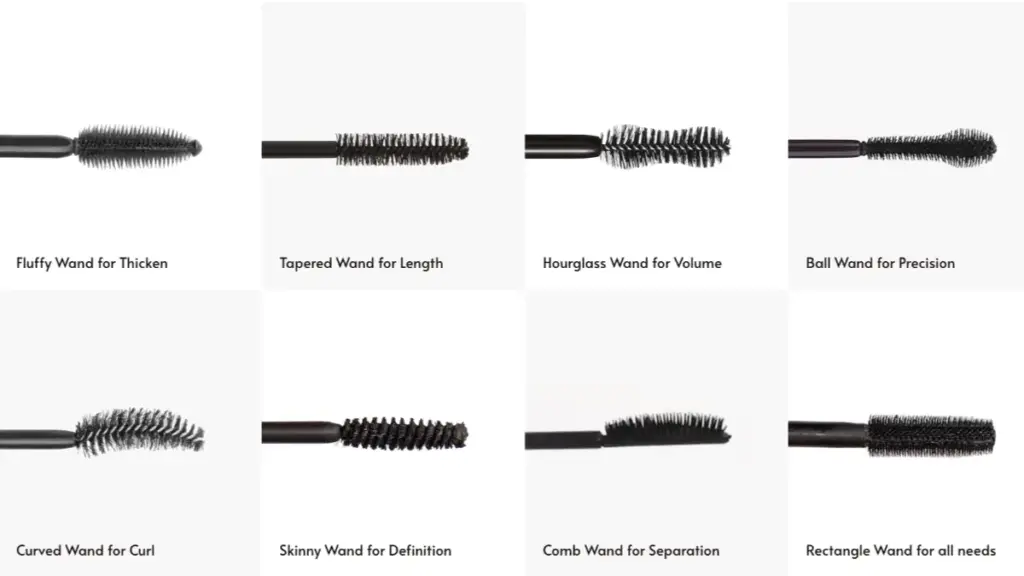
The mascara brush you choose directly controls the final look. Silicone excels at separation, fiber builds volume, curved wands lift, and hourglass shapes create a fanned-out effect.
Silicone Brushes
These brushes are all about clean definition. They comb through lashes to separate and lengthen them without clumping. The firm, evenly spaced bristles apply a thin, consistent coat of mascara. This makes silicone a great choice if you want a natural, lash-by-lash finish. It’s also the go-to for anyone with lash extensions, since it can carefully comb through them without snagging.
Fiber Brushes
Fiber brushes are built to create volume, fast. Their dense, spiral-wound nylon bristles are designed to hold and deposit a lot more mascara. This helps build a thicker, fuller lash line for a classic, high-impact look. This brush type is ideal for anyone with sparse or fine lashes who wants to add visible bulk and drama.
Curved Brushes
The “C” shape of a curved brush is designed to hug the natural curve of your lash line. It’s engineered to lift lashes directly from the root, creating a curl that can often eliminate the need for an eyelash curler. These wands are particularly effective for straight or downward-pointing lashes, as they provide even coverage and lift from one corner of the eye to the other.
Hourglass Brushes
This brush is narrow in the middle with fuller ends, a shape designed to produce a fanned-out, cat-eye effect. The wider tips are meant to load extra mascara onto the lashes at the inner and outer corners, adding volume and drama exactly where you need it to elongate the eye. Hourglass brushes are best for creating a full, wide-eyed look that visually stretches the eye shape.
Mascara Packaging Customization
Mascara packaging customization aligns the tube, cap, and decoration with brand identity. The goal is ensuring all components work together for a good user experience and product performance.
Tube Design
The tube itself is a primary customization point. Brands can specify its shape, size, material, and fill volume to match branding and performance goals. Design focuses heavily on comfortable handling and ease of use, because that directly affects the customer’s experience. Specific choices include materials like ABS and dimensions tailored to the mascara formula and the chosen brush.
Cap Design
The cap is much more than a simple lid. It’s a functional component that controls closure security, grip, and aesthetic consistency. The cap works directly with the wiper and the tube neck to regulate how much product gets loaded onto the wand. Custom cap design focuses on perfecting the fit, user comfort, and styling to match the product’s market position.
Decoration Options
Decoration is how a brand makes the package its own. Printing and hot stamping are common methods for applying logos, branding, and other visual elements. Custom graphics, printing methods, and surface finishes allow brands to create packaging that matches their visual identity and improves product differentiation at retail. Finishes like metallic tones or special surface treatments can also be used to create a more premium look and feel.
Branding and Logo Customization
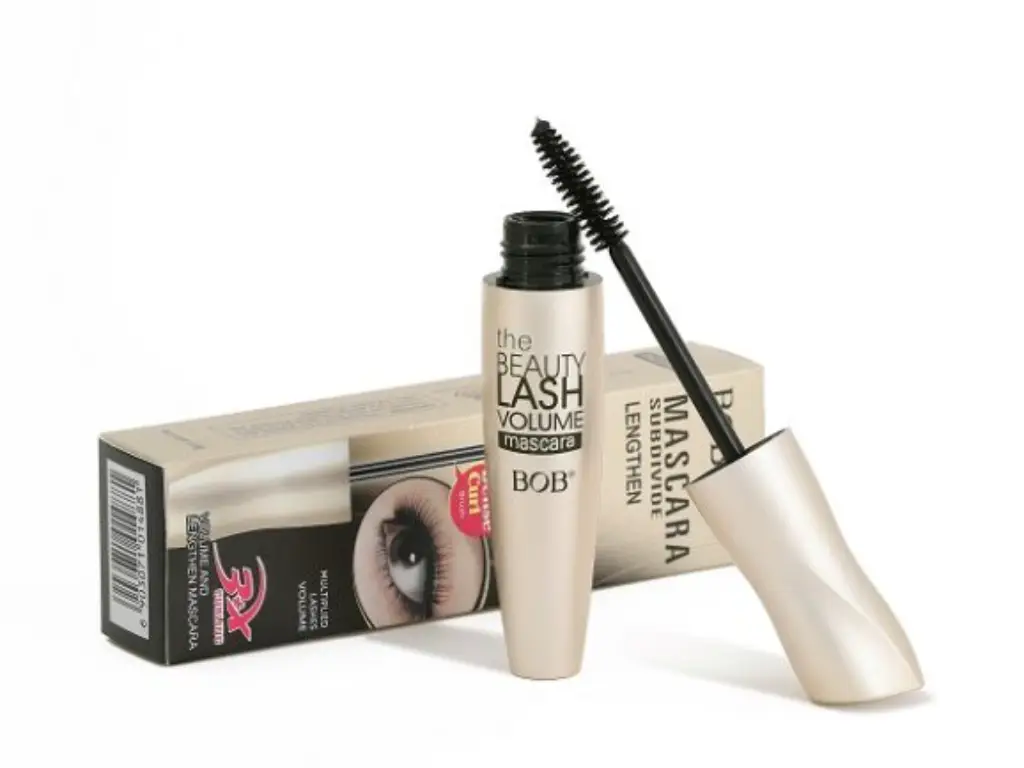
A scalable brand system needs clear rules on logo usage and color to allow high-volume customization while protecting the brand from dilution and inconsistency.
Structuring a Scalable Brand System
To handle high-volume customization, you need more than just a logo file. You need a scalable system of brand assets. This approach allows teams to choose the right logo variant for any context—from a tiny app icon to large-format printing—without guessing or making damaging modifications.
A robust logo system typically includes several specific assets:
- Primary Logo: The full version with the icon and wordmark, used for most major placements.
- Secondary Lockups: Alternative arrangements, like horizontal or vertical versions, designed for constrained spaces.
- Icon or Mark: The simplified symbol used alone for small surfaces like favicons, app icons, or social media avatars.
- Wordmark: The text-only version for situations where the company name needs to carry all the recognition.
This system is governed by brand identity standards, often called a brand guide. These aren’t suggestions; they are the rules that prevent brand erosion. The guidelines define precisely what can and cannot be changed, ensuring every customized product looks like it came from the same company. The core elements are non-negotiable to protect brand equity. Customization is allowed, but only within a controlled framework.
The fixed, non-negotiable elements always include the core logo shape, its proportions, and the primary brand colors. The areas for controlled customization usually involve selecting from pre-approved logo lockups, using monochrome versions on complex backgrounds, and applying colors from the official brand palette in specific, pre-defined ways.
Applying Usage Guidelines in Customization Workflows
Brand guidelines are the operational layer that turns brand strategy into consistent output. They give production teams, partners, and even automated systems clear, unambiguous instructions for applying the brand to customized products. Without these rules, every customization request becomes a subjective design project, which is impossible to scale.
Core usage rules are simple and direct. They cover the non-negotiables:
- Color Versions: When to use the full-color, one-color (black or brand color), or reversed (white) logo.
- Minimum Size: The absolute smallest the logo can be reproduced in print (mm) or on screen (px) before it becomes illegible.
- Clear Space: The required empty margin around the logo to prevent it from being crowded by other elements.
- Background Control: Rules for placing the logo over images or colored backgrounds, including a list of prohibited placements that reduce contrast.
Enforcing these rules in a high-volume workflow isn’t left to chance. It requires embedding the standards directly into the tools and processes. Using design templates with locked brand elements is a common strategy. This allows users to customize designated fields—like a name or a photo—while the logo, colors, and layout remain fixed and on-brand. Providing a central library of pre-approved logo files also prevents people from using low-quality or incorrect versions they found online.
The main risks in any customization environment are logo distortion, inconsistent color and font application, and general brand dilution. A clear policy that prohibits altering the logo, combined with centralized asset management and regular quality checks, is the best defense. This discipline preserves the brand’s consistency, which is a key driver of trust and conversion.
Small MOQ Custom Mascara Solutions
Small MOQ programs let brands launch professional mascara without massive investment. They offer flexibility in formulas and packaging, making them ideal for startups and market testing.
Lowering Market Entry Barriers
The main point of small minimum order quantity (MOQ) mascara is to get a professional product to market without tying up a ton of cash. For emerging brands or those testing a new line, committing to tens of thousands of units is a huge financial risk.
Small batch programs can reduce initial inventory risk and allow brands to test products before moving into larger-scale production.
Suppliers focused on this model offer private label mascara starting around 1,000 units per SKU. This is a realistic entry point. It allows you to launch, get customer feedback, and validate demand before scaling. You avoid the much higher MOQs of 10,000 to 12,000+ units, which are typically required for fully custom-molded tubes or unique brush designs. This approach significantly reduces inventory risk and accelerates your speed to market.
Core Customization Areas
Even with low MOQs, you get meaningful control over the product. The customization happens within a framework of pre-vetted components, which keeps costs down and ensures quality. Here’s what you can typically customize:
- Formula Selection: You’re not inventing a formula from scratch. Instead, you select from a supplier’s library of stable, market-tested bases. This includes options for lengthening, volumizing, curling, and waterproof effects, as well as claims like “clean,” vegan, or smudge-proof.
- Applicator and Components: The brush and wiper system are critical for performance. Suppliers provide a catalog of stock options—silicone vs. fiber brushes, curved vs. straight wands—that you can pair with your chosen formula. This lets you tailor the application experience without paying for new molds.
- Primary Packaging Decoration: You pick a stock tube and cap, then make it your own with branding. This usually involves custom coloring the components to match your brand palette and adding your logo via screen printing or hot stamping for a more premium metallic finish.
- Secondary Packaging: A custom-printed box is a powerful tool. Even if the mascara tube is a standard shape, a unique, well-designed box creates strong shelf presence and a better unboxing experience. You control the materials, printing, and all on-pack messaging.
Laatste gedachten
While sourcing individual components seems cheaper, a successful mascara is an engineered system. The formula, brush, and wiper must be expertly matched to prevent performance failures and protect your brand’s reputation. This managed approach is the difference between a market success and a costly inventory write-off.
The next step is to pair a proven formula with the right applicator for your performance goal. Our team can guide you through our library of market-tested components and low MOQ options. Contact us to define your custom mascara specifications.
Frequently Asked Questions
Can I customize my own mascara formula?
Yes. For brands, this involves partnering with a cosmetic manufacturer to develop a bespoke formula, brush, and packaging based on specific performance goals like lengthening, volumizing, or curling. This professional process ensures safety, stability, and regulatory compliance. For consumers, services often use a quiz to match you with a pre-designed, lab-tested formula and brush combination.
What are the branding options for private label mascara?
Private label mascara offers many branding options. You can position your brand through the formula’s story, such as “clean,” “natural,” or claims like “lengthening” or “waterproof.” You can also select from a catalog of unique brush designs and customize the packaging with your brand’s colors, logo, and finish like matte or glossy.
Can I provide my own packaging to the factory?
Yes, you can often provide your own packaging, but it requires pre-approval from the factory. The manufacturer will need to verify that your packaging is compatible with their filling and sealing equipment and meets all quality and safety standards. You must provide detailed specifications, and there might be a trial run to test for issues before full production begins.
Is a custom mascara mold expensive?
Creating a custom mold for a component like a brush or tube involves a significant one-time cost, typically several thousand dollars. It is a strategic investment that becomes cost-effective for large production volumes, usually 50,000 units or more. For smaller brands, using a manufacturer’s stock components and customizing the color and printing is a more common approach.
How is a mascara bottle designed?
A mascara bottle is designed as part of a complete system that includes the cap, wiper, and brush. The process considers the bottle’s shape for an ergonomic grip, the material for product compatibility and recyclability, and the neck design to ensure a proper seal. The final design must be manufacturable and is usually tested for leaks and usability.
Do you offer ‘clean beauty’ customization?
Yes, we can offer “clean beauty” customization. This means you can create a mascara formulated without certain ingredients, such as parabens, sulfates, and phthalates. We work with a clearly defined list of excluded ingredients to ensure transparency. You can also incorporate other values into your product, such as making it vegan, cruelty-free, and using sustainable packaging options.

 Dutch
Dutch  English
  Arabic
  French
  Portuguese
  Russian
  Spanish