
Mono-material packaging is a cosmetic package built from one resin. Cap, body, mechanism, and closure all use the same polymer, so the whole unit can enter a recycling stream without being taken apart. Conventional lipstick tubes mix plastic, metal, glass, and adhesive. Most recovery facilities cannot separate those layers, which is why a small makeup tube is usually landfilled even when its plastic looks recyclable.
For an OEM buyer, that difference has moved from a marketing idea to a specification item. EU packaging rules now grade packages by how well they can be recycled, and generic “eco-friendly” claims face legal limits. This guide defines the term and shows where a single-resin design works in color cosmetics. It also names the failure points to check before you commit tooling money, and lists what a supplier should document.
What Is Mono-Material Packaging in Cosmetics?
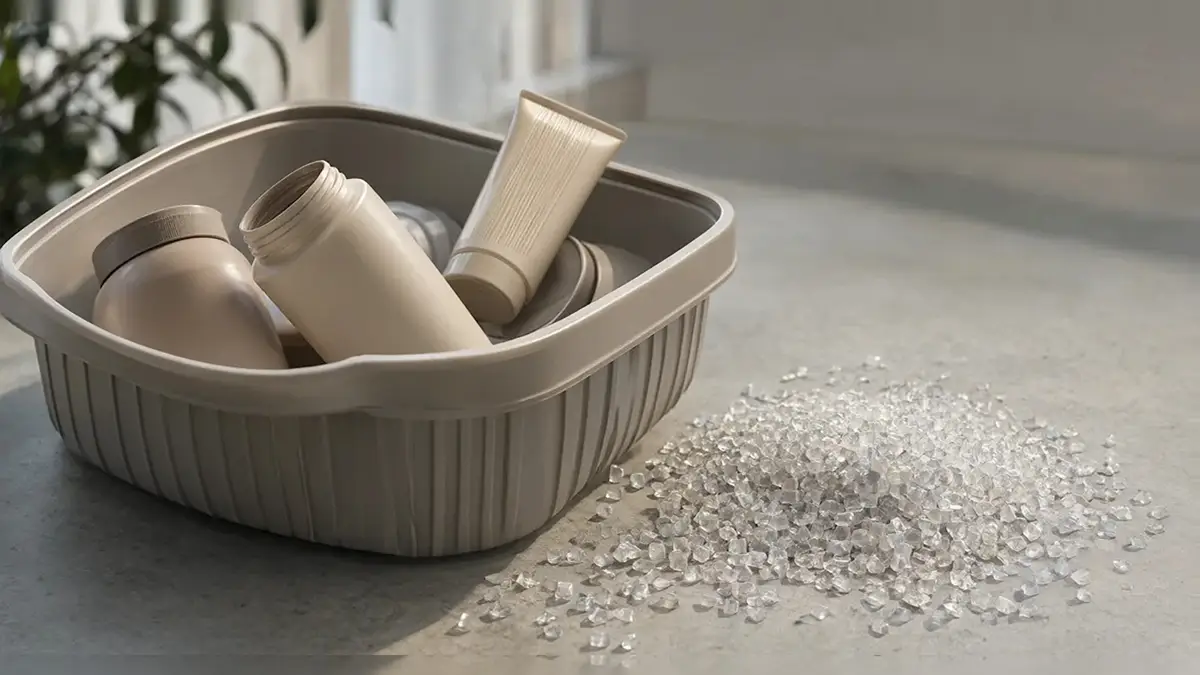
Mono-material packaging uses one polymer across every structural part of a package, which lets recyclers process the item as a single material instead of separating layers first.
The rule of thumb is simple. If a recycler has to pull the item apart to recover the plastic, the package is not mono-material. A dropper assembly is the standard counter-example. It combines a rubber bulb, a metal spring, and a glass pipette, and each part has to be separated before any of it can be recovered.
A single resin choice does the work. In color cosmetics, polypropylene (PP) covers most structural parts of a lipstick because it tolerates filling heat. It also resists the oils and waxes in a bullet formula. Polyethylene terephthalate (PET) is chosen where clarity and rigidity matter more, such as a transparent overcap or a glossy tube wall. Both carry a resin identification code shoppers recognize, but the material only helps if nothing else in the assembly breaks the single-resin rule.
Two terms get confused with mono-material packaging often. The term describes what a package is made of. Post-consumer recycled (PCR) content describes where that material came from, and PCR resin can be its own recycled plastic specification inside a single-resin design. Recyclability describes what happens at the end of life. A package can be mono-material and still fail, because the local collection system may not take that resin. Treat those as three separate line items on your specification sheet.
Why Beauty Brands Switch to Mono-Material
Three pressures push this change at once: published reduction targets, the physical limits of sorting plants, and packaging law.
Sustainability Goals
Brand sustainability statements moved toward packaging because packaging is visible and measurable. Ellen MacArthur Foundation’s 2022 review of cosmetics signatories found that 62% of plastic cosmetic packaging remained non-recyclable. The report named small-format components and undetectable carbon black as part of the problem.
That finding put a design change on the agenda rather than a pledge. Removing metal parts and shrinking the number of resins are levers a brand can pull inside one tooling cycle. A refill program reduces waste by a different route and belongs in the same conversation; our notes on refillable packaging models cover that option.
Recycling Efficiency
Sorting plants separate materials by type, and a small cosmetic tube is a difficult object for them. It is light, it mixes materials, and it can carry a metal part or a glass bead inside a plastic wall. Mixed items that survive sorting contaminate the bale they land in.
Eurostat reported that 42.1% of plastic packaging waste was recycled in the EU in 2023. A single-resin package improves the odds that one small item is recovered as one clean material stream instead of being screened out as residue. Consumers also help or hurt that outcome: if the tube has to be disassembled by hand at the kitchen sink, most people will not do it.
Regulatory Requirements
The EU Packaging and Packaging Waste Regulation, Regulation (EU) 2025/40, entered into force on 11 February 2025 and applies from 12 August 2026. Its design-for-recycling rules grade packaging performance against thresholds of 95%, 80%, and 70% by weight. Packaging that cannot reach the lowest grade is barred from the market from 1 January 2030. Recycled-content floors for plastic packaging start on the same date, between 10% and 35% depending on the application, and rise to between 25% and 65% by 2040.
Two adjacent rules change the paperwork around mono-material packaging. Producer-responsibility schemes for all packaging had to be established across member states by 31 December 2024, and those fees can be modulated by how recyclable a package is. From 27 September 2026, Directive (EU) 2024/825 limits generic environmental claims such as “eco-friendly” or “sustainable” unless the seller can substantiate them.
In the United States, California’s SB 54 program sets state targets of recyclable or compostable packaging and a higher plastic recycling rate by 2032, funded through a producer-responsibility scheme. Implementation rules are still moving. Treat those dates as planning assumptions and confirm current requirements with your compliance counsel.
Common Applications of Mono-Material Packaging
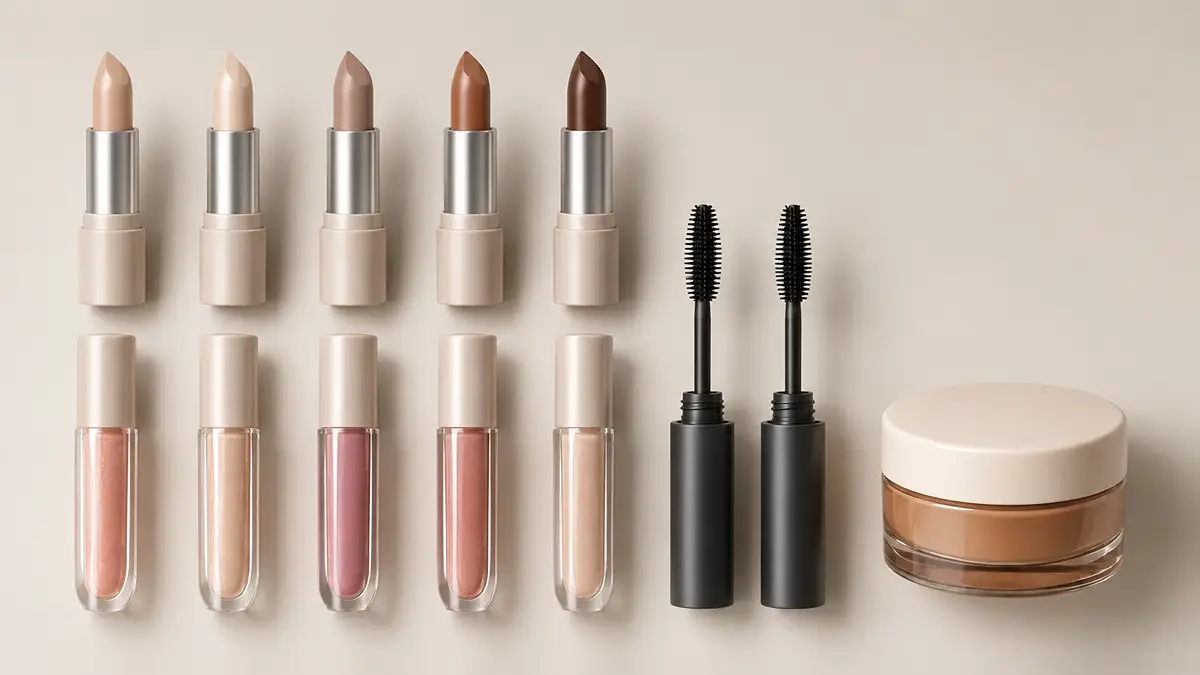
Mono-material packaging converts well in rigid lip and eye components. Barriers, applicators, and decorative finishes are where the claim usually breaks.
Lipstick Packaging
Lipstick is the clearest case. A modern single-resin tube uses PP for the cap, the shoulder, the inner cup, and the base mechanism. The finished unit then enters a stream as one material. The mechanism is the hard part, because a twist-up clutch historically borrowed metal parts for spring tension.
If you want a metal-free claim, ask the supplier to show the mechanism drawing and confirm what the drive and return elements are made of. Weight and feel are the other trade: an all-plastic tube reads lighter than a zinc or aluminum shell, which matters when your price point depends on heft in the hand.
Lip Gloss Packaging
Gloss packaging is usually a tube, a wiper, and an applicator rod. The tube and cap convert to one resin without drama. The applicator does not, because a flocked wand adds short fibers and adhesive to the part. A wiper molded in a different polyethylene can also turn a clean PP tube into a mixed load.
Specify the wiper resin and the applicator type on the same line of the bill of materials as the tube. Non-flocked rods reduce the number of materials and cut the glue line. If a doe-foot feel is essential to how your formula picks up product, keep the flock and drop the single-resin claim for that SKU. A diluted claim is worse than no claim.
Eye Makeup Packaging
Mascara tubes and eyeliner bodies are rigid molded parts, so the shell converts easily. The wand carries the same flock question as gloss, and tubing mascara formulas place higher demands on the seal because the film has to stay stable in the tube. A glass ball inside the wand is a small but common failure point for an otherwise clean single-resin design.
Eyebrow pencils and wood-look sticks sit outside the conversation: a lacquered wood barrel is not a recyclable mono-plastic package, even when the inside is a single wax-and-pigment core.
Skincare Packaging
Skincare spans the widest range of formats, and the conversion difficulty rises with it. Cream jars in PP or PET with a single-resin lid work well. Sunscreen sticks and solid balms are strong candidates because the mechanism is a simple plastic rack-and-pinion, and a balm’s barrier requirement is lower than a serum’s.
Airless pumps and laminated tubes are the exceptions. An airless dispenser needs a piston and a seal system, and a barrier tube for a vitamin C serum may need a multilayer wall to hold stability. Lids with an integrated induction seal also break the rule. Choose the format your formula requires, then decide whether the packaging claim can honestly follow.
Challenges of Mono-Material Cosmetic Packaging
The technical risk is not the tube wall. It is the hidden parts, the sensory expectations of your market, and the recycling system that receives the used package.
Small Parts Break the Claim
One spring, one glass bead, one magnet, or one elastomer seal converts a mono-material package into a mixed package. Each hidden part adds a separation step that no recovery facility performs on a component the size of a fingertip, so one small item cancels the design intent.
Run a component-by-component audit before you print anything on the carton. Count every part that is not the named resin, including adhesive, decoration, and the lining under a lid.
One Resin Carries Every Function
A single resin has to deliver the look, the closure feel, and the heat and chemical resistance a mixed design spreads across four materials. Translucency, a soft-touch coating, and electroplated shine all fight that specification. Coating layers add materials you are trying to remove.
Color brings its own problem. Carbon black pigment is widely used in cosmetic packaging and defeats optical sorting, which is why light, undyed, or clearly identifiable colors recover better. Premium brands can still get a considered look from matte finishes, debossing, and thick walls rather than metallization.
Collection Systems Decide the Outcome
A resin code printed on the bottom is not a promise that collection exists. The US Environmental Protection Agency put the plastics recycling rate at 8.7% in its 2018 materials data. Municipal programs accept a narrow set of formats regardless of what a small component is made of.
Judge the design against the collection reality of your main markets. If your buyers sell into EU households, the single-resin design plus a legible sort instruction is defensible. If they sell into markets without rigid-plastic collection, a refillable or take-back model may reduce more waste than a recyclable one-way tube.
How Suppliers Design Mono-Material Cosmetic Packaging

Mono-material packaging is built from the resin outward. Pick one polymer, remove foreign parts, and control the pigment. Then document every component and test the finished assembly.
Fix the Resin Before the Shape
Tooling decisions follow the resin. PP gives you heat tolerance for filling and resistance to wax and oil, which suits a lipstick bullet. PET gives clarity and a harder surface, which suits a visible gel or a transparent cap. Choosing after the shape looks nice is how buyers end up with a mixed package.
Remove Every Foreign Part
The mechanism redesign is where the value sits. Replacing a metal spring with an elastic plastic element and dropping the glass bead removes the parts that break the claim. Molding the wiper in the same resin family as the tube closes the last gap. Ask for the exploded drawing, not a brochure photo.
Specify Color and Decoration
Pigment choice is a recyclability decision. Undetectable carbon black blocks optical sorting, so avoid it where the market expects a light or transparent pack. Keep decorative steps inside the same material family: mold-in-color, embossing, debossing, and mechanical finish. Metallized coating and a glued label film both work against the design.
Document and Test the Assembly
Ask for a bill of materials that names the resin and the separator parts for every component. Then ask for the stability report for your formula inside that specific tube. A formula that passes in one wall thickness can creep, sweat, or oxidize in another. Our labeling requirements guide covers the claims you may print, which is the second document to line up before launch.
| Component | Hidden Material Risk | What to Specify |
|---|---|---|
| Lipstick base mechanism | Metal parts in the clutch | All-plastic drive, exploded drawing |
| Gloss or mascara wand | Flock fibers, glue, glass ball | Non-flocked rod, bead-free design |
| Wiper | Different polyethylene than tube | Wiper resin named on the BOM |
| Jar lid | Induction seal liner, EPE liner | Liner-free or same-family liner |
| Decoration | Metallized coating, carbon black | Mold-in-color, emboss, detectable pigment |
Design Your Packaging Around One Resin

Frequently Asked Questions About Mono-Material
What does mono-material mean in cosmetics packaging?
It means every structural part of the package is molded from one polymer. A lipstick tube with a PP cap, PP cup, and PP base mechanism qualifies. The same tube with a metal spring inside does not, because a recycler then has to separate two materials from a part smaller than a thumb.
Is a mono-material package always recyclable?
No. Single-resin design removes the separation step, but recovery still depends on local collection and sorting. Small rigid components are screened out by many programs, dark pigments defeat optical sorting, and a resin code on the base does not create a collection route where none exists.
Which plastic is used for mono-material lipstick tubes?
PP is the common choice because it tolerates filling temperatures and resists the oils and waxes in a bullet formula. PET appears where clarity and a harder surface matter, such as a transparent cap or a visible gel. Some suppliers also offer PP with post-consumer recycled content, which combines a single resin with a recycled feedstock.
How do I verify a supplier’s single-resin claim?
Request a bill of materials that names the resin for every component, including the wiper, seal, liner, and spring equivalent, plus an exploded drawing of the mechanism. Then ask what the decoration process is, since a coating or label film adds materials. Any supplier who cannot produce those two documents is describing a hope.
Does a single-resin tube shorten the shelf life of a formula?
Not when it is engineered and tested. Barrier performance depends on wall thickness, seal design, and pigment rather than on the number of materials. A poorly fitted cap or a porous paper component will let in air and light. Run stability testing on the finished assembly, not on the formula alone.
When do the EU packaging design rules apply?
Regulation (EU) 2025/40 applies from 12 August 2026. Its design-for-recycling grading bars packaging below the lowest grade from 1 January 2030, and recycled-content floors for plastic packaging start the same date. Delegate acts set the detailed grading methodology, so plan tooling around the 2030 date rather than the announcement date.
Final Thoughts on Mono-Material Packaging
A mixed-material tube is now a compliance item, not only a design preference. Grading by recyclability, producer-responsibility fees, and the limits on generic green claims all point the same way: fewer materials per package, documented part by part.
Before you commit to a claim, get the exploded drawing and the bill of materials. Then pick the resin your filling process actually needs and test your formula in the finished assembly. Order samples in two candidate designs and put them through your own heat, drop, and stability checks. Send us the component list and we will tell you honestly whether a single-resin version fits your formula and your price point.