

Choosing the wrong applicator geometry leads to formula clumping and poor delivery during high-speed application. For developers in the eye makeup sector, selecting from various mascara wand types requires a deep understanding of structural synergy to prevent a premium formulation from becoming a market liability.
In this guide, we evaluate the specific types of mascara wands required to match your liquid viscosity for optimal pickup efficiency. We also examine modern material specifications and rapid prototyping methods to help you engineer a high-performing product and ensure a successful brand launch.
Types of Mascara Wands and Their Application Effects
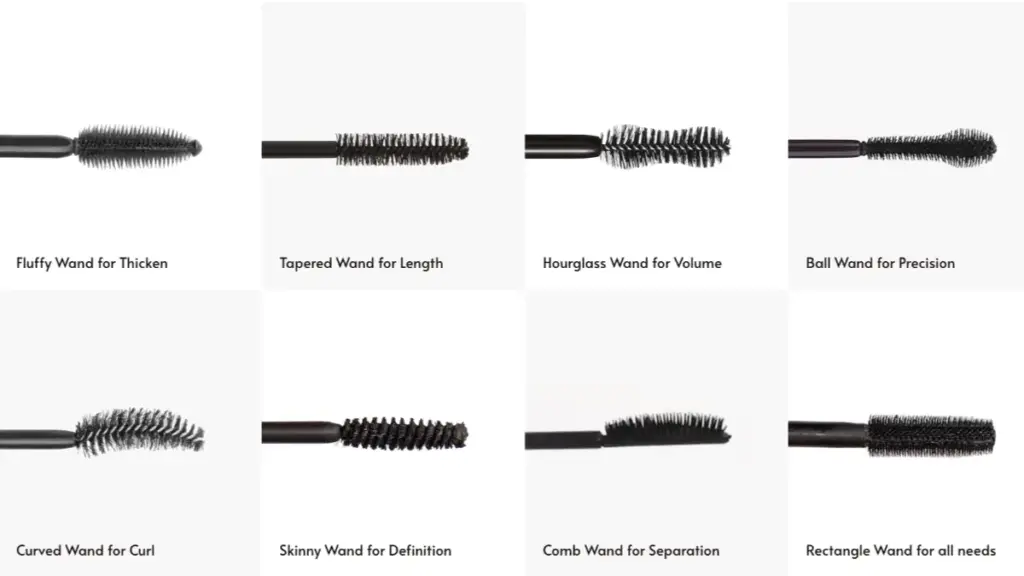
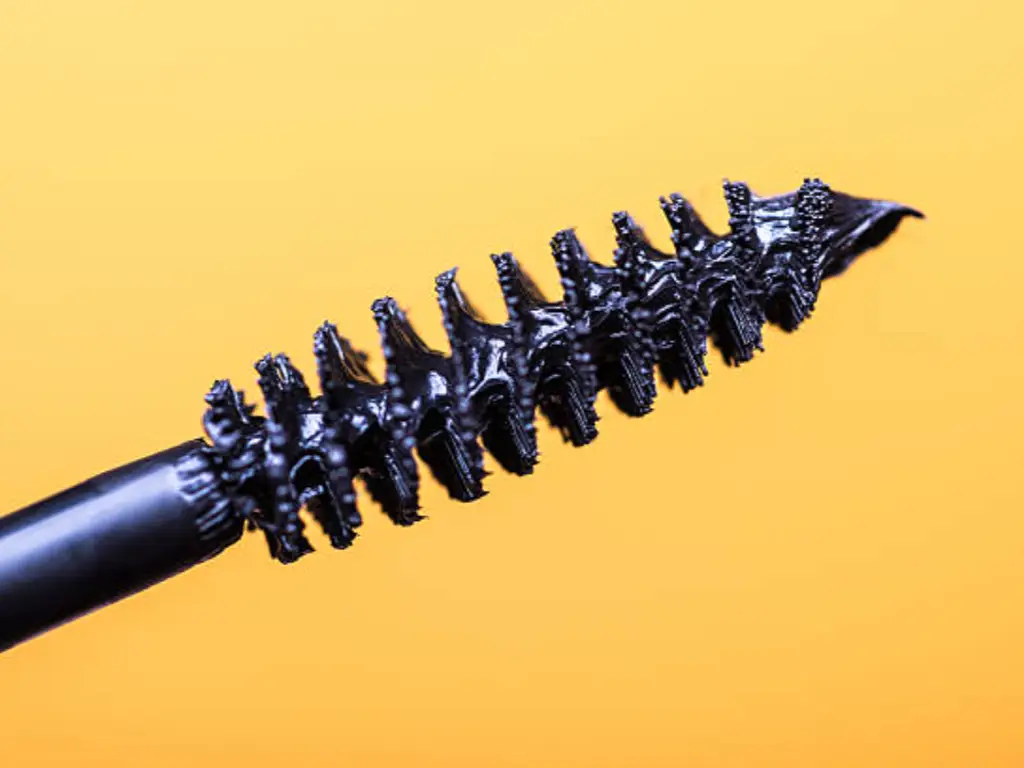
Mascara wand geometry directly dictates the lash finish. Matching bristle density, shape, and size to specific lash types ensures optimal product pickup and targeted application effects.
Fluffy Wand: High-Load Volumizing
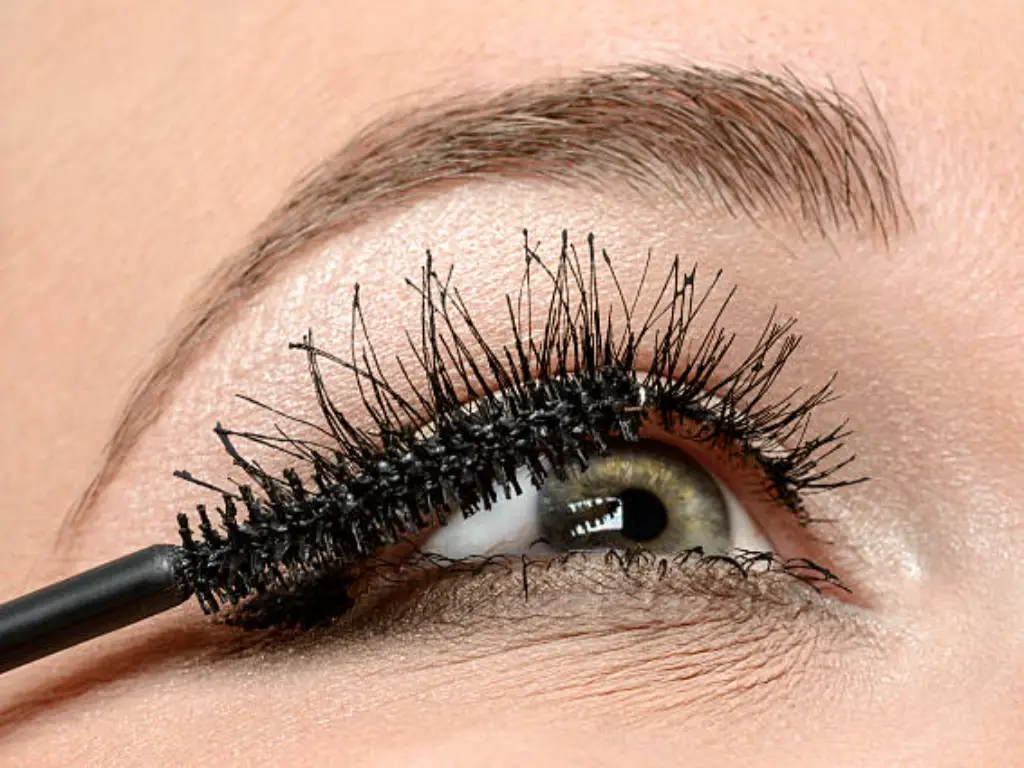
Featuring a high-density bristle matrix, this design maximizes product loading capacity. The large surface area is engineered for low-to-medium viscosity formulas, targeting consumers seeking “instant drama.” It is a staple for professional-grade lines focusing on maximum fiber deposition and root-to-tip thickening.
Tapered Wand: Ergonomic Elongation
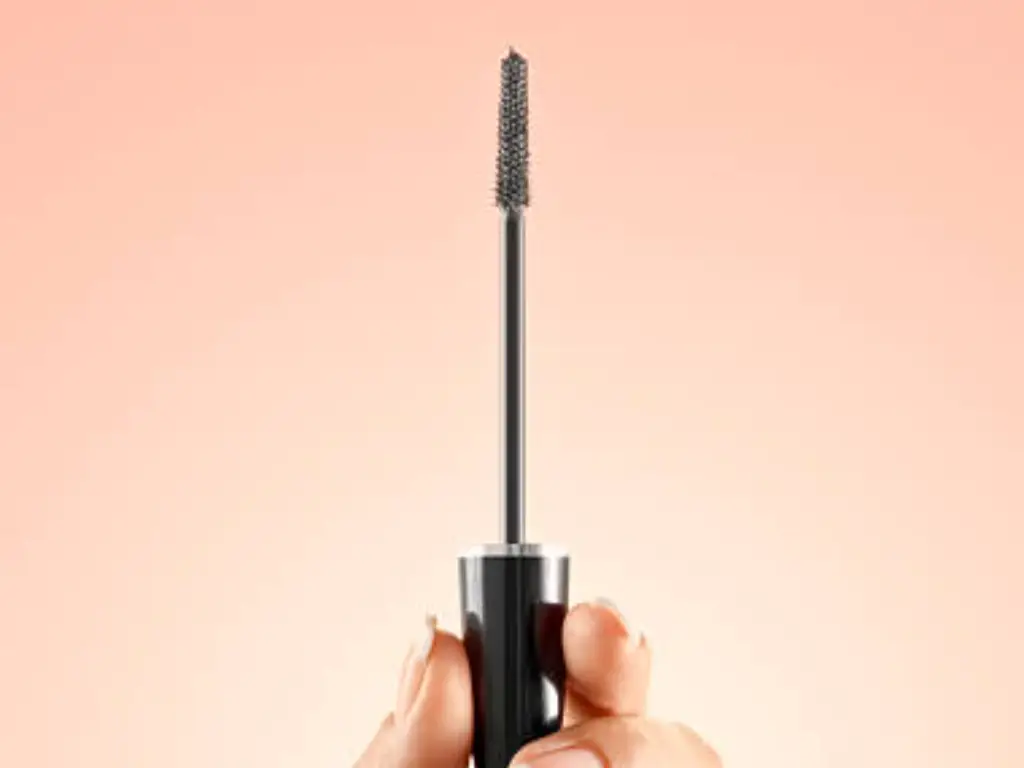
The conical geometry features a graduated bristle length that provides mechanical leverage for lengthening effects. From a production standpoint, the precise tip allows for detail-oriented application in the ocular canthus. Ideal for “Falsie-Effect” collections targeting demographics with shorter, Asian-style lash profiles.
Hourglass Wand: Multidimensional Lift
The concave center creates a reservoir for the formula, while the flared ends provide mechanical lift. This geometry is optimized for creamy, wax-based formulas to deliver 360-degree lash coating. It targets the luxury volume segment, offering a high-performance “panoramic” finish without architectural clumping.
Ball Wand: Precision Spot-Targeting
This spherical architecture provides unique rotational control, allowing for 90-degree application angles. It is an essential component for niche precision kits or “Lower-Lash” specific SKUs. The localized bristle distribution prevents formula overloading, making it perfect for smudge-proof, high-definition (HD) launches.
Curved Wand: Structural Curl Retention
Engineered to mirror the anatomical curvature of the lash line, this wand provides compressive force to set curls during application. It is the gold standard for quick-dry, curling polymer formulas. Ideal for brands targeting “lift and hold” claims for straight or downward-growing lashes.
Skinny Wand: Micro-Definition Engineering
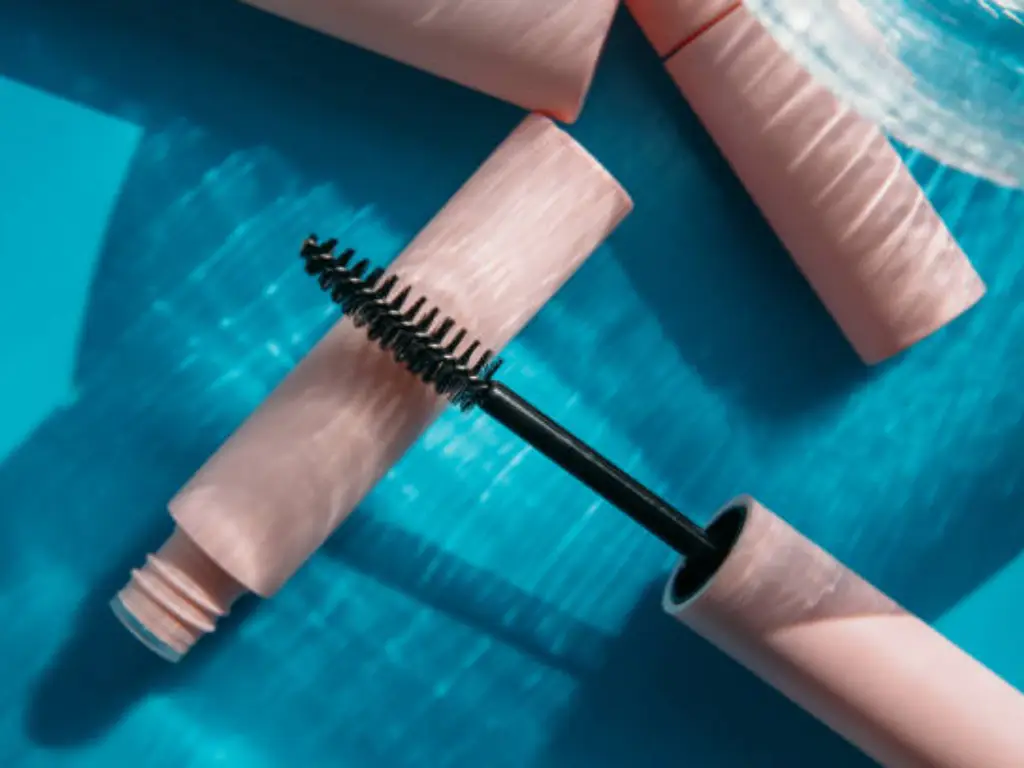
The low-profile, short-bristle design is optimized for high-viscosity or waterproof formulas that require precise, thin-film deposition. It offers superior control for “No-Makeup” makeup lines, ensuring clean separation and root-level definition without the mess associated with high-bulk traditional brushes.
Comb Wand: Mechanical De-Clumping
Featuring rigid, spaced teeth, this applicator functions as a precision tool for lash separation. It is best paired with fluid, lengthening formulas to create a “fluttery” finish. Targeted at the high-end clean beauty market, it ensures a sophisticated, clump-free profile for dense-lashed clients.
Rectangle Wand: Edge-to-Edge Coverage
The flat, broad-faced geometry provides high structural stability for consistent, linear application. It excels in multifunctional “All-in-One” SKUs, balancing volume and length. This versatile design is a cost-effective choice for mass-market hero products requiring a reliable, universal application experience.
Mascara Wand Materials: Silicone vs. Nylon Brushes
We primarily categorize applicators into two material streams, each demanding distinct technical workflows and capital investments.
Nylon fiber brushes utilize a traditional twisted-wire core architecture. High-speed spiral winding machines wrap flexible nylon filaments around a central metal axis, creating a dense, absorbent matrix. This structure is the industrial standard for high-viscosity, pigment-rich formulas, as the fiber density facilitates maximum bulk pickup for rapid volume claims.
Conversely, molded silicone wands leverage high-precision injection molding using 40-50 Shore A food-grade elastomers. This process allows for intricate bristle geometries and consistent spacing down to 50 microns. While requiring higher initial tooling costs, silicone offers superior hygiene and structural memory, resisting deformation over extended use.
| Recurso | Silicone (Molded) | Nylon (Fiber) |
|---|---|---|
| Manufacturing | Precision Injection Molding | Twisted Wire Winding |
| Ideal Formula | Low-to-Medium Viscosity | High-Viscosity & Fiber-Rich |
| Pickup Control | High Accuracy; Minimal Waste | High Bulk Load; Rapid Deposit |
| Main Benefit | Defined Separation & Definition | Dramatic Volume & Thickening |
| Durability | Retains Shape; Easy to Clean | Prone to Crushing over Time |
Launch Your Custom Mascara Line Faster
Bristle Density and Arrangement: The Science of Lash Separation
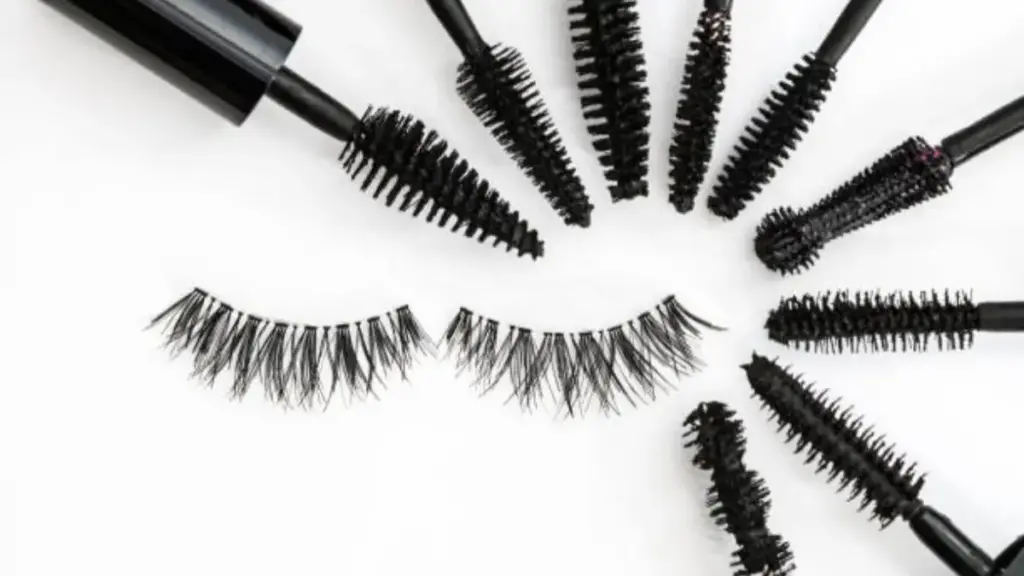
Effective eye makeup application relies on an applicator’s ability to navigate the “staggered forest” of the natural lash line. Unlike uniform surfaces, human lashes grow in vertical layers with varying densities, requiring precise bristle spacing to ensure individual fiber isolation and prevent product overloading.
Analyzing the 60-30-10 Density Rule
To optimize custom mascara performance, engineers must design bristle arrangements that accommodate the three-tier architecture of the lash line:
- Middle Row (60% Density): The structural core that requires high-load product deposition for bulk and volume.
- Top Row (30% Density): Finer, shorter hairs that need tapered bristles for precise capture without eyelid smudging.
- Bottom Row (10% Density): Angled, down-turned lashes requiring micro-bristles for defined separation.
A uniform brush geometry often fails this architecture. High-performance mascara manufacturing now focuses on variable-length bristle patterns—combining short, stiff bristles for root-loading with longer, flexible fibers for tip-to-tip separation.
Isolation Mechanics and Clump Prevention
The primary goal of applicator engineering is to eliminate “stickies”—the industrial term for inter-lash bonding caused by formula pooling. Poorly designed bristle density leads to:
- Inter-lash Tension: Disrupting the natural growth cycle and causing premature shedding.
- Formula Accumulation: Leading to uneven drying times and localized clumping.
By utilizing algorithmic bristle placement, manufacturers can ensure that each stroke provides mechanical isolation. This precision engineering allows the formula to set on individual hairs, creating the “panoramic” effect that drives high consumer satisfaction and repeat purchases for your brand.
Matching Wand Design to Formula Viscosity and Performance
Applicator design must perfectly align with formula viscosity. Matching wand geometry to liquid thickness maximizes glide, controls product loading, and prevents clumping during high-speed applications.
We categorize formulas into specific viscosity tiers to determine the optimal types of mascara wands for production. High-viscosity pigments demand structural rigidity and controlled pickup, while low-viscosity liquids require precision geometries to maintain flow stability.
| Viscosity Category | Ideal Wand Geometry | Performance Goal |
|---|---|---|
| High (Thick/Fiber-Rich) | Flat wands, paddle applicators, stiff nylon | Prevents excess buildup; manages heavy bulk |
| Medium (Creamy/Wax-Based) | Hybrid molded bristles, hourglass, curved | Balances load; builds volume without clumps |
| Low (Thin/Waterproof) | Tapered, skinny, precision silicone combs | Ensures even flow; targets root-to-tip definition |
To ensure synergy, engineering teams utilize Brookfield viscometers to benchmark prototypes against a strict 80-90% pickup efficiency threshold. This data-driven approach allows mascara manufacturing partners to validate custom stoppers and wand elasticity before mass-market rollout.
Wand Structure and Product Pick-Up: Geometry and Handle Design Combined
Symmetrical brush heads speed up automated handling, while calculated handle ergonomics transfer torque efficiently to reduce operator fatigue during heavy-duty application.
Brush shape and bulk product pickup control
The physical geometry of a wand dictates how efficiently it handles bulk material. Complex shapes slow down manufacturing lines because robotic systems and manual operators waste time realigning the components before pickup. By simplifying the structural profile, manufacturers eliminate these bottlenecks.
- Symmetrical geometry: Rounded or uniform bristle patterns allow automated vacuum or grip systems to pick up the wand instantly without orientation adjustments.
- Custom end-effectors: Offset center-of-gravity calculations enable level pickup of unbalanced loads, integrating rotation and tilting mechanisms directly at the wand tip.
- Heavy-gauge steel: Welded wires create a grid-like brush head that delivers lightweight strength to support heavy bulk product weight without warping.
- Simplified profiles: Chamfered edges replace intricate geometries, driving higher placement success rates during automated filling sequences.
Handle design and application precision
A wand is only as effective as the grip driving it. Proper handle configuration ensures precise material application while protecting the operator from joint stress and fatigue during repetitive, high-torque operations.
- Configuration choices: L-handles fit into tight spaces for fast manual control, while T-handles deliver maximum leverage for high-torque operations.
- Dimensional precision: Exact bore diameters guarantee secure attachment. Center spacing and tapered maximum diameters optimize balanced leverage and grip comfort.
- Heavy-load safety: Components lifting 30 to 50 pounds feature labeled lifting interfaces and explicit handling points, while closed guard ledges shield fingers during bulk pickup.
- Ergonomic detachment: Detached designs distance hands from the product, adhering to strict ergonomic standards for repeated daily use without physical strain.
Custom Mascara Wand Development: From Mold Design to Unique Branding
The transition from conceptual design to retail-ready product has been revolutionized by rapid prototyping. In modern mascara manufacturing, the shift from traditional tooling to additive techniques allows brands to bypass the 18-week lead time typically required for steel molds.
Method Production Focus Timeline & Capability 3D Printing Rapid Prototyping & R&D 1-week turnaround; features down to 50 microns. Injection Molding High-Volume Mass Production 12-18 weeks for multi-cavity mold fabrication. Extrusion Simple Symmetrical Shapes Efficient continuous forming for basic wand stems.
By leveraging 3D printing (Additive Manufacturing), developers can produce functional, elastic prototypes in just seven days. These systems utilize advanced polymers to print intricate bristle features down to 50 microns, enabling precise testing of formula pickup and lash separation before committing to high-volume production. This speed is a critical competitive advantage for eye makeup brands needing to pivot quickly based on market trends or seasonal shifts.
Once the geometry is validated for safety and elasticity, the design transitions to Injection Molding for mass scalability. This hybrid development cycle ensures that unique, algorithmic bristle patterns are perfected in the lab before being deployed at scale, allowing for deep private-label differentiation through custom-engineered applicators.
Considerações finais
Relying on generic, off-the-shelf applicators may reduce upfront costs, but mismatching geometry with formula viscosity guarantees market failure. Engineering the precise bristle density and material synergy is the only defense against clumping and poor performance. At Siloran, we specialize in bridging this technical gap through advanced mascara manufacturing and rapid prototyping.
Transform your formulation into a high-performing retail staple by validating performance before mass production. Secure your brand’s differentiation with our custom-engineered solutions.
Ready to optimize your applicator synergy? Explore Siloran’s Custom Mascara Solutions →
Frequently Asked Questions
Which mascara wand is best for volume?
Hourglass-shaped wands with dense bristles are superior for volume. Their architecture grips the lash root to deposit heavy formula loads. Stiff nylon spiral brushes also provide instant fullness, making them ideal for high-impact volumizing SKUs.
What brush is best for short lashes?
Skinny wands and micro-spoolies offer the precision required for short lashes. These slim profiles allow for root-to-tip stretching and detailed coating of fine hairs without eyelid smudging, ensuring high-definition results for targeted eye makeup lines.
Silicone vs nylon mascara wands: which is better?
Silicone excels in precision, hygiene, and separation for lightweight formulas. Nylon is the industrial standard for building rapid, dramatic volume with thicker pigments. The choice depends on your specific formula viscosity and target market performance claims.
Why are some mascara wands curved?
Curved wands are engineered to mimic the eye’s natural anatomy, providing mechanical lift and curl. This contour allows for simultaneous access to inner and outer corners, making it the ideal geometry for curling and fanning formulations.
How to clean a mascara wand?
First, wipe off the excess mascara with a dry tissue. Mix a few drops of mild soap into warm water, dip the wand, and swirl it around to break down the formula. Gently massage the bristles with your fingers, then wipe the wand repeatedly with a tissue until it shows no residue. Let the tool air dry on a clean paper towel. Routine cleaning kills bacteria and stops clumps from forming during your next use.
Can I customize my own mascara brush?
Yes. At Siloran, we offer full customization of mascara brushes, from bristle geometry to material firmness. Our engineering team builds custom molds calibrated to your unique formula, ensuring a high-performance, exclusive market entry.
Contact us to begin developing your custom applicator today.


 Portuguese
  English
  Arabic
  Dutch
Dutch  French
  Russian
  Spanish