
Understanding lip gloss shelf life is important for planning production, shipping, and inventory. Confusing the manufacturing date with the period after opening (PAO) can make it harder to manage stock, especially when products remain in distribution or retail channels longer than expected. For brands, poor shelf-life planning can lead to markdowns, returns, write-offs, and other unnecessary costs.
This guide explains the main factors behind an unopened lip gloss shelf life of roughly 12 to 36 months, including the formula, preservation system, packaging, and storage conditions. We evaluate how formula composition, preservative systems, and packaging quality dictate stability, providing the data needed to manage batch codes and set accurate inventory cushions for mass distribution.
How Long Does Lip Gloss Last?
Lip gloss lasts 2-6 hours on your lips. In the tube, it’s good for 1-3 years unopened or about 6-18 months after you start using it.
On the Lips: Typical Wear Time
When you apply it, most lip gloss will give you about 2 to 6 hours of wear before it starts to fade. Expect to reapply it every couple of hours, especially after eating or drinking. Thicker, more viscous formulas tend to last longer, while very sheer or oily glosses break down faster. Simple things like using a lip liner first can significantly improve how long it stays put.
In the Tube: Shelf Life Before and After Opening
The life of a lip gloss in its packaging is a different story. It’s broken down into two distinct periods: its life before you open it and its life after.
Unopened Shelf Life: A sealed, unopened lip gloss stored in a cool, dark place is typically stable for 1 to 3 years. The main factors controlling this are the product’s preservative system and its packaging. An airtight, opaque tube protects the formula from light and air, which keeps the oils and color from degrading.
After Opening (PAO): Once you open the tube, the clock starts ticking. The “Period After Opening” (PAO) for most lip gloss is between 6 and 12 months, though some can last up to 18. Each use can introduce air and microorganisms into the product, increasing the microbiological and oxidative challenges the formula and packaging must withstand over time. Squeeze tubes and other packaging formats that minimize back-contact with the formula can reduce contamination risk compared with repeatedly re-dipping an applicator into the product.
PAO vs. Expiration Date
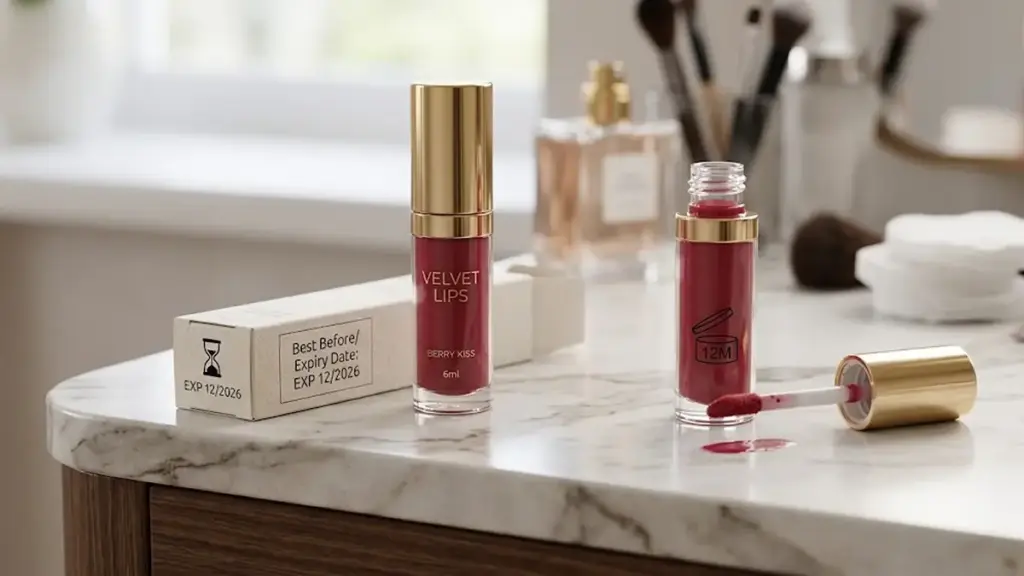
PAO and minimum durability address different stages of a cosmetic product’s life. The PAO indicates how long the product is considered safe to use after opening, while the minimum durability period applies to the product under appropriate storage conditions before opening. Both can depend on the formula, packaging, storage conditions, and supporting stability data.
What PAO Means
PAO, or Period After Opening, tells you how long a lip gloss is safe to use after you first open it. You can find it on the packaging as an open jar symbol with a number followed by “M” for months, like 12M. The PAO clock starts ticking the moment you break the seal. This accounts for the increased risk of contamination every time the applicator touches your lips and goes back into the tube, introducing air and bacteria. For a product like lip gloss that’s used near the mouth, a typical PAO is around 6-12 months.
What Shelf Life and Expiration Dates Mean
Shelf life refers to how long a lip gloss is expected to remain safe, stable, and fit for use when stored under the specified conditions. Depending on the market and product, this may be communicated through a minimum durability date or a period-after-opening (PAO) indication. For lip gloss with a validated shelf life of around 36 months, the exact durability period should be supported by product stability data rather than treated as a universal rule.
Why They Are Different
The distinction is straightforward: PAO measures the safe usage window for an opened product, while an expiration date measures the shelf life of a sealed one. They address different types of risk. The expiration date relates to the formula’s natural degradation over time. PAO relates directly to contamination from use. A lip gloss can have a long expiration date but a much shorter PAO. For example, a gloss might be good for 36 months while sealed but should be used within 12 months after you start applying it. Both are important: the expiration date tells you if an unopened product is still good to buy, and the PAO tells you when it’s time to toss it.
Turnkey Makeup Solutions for Global Brands
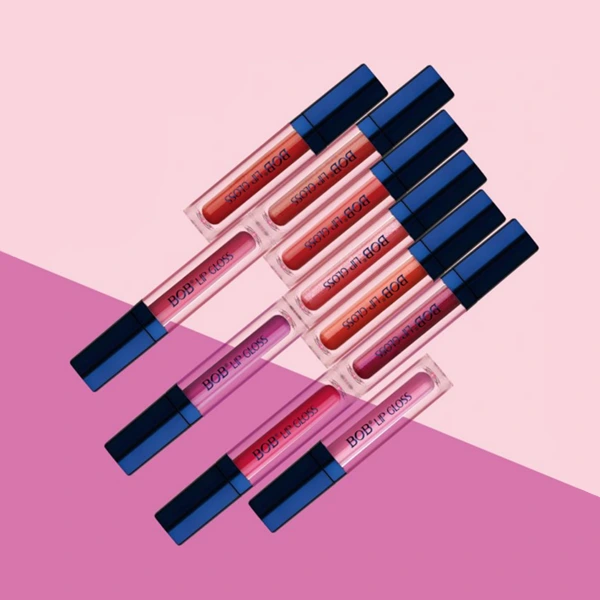
Factors That Affect Lip Gloss Shelf Life
Lip gloss shelf life depends on several controllable factors, including the formula, preservation strategy, packaging, and storage conditions.
Formula Composition
The balance of lip gloss ingredients, including oils, waxes, emollients, and film-forming ingredients, can have a major effect on texture and stability. Glosses heavy on oils and light on waxes look great but are far more likely to oxidize and separate. It’s a fundamental trade-off between texture and stability.
Products with a high load of natural oils and botanical extracts simply expire faster. More oxidation-stable ingredients can make a formula easier to stabilize and may help provide a more predictable shelf life. The effect depends on the specific ingredient and formulation.
Water can increase the risk of microbial growth, so water-containing glosses generally require an appropriate preservation strategy. However, shelf life also depends on oxidation, physical stability, packaging compatibility, and storage conditions. Anhydrous formulas may have a lower microbiological risk, but their stability can still be limited by oxidation or other formulation changes.
Preservative Systems
Achieving a longer period-after-opening (PAO) requires adequate control of microbiological risk. For water-containing formulas, an appropriately designed broad-spectrum preservation system is often an important part of that control. The final PAO depends on the complete formula, packaging, use conditions, and supporting stability data.
Even oil-based glosses need appropriate protection from contamination and oxidation. Repeated contact between the applicator and the lips can increase microbial exposure inside the package. The formulation and packaging therefore need to work together to control the risks that arise during normal use.
A “preservative-free” claim does not automatically mean a shorter shelf life. For anhydrous or microbiologically low-risk formulas, manufacturers may rely on the product’s formulation characteristics and packaging rather than a conventional preservative system. The appropriate approach is to validate microbiological and physical stability for the specific formula.
Packaging Quality
A cheap seal or a sloppy wiper system lets in oxygen, and oxygen causes the oils in the formula to break down and smell rancid. Good, airtight components are the first line of defense.
Clear tubes might look nice on a retail shelf, but light degrades sensitive colorants and active ingredients. For formulas containing light-sensitive ingredients, opaque or UV-protective packaging can help reduce light-related degradation.
Applicator design directly impacts contamination risk. Squeeze tubes or pumps offer far better protection than open pots or the doe-foot wands that get re-dipped over and over again.
How Ingredients Affect Lip Gloss Shelf Life
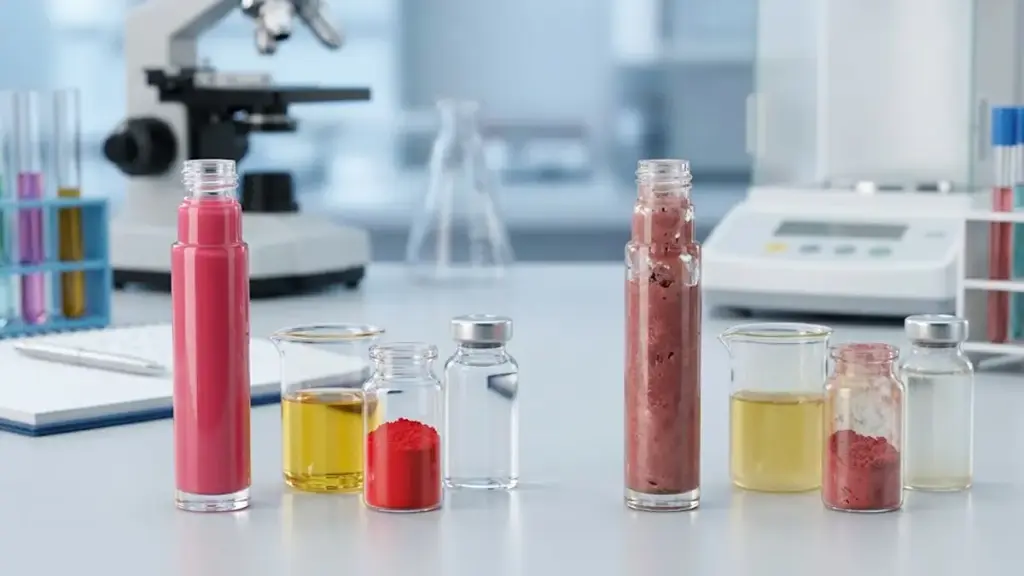
A product’s usable life depends on the stability of its most sensitive components. Whether oils oxidize, colors fade, or preservatives fail, ingredient stability dictates when the formula no longer meets its intended quality or safety requirements.
Chemical and Physical Degradation Pathways
The most common failure point in oil-based formulas is oxidation. When oils and emollients react with air, they go rancid, producing off-odors and causing color to shift. In many oil-based formulas, oxidation can become an important factor limiting product life, particularly when the formula contains oxidation-sensitive oils or emollients.
Physical stability is just as critical. An improperly balanced formula of waxes and oils will eventually break. This can lead to lip gloss separation, such as visible oil separation or changes in viscosity, which can affect the product’s appearance, texture, and usability. Light exposure can also affect certain pigments, dyes, and other light-sensitive ingredients, potentially causing color changes over time. Certain organic dyes will fade or change color when exposed to light, compromising the product’s appearance well before it actually spoils.
Functional performance can also decline over time, even when the gloss still looks and feels normal. Ingredients used for specific product benefits, such as UV filters or certain vitamins, may be sensitive to heat, light, or oxidation and can lose effectiveness as they degrade. For this reason, functional claims should be supported by appropriate stability data throughout the product’s intended shelf life.
Microbiological Stability and Safety
Water-containing formulas generally require stronger control of microbial growth because available water can support bacteria, yeast, and mold under suitable conditions. The actual microbiological risk depends on the complete formulation and preservation system. Without adequate microbiological control, a water-containing formula may fail to maintain its required microbiological quality during storage and use. The appropriate preservation strategy depends on the complete formulation and packaging system. The problem is made worse by common applicators. A doe-foot wand is repeatedly introduced to the lips and then re-inserted into the tube, creating a constant stream of microbial contamination that challenges the preservative system every day.
Even the best preservatives have a limited lifespan. Their effectiveness can decline with exposure to heat or simply over time. This means a product can become unsafe long before there are any visible signs of spoilage like mold or a bad smell. Anhydrous, or water-free, formulas generally present a lower risk of microbial growth because they provide less available water for microorganisms. However, their shelf life can still be affected by oxidation, physical stability, packaging compatibility, light exposure, and other formulation factors.
How Packaging Affects Lip Gloss Shelf Life
Packaging plays an important role in protecting lip gloss from oxygen, moisture, leakage, and other external factors that can affect product quality during storage and distribution.
Oxygen Protection
Oxygen is the primary driver of oxidation, which causes oils to go rancid and colors to shift. Effective packaging directly counters this by limiting air exposure at every stage.
- Materials like multilayer plastics or glass create a physical barrier to slow oxygen entry. This is what stops the formula from oxidizing, which leads to rancid smells and color changes.
- Airtight closures, like precision screw caps and effective wand wipers, cut down on air exchange each time the product is used. This maintains the formula’s integrity.
- Airless pumps or well-designed squeeze tubes can reduce air exposure and help protect sensitive formulas during storage and use. Whether a particular packaging format is appropriate depends on the formula, compatibility requirements, and intended shelf life.
Moisture Protection
Moisture is a constant threat, especially in humid environments like bathrooms or certain climates. It can ruin texture and create an environment for microbial growth.
- Packaging with strong moisture-barrier properties can help reduce exposure to humidity during storage. Glass provides a strong barrier, while the overall closure and seal design also play an important role in protecting the formula.
- Well-designed caps that include liners or gaskets create a tight seal that physically blocks moisture. This is especially important for products stored in bathrooms.
- Secondary packaging, like a simple carton, adds another buffer against humidity spikes during shipping and while the product sits on a retail shelf.
Leakage Prevention
Leakage can compromise both product quality and the overall packaging performance during shipping and storage. For a semi-liquid formula like lip gloss, preventing leaks during transport and storage is a core function of the packaging design.
- It starts with the container’s structural design. Proper wall thickness and a robust neck finish ensure the seal holds up against pressure and rough handling.
- Closures with precise threads and an effective wiper system are critical for creating a reliable seal. This stops the formula from seeping out, even if stored on its side.
- Outer cartons play a role here too. They often keep the product oriented upright and absorb impacts, reducing stress on the cap that could otherwise cause a leak.
Stability Testing Used to Validate Shelf Life
Stability testing generates the technical evidence to justify a shelf life claim, ensuring the product remains safe, functional, and visually appealing from production to consumer use.
| Study Design and Key Test Parameters | Storage Conditions and Data Interpretation |
|---|---|
|
|
Siloran’s Approach to Lip Gloss Product Development
Developing a stable lip gloss starts long before mass production. At Siloran, product development brings formulation, packaging, sample testing, and production together so these elements can be evaluated as one system. Our R&D team supports formula development and review, while customers can confirm samples before moving into full production. Once approved, production takes place in a 40,000-square-meter facility with dedicated workshops for lip makeup, powder, spraying, batching, and other processes. Automated filling, capping, and packaging equipment helps maintain consistency across production runs. Siloran also operates under GMPC and ISO22716-certified factory systems and maintains GMP cosmetic 100,000-grade clean-room standards. For private-label brands, this integrated approach can make it easier to align product performance, packaging specifications, and manufacturing requirements before a formula reaches large-scale distribution.
Signs That a Lip Gloss Has Expired
A lip gloss may no longer be suitable for use if it develops an unusual odor, significant color change, visible separation, or a gritty texture. These changes can indicate oxidation, physical instability, or microbial contamination and are reasons to stop using the product.
Beyond the date printed on the package, your senses are the best tool for quality control. If a lip gloss starts behaving differently than it did when you first opened it, that’s a clear signal its shelf life is over. These changes are caused by oil oxidation, microbial growth, or the physical breakdown of the formula.
Changes in Smell and Appearance
Visual and olfactory cues are the most immediate indicators that a gloss has turned. A noticeable or unusual change in smell is a strong warning sign and is a good reason to stop using the product, as it may indicate oxidation, ingredient degradation, or microbial activity.
- Odd smell: A sour, rancid, or unusual chemical odor is a clear sign the gloss has spoiled. Fresh gloss should smell like its intended fragrance, not like old crayons or vinegar.
- Color shifts: The gloss may appear yellowed, cloudy, or significantly darker than its original shade. Pigments can degrade over time, especially with exposure to light.
- Formula separation: You might see the oils and pigments splitting into distinct layers in the tube. If it doesn’t mix back together easily, the emulsion has broken.
Changes in Texture and Feel
How the gloss feels during application is just as important. A fresh formula is engineered to be smooth and comfortable, while a degraded one will feel unpleasant and may no longer be safe for your lips.
- Altered consistency: A good gloss is smooth. An expired one can become overly sticky, watery, gritty, or clumpy as the ingredients break down.
- Unpleasant application: It may feel tacky, dry, or unusually heavy on the lips instead of gliding on smoothly. This means the solvent or emollient balance has changed.
- Skin irritation: If the gloss causes redness, itching, burning, or other unexpected irritation, stop using it. The reaction may have several possible causes and should not automatically be attributed to formula degradation or contamination. Stop using it immediately.
How Manufacturers Extend Product Shelf Life
Manufacturers can improve product stability by combining an appropriate formula, packaging system, storage conditions, and stability testing. It combines stable formulas, protective packaging, and rigorous testing to slow oxidation, microbial growth, and physical separation from factory to shelf.
Stabilizing Formulas with Preservatives and Testing
The first step in extending shelf life is building a resilient formula. For oil-rich lip gloss formulas, oxidation can be an important source of instability, particularly when the formula contains oxidation-sensitive oils or emollients. Manufacturers combat this by using stable synthetic emollients or adding antioxidants like tocopherol (Vitamin E) to protect more fragile natural oils. This chemical stability is what keeps the product from developing an off-smell or changing color while sitting in a warehouse.
If a formula contains any water, microbial growth becomes the main concern. A robust, broad-spectrum preservative system is non-negotiable to prevent bacteria, yeast, and mold. Every formulation undergoes stability testing to validate its shelf life. This involves exposing the product to stressful conditions—like high heat (accelerated testing) and freeze-thaw cycles—to simulate what it will endure during shipping and storage. These tests confirm the formula won’t separate, thicken, or break down before its intended expiration date.
Using Packaging to Prevent Contamination and Degradation
Packaging is the formula’s first line of defense. A well-engineered container protects the product from external threats that degrade it over time. Airtight seals and high-quality closures are critical to minimize oxygen exposure, directly slowing down the oxidation of oils and fragrances. For formulas with light-sensitive ingredients, like certain colorants or actives, manufacturers choose opaque or UV-protective materials to prevent light from breaking them down.
The applicator design also plays a huge role, especially for the product’s life after it’s been opened. A doe-foot wand, which is repeatedly dipped back into the tube after touching the lips, introduces a higher risk of microbial contamination. In contrast, formats like squeeze tubes or airless pumps are inherently more hygienic because they limit back-contamination. Choosing a less-contaminating format is a direct strategy to extend the product’s safe and effective in-use life.
Frequently Asked Questions
How long does lip gloss last unopened in warehouse storage?
Unopened lip gloss stored correctly in cool, dry warehouse conditions typically lasts for 1–3 years. For most brands, 2–3 years is the practical maximum for sealed stock. Beyond this time, preservatives and other ingredients can degrade, making the product unsuitable for sale even if it remains unopened.
What is the difference between an expiration date and the PAO symbol?
The expiration date applies to the product’s shelf life before it is opened, indicating how long it remains stable in its sealed container. The PAO (Period After Opening) symbol, shown as an open jar with a number like “12M,” indicates how many months the product remains safe to use after it has been opened and exposed to air.
Why does old lip gloss smell like vinegar or rancid oil?
These smells develop from two main processes. The “rancid oil” or “old crayon” odor comes from the oxidation of oils and butters in the formula when exposed to air. A “vinegar” or sour smell can result from the breakdown of other chemical ingredients or from microbial contamination, where bacteria introduced from the lips grow as the product’s preservatives weaken.
What preservatives are best for clean beauty lip glosses?
There is no single preservative system that is best for every clean beauty lip gloss. Anhydrous formulas may have a lower microbiological risk, so oxidation control can be especially important. For water-containing glosses, an appropriate broad-spectrum preservation system may be needed to control microbial growth. Brands pursuing a clean beauty positioning may choose preservative options that meet their ingredient standards, such as certain nature-derived systems, while antioxidants such as tocopherol can help protect oils from oxidation. The right approach depends on the formula, packaging, target market, and required stability testing.
How is the unopened shelf life of cosmetic liquids tested?
Unopened shelf life is assessed through a combination of real-time and accelerated stability testing. Samples are stored under controlled conditions and monitored over time for changes in color, odor, texture, viscosity, phase stability, and packaging integrity. Accelerated testing uses elevated temperatures or other stress conditions to identify potential stability issues earlier, while real-time testing provides evidence of how the product performs under normal storage conditions. The results help manufacturers establish an appropriate shelf life based on the specific formula, packaging, and storage conditions.
Does plastic or glass packaging make lip gloss last longer?
Glass offers strong barrier properties and can be useful for formulas that are particularly sensitive to oxygen or ingredient loss. However, a well-designed plastic package can also provide effective protection for many lip gloss formulas. In practice, the complete packaging system—including material, closure, seal, and compatibility with the formula—often matters more than the material alone.
Final Thoughts
Lip gloss shelf life depends on the interaction between the formula, preservation strategy, packaging, manufacturing process, and storage conditions. A properly designed and tested product gives brands a more reliable basis for inventory planning and market distribution. While low-cost manufacturing can reduce upfront expenses, it exposes your inventory to the financial risk of premature spoilage. A verified stability profile is your only defense against customer returns and dead stock.
For private label and OEM projects, it is better to confirm shelf-life and packaging performance before committing to large-scale production. We recommend requesting samples to validate our formula stability and packaging integrity for yourself. Contact our B2B team to review our stability testing data and discuss your private label requirements.