

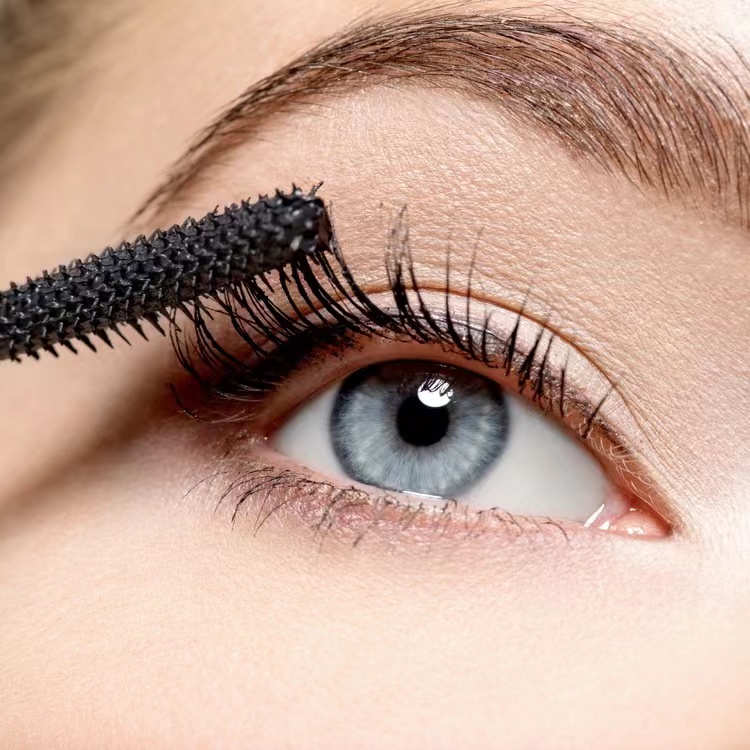
The cost of private label mascara is determined by more than the formula itself. The final unit price is influenced by multiple factors, including packaging components, order quantity, customization requirements, formula type, and quality testing. For brands planning a new mascara line, understanding these cost factors helps create a more accurate production budget before moving into manufacturing.
Among these factors, packaging selection and MOQ often have a direct impact on the overall investment. Different tube designs, brush types, materials, and decoration options can significantly change the cost per unit, while larger production volumes usually reduce the average manufacturing cost. This guide breaks down the main cost components of private label mascara and explains how each factor affects your total product budget.
What Determines Private Label Mascara Costs?
Mascara costs are driven less by the formula and more by packaging and order volume. The tube and brush system often costs more than the liquid inside.
| Core Product Costs: Formula & Packaging | Operational Costs: Volume, Labor, & Compliance |
|---|---|
|
|
Formula Selection: Stock vs. Custom Formulation Costs
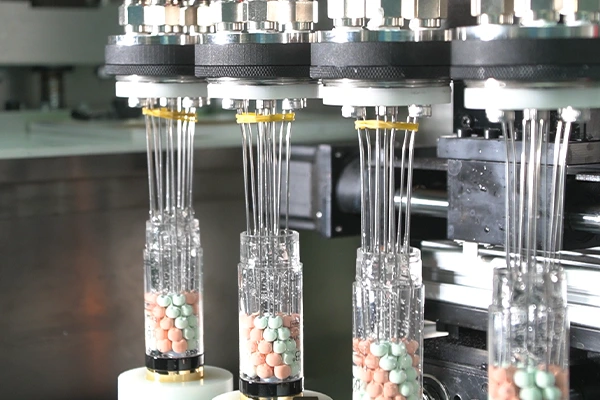
Stock formulas minimize upfront R&D for quick, low-risk launches. Custom formulas require significant investment and longer timelines but enable unique, brand-defining products.
Stock formulas
You’re using a pre-developed, validated recipe from a professional mascara manufacturer, which strips out most of the R&D risk and shortens the product development timeline.
Stock formulas are commonly selected by brands that want shorter development timelines and lower upfront costs compared with fully customized formulas. This option generally requires less upfront investment, but brands still need to evaluate expected demand, inventory planning, and target margins before placing orders.
The costs you do encounter are small and predictable:
- Minor Customization: Expect small fees for simple tweaks like adjusting a fragrance, changing a color, or ensuring the formula works with your chosen packaging.
- Validation Testing: Basic stability and compatibility tests are often required, but these are typically bundled into a small project fee.
- Low Upfront Expense: This route represents the lowest possible R&D spending, shifting the cost focus almost entirely to production and marketing.
Custom formulas
Going custom means you’re developing a unique product from the ground up. This is a significant investment of both time and money, intended for brands whose core strategy revolves around a unique performance claim or ingredient story. The higher cost is justified by spreading it across the product’s entire projected lifetime sales volume.
The costs are substantial and come in stages:
- Multi-Stage Costs: Expenses accumulate through discovery, multiple lab iterations, pilot batch scale-ups, comprehensive testing, and preparing regulatory documents. Each step has its own price tag.
- Varied Payment Models: How you pay can vary. Some labs charge a fixed project fee, others use milestone-based payments. A common model involves the manufacturer subsidizing R&D in exchange for higher production margins later.
- Significant Upfront Investment: There’s no way around the high initial cash outlay and longer lead times. You’re funding a full R&D cycle to create something proprietary.
Your End-to-End Private Label Cosmetics Solution
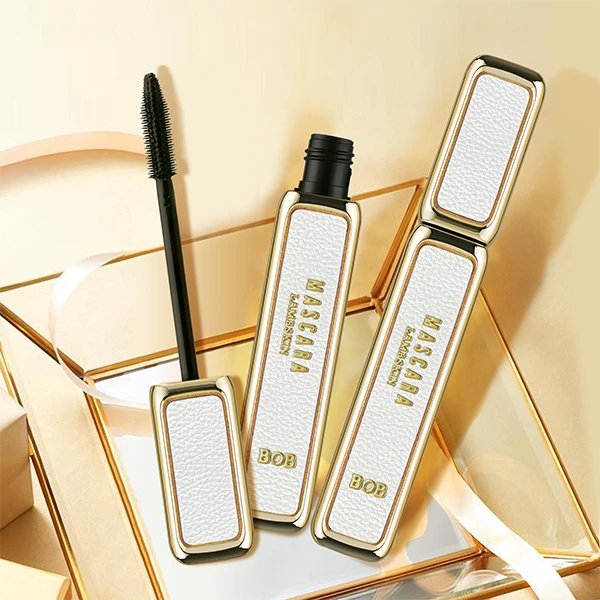
Mascara Packaging Costs: Standard vs Custom Options
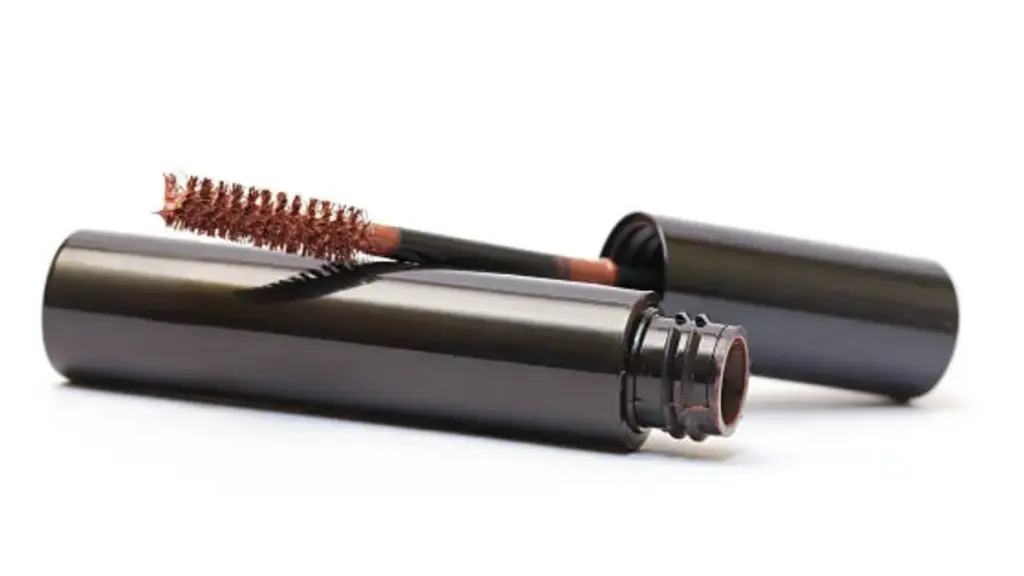
Packaging costs hinge on a key trade-off: affordable standard options versus brand-building custom designs. Your final unit price is driven by this choice, plus printing methods and volume.
Standard packaging
Standard packaging means using off-the-shelf sizes and structures. This is the most straightforward way to control costs, especially when budgets are tight or the packaging itself isn’t a core part of your brand’s message.
- It avoids expensive custom tooling fees because you’re using existing, common designs.
- You benefit from economies of scale. Since these sizes are made in huge volumes for many companies, the per-unit price is much lower.
- This is the most cost-effective route for products where functionality trumps a unique unboxing experience.
Custom packaging
Custom packaging is tailored specifically to your product with unique sizes, materials, and structural designs. This route is an investment in brand perception and product protection, but it comes with higher costs that need to be justified.
- It requires an upfront investment in tooling for custom cutting dies and molds.
- The per-unit cost is higher than standard options, but it can enhance how customers perceive your product’s value.
- The spend makes sense for premium products or when an optimized fit reduces shipping damage and logistics costs enough to offset the higher price.
Logo printing
The cost of adding your logo and branding is driven by the printing method, the number of colors you use, and any special finishes. The right choice depends entirely on your order volume and how often you change designs.
- Flexographic and offset printing have high initial setup costs for plates but offer a much lower price per unit on high-volume runs.
- Digital printing avoids plate fees, making it the smarter choice for short runs, prototyping, or if your branding gets updated frequently.
How MOQ Affects Private Label Mascara Pricing
Order size is a trade-off. Small orders mean higher unit costs for less inventory risk. Large orders slash unit prices but demand more cash and warehouse space.
Small orders
Placing orders at or near a supplier’s Minimum Order Quantity (MOQ) results in a higher cost per unit. This isn’t arbitrary; fixed production costs, like tooling and machine setup, are spread across fewer items, which inflates the price of each one.
For the buyer, this approach is about managing risk. It reduces the need for a large upfront cash investment and lowers the danger of being stuck with unsold inventory. This makes it a smart strategy for testing new products or when demand is uncertain.
Smaller orders usually result in higher unit costs, but they allow brands to reduce inventory exposure when testing a new product.
Large orders
Placing orders significantly above the MOQ unlocks economies of scale, leading to a much lower cost per unit. Suppliers often provide volume discounts because their fixed costs get distributed over a larger production run, making their entire process more efficient.
While the unit price is attractive, large orders demand a substantial cash investment. They also increase inventory carrying costs, which include storage, insurance, and the risk of the product becoming obsolete before it sells.
This strategy works best for products with stable, predictable demand. You need to be confident in your forecasting, because the financial penalty for ending up with excess inventory is high.
Shipping and Landed Costs for Private Label Mascara
Your total landed cost is freight, customs, and taxes combined. These charges are almost always calculated on the CIF value, not just the product price.
Freight
This is the cost to move your goods internationally, whether by ocean, air, or courier. It’s not just one number; it includes the base transportation rate, fuel surcharges, and any cargo insurance you add.
The freight and insurance costs are added directly to your product’s value to create what’s known as the CIF value (Cost, Insurance, and Freight). This CIF figure is critical because it becomes the primary foundation for calculating almost all subsequent import duties and taxes.
Customs
Customs charges are the duties and tariffs levied by the government. The amount you pay depends on the product’s specific HS code, its country of origin, and its total CIF value. These are not optional fees.
- Costs can stack up. You might face a standard duty, but also additional surcharges like a 10% baseline tariff or even a 25% reciprocal tariff for goods from certain countries.
- Customs can also add separate merchandise processing fees. These are usually a small percentage of your shipment’s value but are another required part of the calculation.
Taxes
These are separate from customs duties and are also mandatory. The most common is an import tax, like a Value-Added Tax (VAT) or sales tax. It’s typically calculated on a total value that includes your product cost, the freight, and the duties you just paid.
- If you import regulated goods like alcohol or tobacco, expect to pay additional excise taxes. These are often charged per unit or by volume, not as a percentage of value.
- These taxes are a distinct and required part of your final landed cost. Forgetting to budget for them will wreck your profit margins.
Hidden Costs in Private Label Mascara Manufacturing
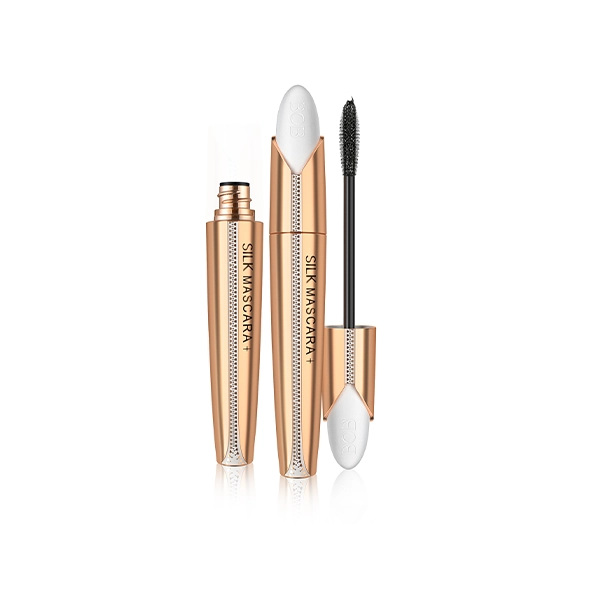
The initial quotation for samples, testing, and tooling does not always represent the full development cost. The real costs hide in engineering time, production downtime, and launch delays that quietly drain margins.
Sampling
The direct costs of sampling are obvious: you pay for small, inefficient prototype runs and often buy materials at a premium. These small batches are naturally more expensive per unit than full-scale production, a cost that gets multiplied with every design revision.
The indirect costs are harder to see but hit harder. Every sample run consumes engineering hours that are often buried in general overhead. Worse, it forces production line changeovers, creating downtime and disrupting the flow of profitable orders. That lost capacity is a real, unbudgeted expense.
Extended sampling cycles also create massive opportunity costs by delaying your market launch, giving competitors a head start. Rushing the process isn’t the answer, either. Pushing a flawed prototype through can bake design defects into the final product, leading to rework, returns, and warranty claims down the line.
Testing
In-house testing costs go well beyond the equipment. You have technician labor, the time your test cells are occupied, and the literal destruction of finished units for stress tests. These consumed products are effectively a higher scrap rate that doesn’t always show up on the balance sheet for that specific project.
Using third-party labs introduces its own set of expenses. You have the lab fees, but you also have to factor in the cost of shipping samples and the project management time spent coordinating tests and interpreting the results. A test failure means you pay for all of this twice.
Testing can also become a major bottleneck, delaying production and shipment schedules. Insufficient testing can create additional costs later through product adjustments, production delays, or quality issues after launch. Skipping a validation step to save a few dollars upfront can result in catastrophic field failures and recalls, costing millions and damaging your brand’s reputation.
Tooling
The initial check you write for a mold or die is just the down payment. Any design modification during development requires expensive tool rework. These changes, which are almost inevitable, add up quickly and are rarely forecasted accurately.
Then comes the lifecycle. Routine maintenance, refurbishment, and cleaning consume resources. An unplanned tool breakdown is even worse, halting an entire production line. This idle time and overtime pay to catch up are direct hits to profitability.
There’s also the amortization risk. If your product’s sales volume doesn’t meet the forecast, you may never fully recover the tool’s cost before it becomes obsolete. And when dealing with suppliers, watch out for hidden fees or the sudden need to pay for a duplicate tool if you decide to switch vendors.
Certifications
Direct fees for audits, pre-certification tests, and annual renewals are easy to budget for. The real drain comes from the internal labor costs. Your quality, regulatory, and engineering teams will spend weeks preparing documentation, conducting internal audits, and managing compliance, all of which is time not spent on new development.
Maintaining a certification often means adding process controls, like extra inspections or documentation steps. These add complexity and overhead to every single unit you produce. The cost isn’t a one-time event; it’s a permanent tax on your efficiency.
Additional certification costs may occur if significant product changes require updated documentation or re-evaluation. A significant change to your product design, a key component, or your manufacturing facility can trigger the need for a partial or complete re-certification. This starts the entire expensive cycle over again, often unexpectedly.
How to Reduce Private Label Mascara Production Costs
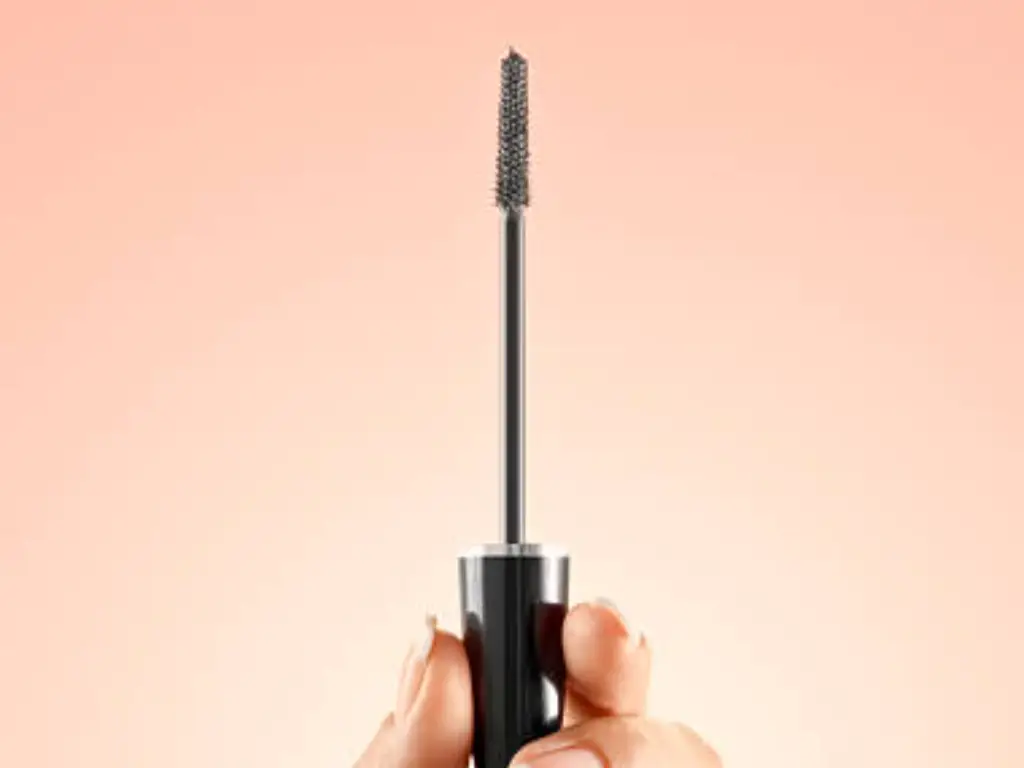
Most cost overruns in private label manufacturing are predictable. The biggest savings come from thorough planning before production begins and clear communication with suppliers during development, not from chasing last-minute fixes.
Optimize Planning, Design, and Procurement Before Work Begins
Early specification planning helps brands avoid unnecessary revisions, tooling changes, and packaging adjustments that increase production costs.
- Define clear product specifications. Clearly define formula requirements, packaging components, decoration methods, and order quantity before requesting quotations. Clear specifications allow suppliers to provide more accurate quotations and reduce unexpected cost changes during development.
- Review design and packaging options. Systematically review packaging structures, materials, and customization options to identify areas where costs can be reduced without affecting product performance or brand positioning.
- Standardize where possible. Using standard packaging components and existing molds can significantly reduce tooling costs and shorten production timelines. Custom packaging provides stronger differentiation but usually requires higher upfront investment.
- Compare qualified suppliers. Comparing quotations from qualified suppliers helps brands understand differences in formula options, packaging specifications, MOQ requirements, and overall production costs. This also provides a clearer view of market pricing for similar product configurations.
Control Costs During Product Development
Once specifications move into development, the focus shifts to managing changes and tracking key cost drivers.
- Minimize late-stage changes. Limit unnecessary changes after production specifications are confirmed. Formula adjustments, packaging changes, or artwork revisions may increase development time and additional costs. Each revision should be evaluated against both budget and timeline impact.
- Track major cost factors. Monitor key cost drivers throughout development, including formula customization, packaging upgrades, testing requirements, and order quantity adjustments. Understanding how each decision affects the total project cost helps brands make informed trade-offs.
- Choose reliable supply partners. Selecting packaging components that are readily available and working with suppliers that have established production capabilities can help reduce delays and additional development costs. Supply chain stability directly affects both timelines and final costs.
- Manage risks before production. Identify potential risks early, such as packaging compatibility issues, testing failures, or unexpected MOQ requirements, to avoid additional costs before mass production begins. A clear understanding of supplier capabilities and production lead times helps prevent costly surprises.
Final Thoughts
Selecting a supplier based only on the lowest unit price may create additional risks if product quality, packaging compatibility, and production reliability are not evaluated. Your total cost is defined by packaging choices, order volume, and hidden operational drags. A successful brand launch depends on balancing these factors to protect your margins.
A detailed cost evaluation based on formula, packaging, order volume, and production requirements helps brands create more accurate launch budgets. Our team can build a detailed quote based on your formula, packaging, and volume requirements. Contact us to define your project specs and secure a clear production cost.
Frequently Asked Questions
How much does it cost to start a mascara brand in 2026?
Launching a mascara brand starts around $5,000–$20,000 for a private label line, where you use pre-existing formulas and packaging. For a fully custom formula and brand, costs typically range from $50,000 to over $250,000. Key expenses include formulation, safety testing for eye products, packaging components, minimum order quantities (MOQs), and marketing.
What is the standard MOQ for private label mascara?
The standard Minimum Order Quantity (MOQ) for private label mascara typically falls between 1,000 and 5,000 units per shade. Many suppliers also cater to startups by offering much lower MOQs, sometimes as few as 50 to 500 units, which allows for market testing with less upfront investment.
Why does private label mascara seem expensive?
The cost of private label mascara includes more than just the formula. It covers specialized components like the tube, wand, and wiper, which often have their own minimum order requirements. The price also reflects rigorous safety and stability testing required for eye-area products. Smaller order volumes for new brands naturally lead to higher per-unit costs compared to mass-produced goods.
How can I get free mascara samples?
You can often get free mascara samples as a complimentary gift with a qualifying purchase from beauty retailers or directly from a brand’s website. Brands also run promotional campaigns, offering samples through social media ads or email sign-ups. Additionally, freebie aggregator websites list current sample offers from various companies.
What is the typical markup on wholesale mascara?
Markup happens in stages. First, a brand marks up its product by 100% to 300% over the manufacturing cost to set its wholesale price. Then, retailers add their own markup of 60% to 80% on top of that price. This layered approach means the final shelf price for a mascara can be 5 to 10 times its original cost of goods.
What are the common ways to pay for international cosmetic orders?
Most international cosmetic orders are paid for using major credit cards like Visa and MasterCard, or digital wallets such as PayPal, Apple Pay, and Google Pay. For larger wholesale orders, bank wire transfers are often required. Payment costs to consider include foreign transaction fees from your card issuer and currency conversion markups from the payment processor.


 English
  Arabic
  Dutch
Dutch  French
  Portuguese
  Russian
  Spanish